
Vietnam is Enhancing it’s Elite Su-27 Fighters with Belarus’ Help - But Chinese Flankers Remain Far Ahead
Military Watch Magazine Editorial Staff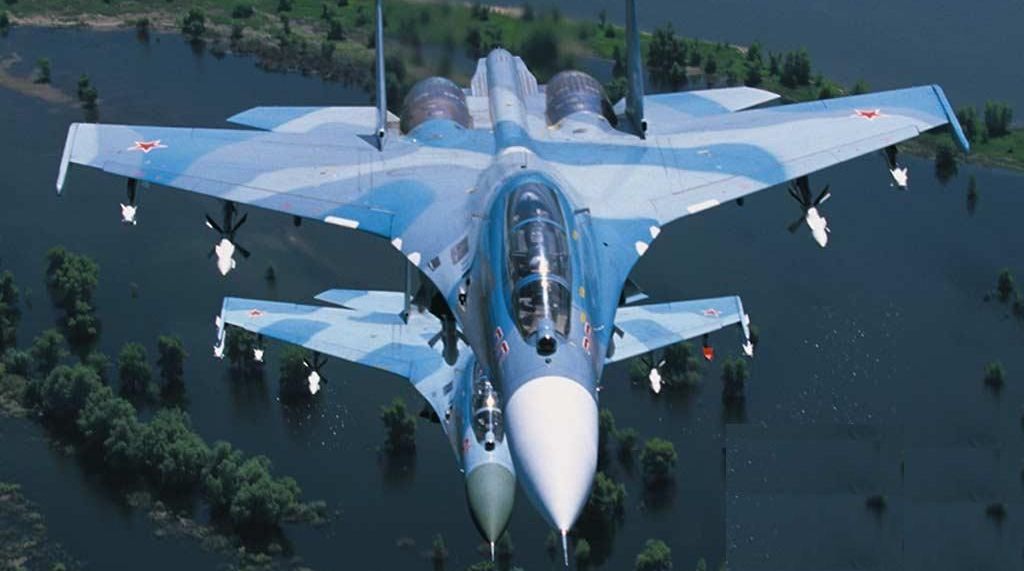
Vietnamese Air Superiority Fighters with R-27 and R-73 Air to Air Missiles.
The Vietnam People's Air Force is planning to upgrade its Su-27UB and Su-27SK Flanker heavyweight air superiority fighters to the Su-27UBK and Su-27SKM standards, to ensure their continued viability against modern threats. The Su-27SK is the most basic variant of the Soviet Flanker air superiority fighter, and orders to acquire these aircraft from Russia were placed in the 1990s. The Su-27UB is a twin seat variant of the same platform. Although their flight performances provide excellent capabilities for visual range combat, the platforms’ avionics, sensors and electronic warfare systems date back to the 1980s meaning they are increasingly outmatched by those of neighbouring states such as China’s J-11B and J-16 fighters. The Vietnam People's Air Force received its first enhanced Su-27UBK in late October 2019, after the fighter was sent to Factory No. 558 in Belarus for an overhaul. Belarus was reportedly chosen for the upgrades because of the very short overhaul time, although the country does not currently field any Flanker squadrons of its own. Belarus previously operated Su-27 fighters inherited from the Soviet Union, which have since been placed in storage, but the country has ordered a dozen more modern Su-30SM fighters from Russia which began deliveries in 2019.
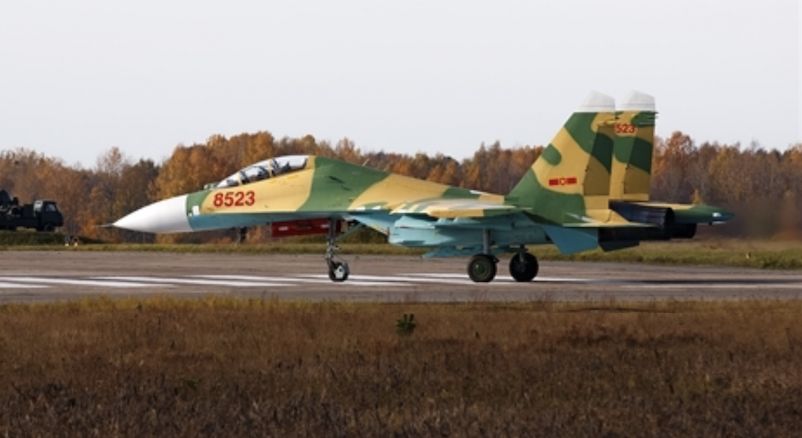
Vietnam is also reportedly considering upgrading its more recently acquired fleet of Su-30MK2 fighters to a more modern standard in Belarus, and while less capable than an ‘off the shelf’ Su-30SM from Russia, the latest iteration of the design, it benefits from many of the same capabilities. Belarus previously provided a similar upgrade for the Angolan Air Force’s Su-30 fleet. Vietnam is also looking to further modernise its fighter fleet through further acquisitions including a purchase of either F-16V or Su-30SM ‘4+ generation’ fighters in the near term and an acquisition of Su-57 next generation fighters at a later date. The first purchase of '4+ generation' fighters is expected to replace the Su-22 strike fighters currently in service, while the latter purchase for the Su-57 is likely intended to replace the Su-27 in frontline service. Even in their enhanced form, Vietnams Su-27s remain far inferior to more advanced variants of the Flanker design in Russian and Chinese service such as the Su-27SM2 and J-16, much less the latest variant the Su-35 which China currently deploys. Advantages of newer designs include lighter composite airframes, more powerful engines, new sensors such as the Irbis-E and the J-16's unnamed AESA radar, and new missiles such as the R-37M and PL-15 among others. Ultimately upgrading the Su-27 fighters currently in service represents a cost effective means of ensuring the Vietnamese fleet does not fall into obsolescence, but is still very far from bridging the qualitative disparity with neighbouring China - which fields state of the art next generation fighters of both domestic and Russian origin. China is also developing a highly ambitious derivative of the Flanker design which will surpass both the J-16 and the Su-35 in its performance under the J-11D program.
