
U.S. Announces Nuclear Powered Battleship to Compete with Russian Kirov Class
Military Watch Magazine Editorial Staff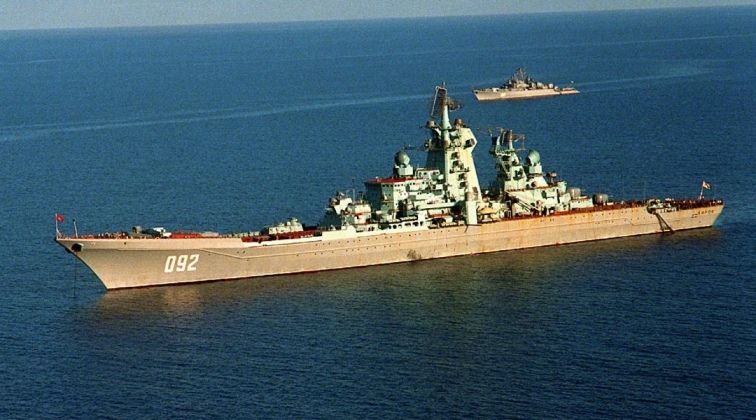
Russian Navy Kirov Class Nuclear Powered Cruiser
The U.S. Navy has announced the development of a nuclear powered surface combat ship, colloquially referred to as the Trump class battleship, which would mark a major shift for the service’s power projection. The United States has not laid down a nuclear powered surface combat ship in almost half a century, since the USS Arkansas was laid down in 1977, with the extreme production and sustainment costs of such ships having been considered prohibitive. The use of nuclear propulsion significantly increases the endurances of surface warships, as well as their ability to sustain their maximum speeds for longer periods, and to power onboard systems such as directed energy weapons and radars. They have nevertheless for decades been considered far from cost effective.
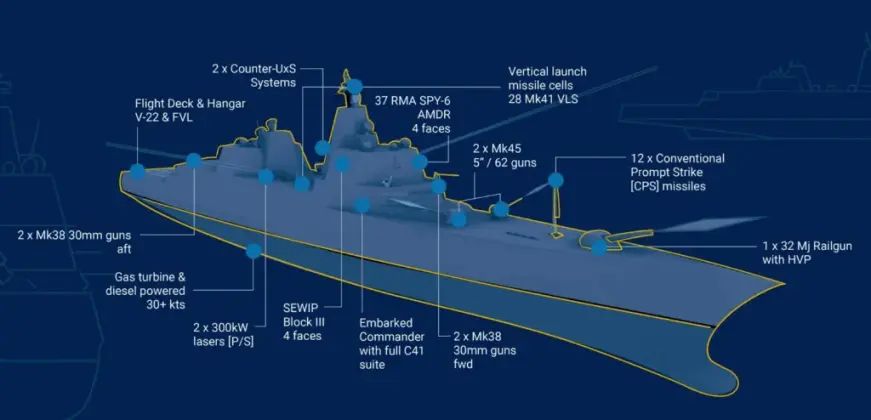
The Navy has outlined plans to procure 15 new nuclear powered surface combat ships, or approximately one every other year, between Fiscal Year 2028 and 2055, with the vessels estimated to cost $17 billion, making them the most expensive warships in history. This is more than what the Navy expects to spend on each of the next three Gerald Ford class nuclear powered aircraft carriers, which have projected unit costs of approximately $13-15 billion. The additional of nuclear propulsion systems is considered a primary contributor to both procurement and lifetime costs. Announcing the new program, the Navy’s shipbuilding program stated: “Our Fleet deserves and our national security requires the most comprehensive capability a surface combatant can provide, not just what we can make do with tradeoffs. The nuclear-powered Battleship is designed to provide the Fleet with a significant increase in combat power by longer endurance, higher speed, and accommodating advanced weapon systems required for modern warfare.”
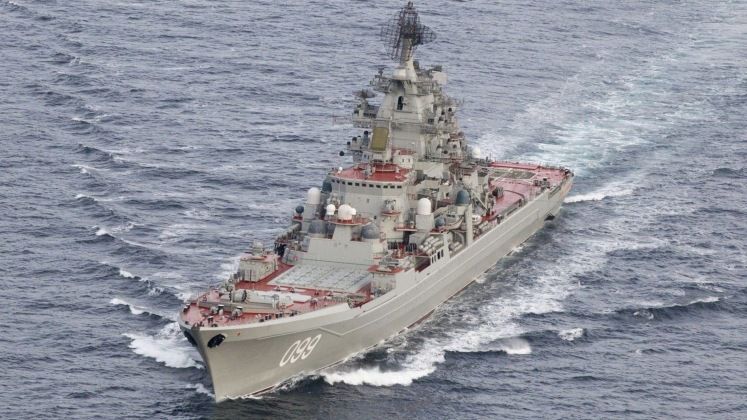
The only nuclear powered surface combat ships in the world are the Russian Navy’s Soviet-built Kirov class cruisers, two of which are currently in service, which each displace approximately 28,000 tons making them approximately three times the size of U.S. Navy Arleigh Burke class destroyers. The Russian Navy gave confirmation in the final week of July that the first of these ships, the Admiral Nakhimov, had been re-floated after over a decade of refurbishment and modernisation. When modernised, the ships integrate an arsenal of 80 cruise missiles reported to include both land attack missiles such as the 3M14T Kalibr, which can be used to launch precision strikes on ground targets up to 2500 kilometres away, as well as the anti-ship missiles including the new Zircon which can achieve Mach 9 speeds. The Kirov class is currently the world’s most heavily armed type of surface combatant, and each integrating 96 launch cells for carriage of long range surface-to-air missiles.
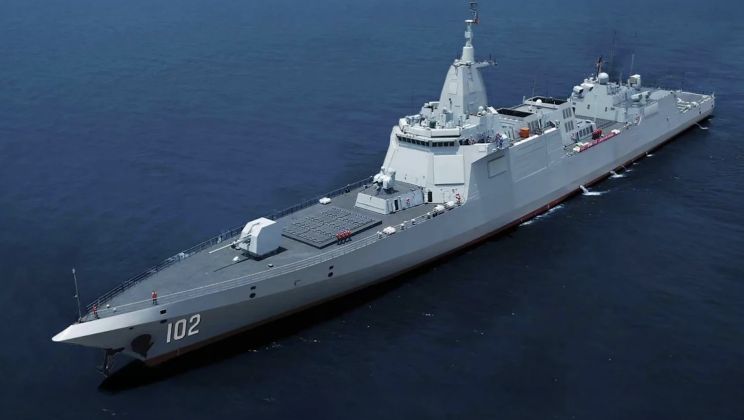
The U.S. Navy’s surface fleet has faced an increasingly unfavourable balance of power, with the Chinese Type 055 class destroyer considered to have very significant performance advantages in all areas other than ballistic missile defence, while being both larger and considerably more modern. The Navy in January 2022 released details of a possible configuration for a next generation destroyer, which is currently being developed under the DDG(X) program. Cuts to the Zumwalt class stealth destroyer program from 32 to three ships, due to significant performance issues and cost overruns, has limited the Navy’s ability to keep up with Chinese advances, while the age of the Arleigh Burke class destroyers the Navy currently relies on has limited their ability to continue receiving upgrades and enhancements. The announcement of a new nuclear powered cruiser program has raised questions regarding whether it may compete with the urgently needed DDG(X) program for funding.
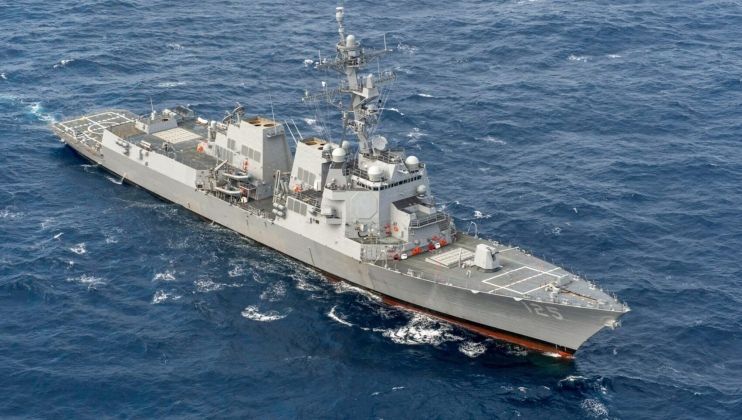
While China was confirmed in late 2025 to be constructing its first nuclear powered aircraft carrier, there have been no indications that it will produce nuclear powered surface combat ships. There have meanwhile been indications that the Russian Defence Ministry is planning to retire one of its Kirov class ships, due to the high costs of modernising it and its high sustainment costs. As a result, the U.S. Navy is positioned to be the only operator of nuclear powered surface combat ships other than a single Russian Kirov class cruiser. The immense difficulties the United States has had with post-Cold War era weapons programs, including the Zumwalt class destroyer, Littoral Combat Ship, and Gerald Ford class supercarrier, have raised questions regarding its ability to develop even the DDG(X) in an acceptable timeframe and cost effectively, and much moreso a larger nuclear powered combat ship. The cost effectiveness of building combat ships costing over $15 billion has also been seriously questioned, with the concentration of immense value in a single vessel providing adversaries with opportunities to inflict enormous setbacks with a single missile or torpedo salvo.
