
U.S. Navy Announces Major Upgrade to Nuclear Missile Submarine Forces Facing China with New Colombia Class Ships
Military Watch Magazine Editorial Staff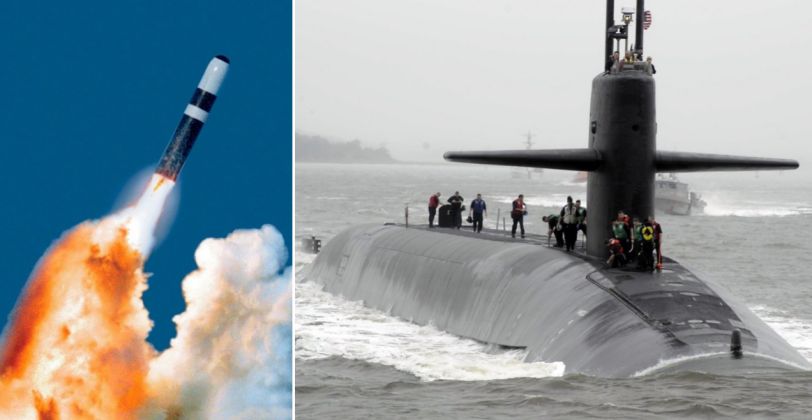
Trident Ballistic Missile Launch and Ohio Class Ballistic Missile Submarine
The U.S. Navy has announced plans to station up to eight modern Columbia class ballistic missile submarines at Naval Base Kitsap-Bangor in Washington State from 2032, providing a much improved strategic strike capability against targets in the Pacific, most notably China, but also North Korea and the Russian Far East. The U.S. Armed Forces publication Stars and Stripes has repotted that the deployment highlights broader efforts to preserve credible nuclear deterrence and undersea dominance in the Pacific, as the region remains central to strategic competition with China. Other Western analysts have referred to the decision as “one of the most strategically important shifts in U.S. naval nuclear force posture in decades.”
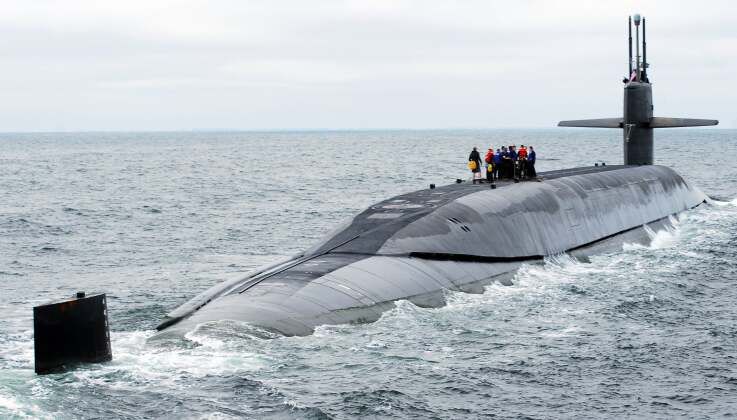
The Colombia class has been widely assessed to be the stealthiest submarine design in the Western world, with each displacing over 20,800 tons, and integrating 16 Trident II D5LE ballistic missiles. The ships were designed to replace the Navy’s ageing Ohio class ballistic missile submarines, which entered service between 1981 and 1997, with their capabilities having been widely assessed to represent the most significant advance in American strategic submarine design in over four decades. The Colombia class was designed from the outset to be quieter, more survivable, more reliable, and less expensive to operate over its lifetime than the Ohio class. The life-of-the-ship nuclear reactor core is one of the most notable innovations, and avoids the need for refuelling across its 42 year service life, significantly increasing operational availability while reducing maintenance requirements and lifetime costs.
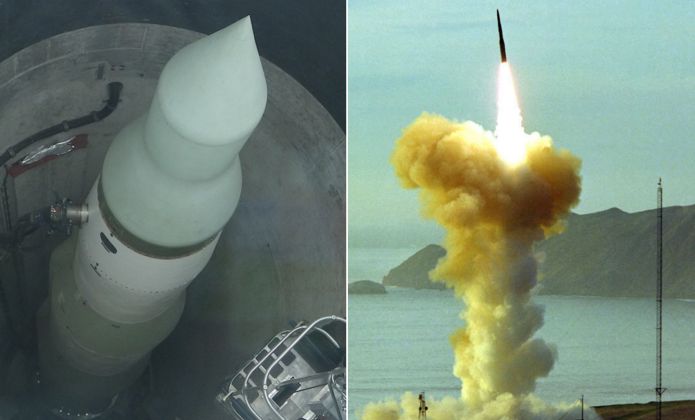
The Colombia class is the largest submarine design ever built for the U.S. Navy, with service entry currently projected for around 2031. While when the program was launched the first ship of the class was expected to enter service in the late 2020s, it has suffered from significant delays. Strategically, the Columbia class submarine is among the highest-priority acquisition programs in the U.S. Armed Forces, with the ships expected to be relied on to carry approximately 70 percent of deployed U.S. nuclear warheads during normal operations. The limited survivability of the ageing Ohio class fleet, and the severe deterioration of the land-based nuclear deterrent which depends on Minuteman III missiles that are over half a century old, have been major factors contributing to the importance of the new submarine program.
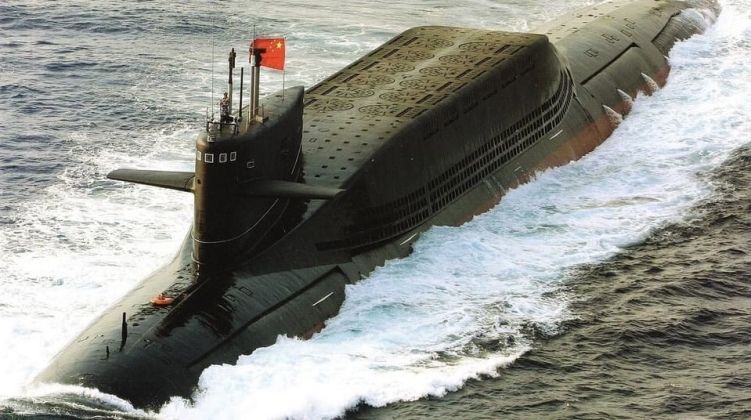
In parallel to the Colombia class program, China is developing the rival Type 096 class ballistic missile submarine to replace its currently serving Type 094 class ships, with the program expected to revolutionise the capabilities of the country’s maritime strategic deterrent. The most important improvement is expected to be acoustic stealth, with the new ships expected to incorporate extensive vibration isolation, raft-mounted machinery, improved hull design, and advanced noise-damping systems to significantly reduce their acoustic signatures. Reported Chinese advances in developing magnetic drive technologies and Rim Driven Propellers, which have reportedly been integrated onto the recently launched first attack submarine of the new Type 095 class, could provide the Type 096 class with fully peer level quieting capabilities to the Colombia class. Also operating in the Pacific, Russia is rapidly expanding its fleet of cutting edge Borei class ballistic missile submarines, while North Korea has made significant progress developing its first nuclear powered ballistic missile submarine with reported Russian support.
