
Continued Cost Overruns and Delays to Urgently Needed Sentinel ICBM Undercut U.S. Nuclear Triad
Military Watch Magazine Editorial Staff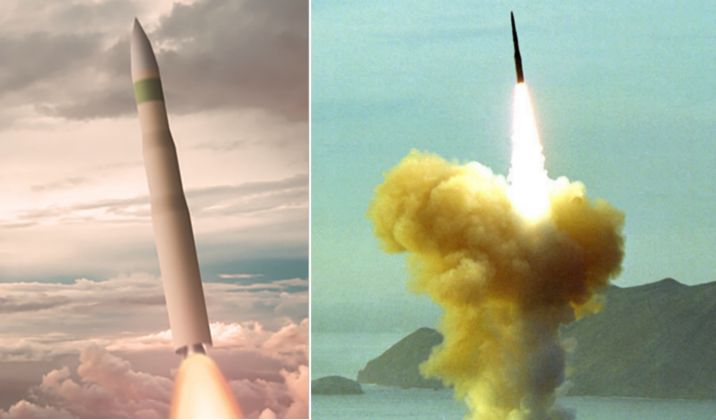
Sentinel (left) and Minuteman III ICBMs
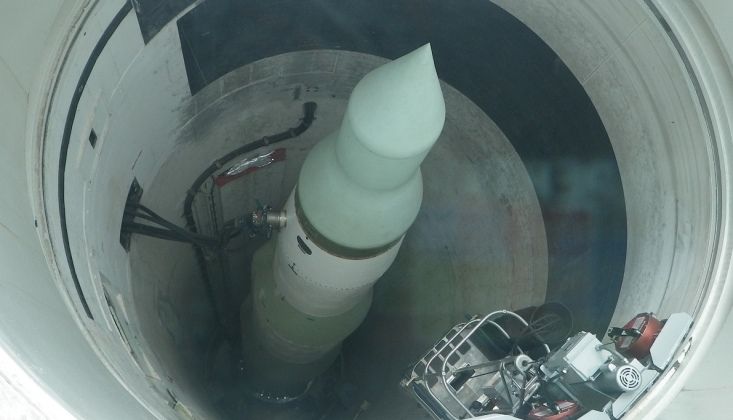
Commander of the U.S. Air Force Global Strike Command General Stephen Davis has revealed that the LGM-35 Sentinel intercontinental range ballistic missile (ICBM) program has remained in a restructuring phase, and continues to face significant challenges after nearly two years of comprehensive review. A clear timeline for the development of the new strategic missile has yet to be established, forcing the Air Force to further extend the service life of the LGM-30 Minuteman III missiles from the 1970s as the only means to maintain the land arm of the nuclear triad. Davis emphasised that the Sentinel is one of the largest programs currently undertaken by the Department of Defence, and the Air Force’s most important modernisation program, stressing the importance of maintaining existing missile capabilities until it becomes operational.

The U.S. Air Force awarded Northrop Grumman a $13.3 billion development contract in 2020 to replace more than 400 active Minuteman III ICBMs on a one-to-one basis, with an initial estimated total cost of approximately $100 billion. As engineering requirements expanded, however, the program costs have continued to rise, exceeding $130 billion by early 2024, triggering the Nunn-McCurdy Act and forcing Congress to demand a complete restructuring. In July 2025 the Pentagon revealed that the total program cost had reached $160 billion, and even after restructuring, it remained at $140 billion, more than 80 percent higher than the initial estimate of $77.7 billion. A significant contributor to increased costs is the new program’s inability to reuse existing silos housing Minuteman III ICBMs, meaning entirely new silos will need to be constructed. The Air Force considered alternative deployment options, including deployments in lakebeds or tunnels, but ultimately rejected them.
In June 2024 U.S. Air Force Colonel Charles Clegg was removed from his position as director of the Sentinel program, with the service citing a “loss of confidence” in his ability, and stating that he “did not follow organisational procedures.” His dismissal comes as the program has faced growing controversy, with the House Appropriations Committee having stated that it “was stunned to learn” of the massive increases in costs. Continued restructuring of the program increased uncertainty regarding the beginning of the flight testing phase, with an Air Force official having confirmed in June 2025 that while the missile’s first test flight, which was previously scheduled for 2026, it no longer had a confirmed date. The first test flight was previously scheduled for 2023-2024, but was delayed by over two years. The Government Accountability Office at the time estimated that the first flight test was scheduled for March 2028, placing it four years behind schedule, although this date now appears highly unlikely to be viable.
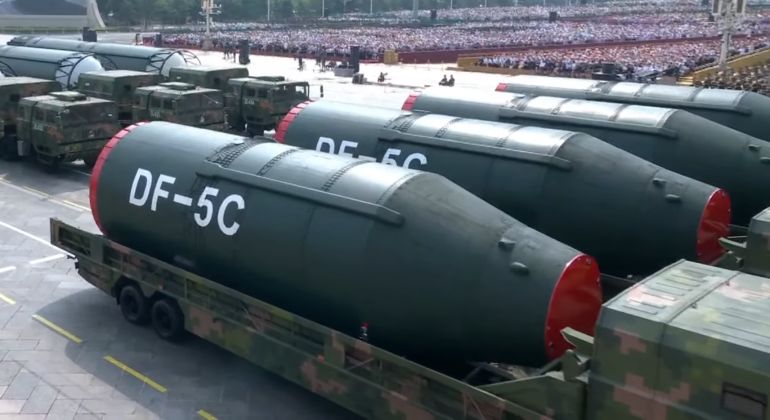
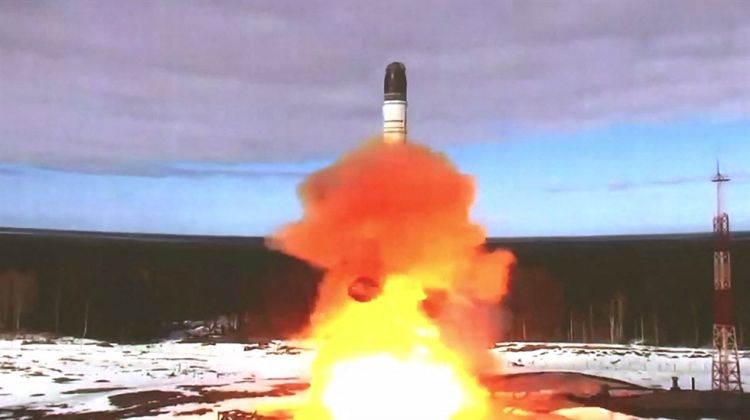
Cost overruns affecting the Sentinel program have surfaced as the Air Force contends with an increasingly strained budget, with two new bomber programs, continued procurement and sustainment of the F-35A, development of the F-47 fighter, and development of an AEW&C system and a more survivable type of tanker, being among the major investments seen as highly urgent. As a result of extreme delays and cost overruns affecting the Sentinel program, the Air Force was revealed in September 2025 in a Government Accountability Office reported to be evaluating the extreme option of extending the service life of the Minuteman III missile until 2050. The Minuteman III is the oldest class of ICBM in service worldwide by a margin of several decades, with China, Russia and North Korea having all continued to rapidly modernise their own ICBM arsenals. The former two have integrated hypersonic glide vehicles capable of intercontinental range strikes, while the Korean People’s Army did so on intermediate range missiles in 2024.
Serving since 1970, the Minuteman III arsenal has been pushed to its absolute limit for life extension, and is several decades past its originally intended service life. As previously observed by Commander of the United States Strategic Command Charles A. Richard: “You cannot life-extend Minuteman III… It is getting past the point of [where] it’s not cost-effective to life-extend Minuteman III. You’re quickly getting to the point [where] you can’t do it at all.” Richard warned that the missiles were so obsolete that their original designers were dead, and engineers no longer even had some of the necessary technical documentation. “That thing is so old that in some cases the [technical] drawings don’t exist anymore, or where we do have drawings, they’re like six generations behind the industry standard. And there’s not only [no one] working that can understand them – they’re not alive anymore,” he warned. The possibility has been raised that issues with the Sentinel program could lead the United States to abandon the third arm of its nuclear triad, and reallocate funding to strengthening the ballistic missile submarine and strategic bomber arsenals.
