
World’s Most Dangerous Attack Submarine: China’s New Type 095 Class Ships Set New Standard For Undersea Warfare
Military Watch Magazine Editorial Staff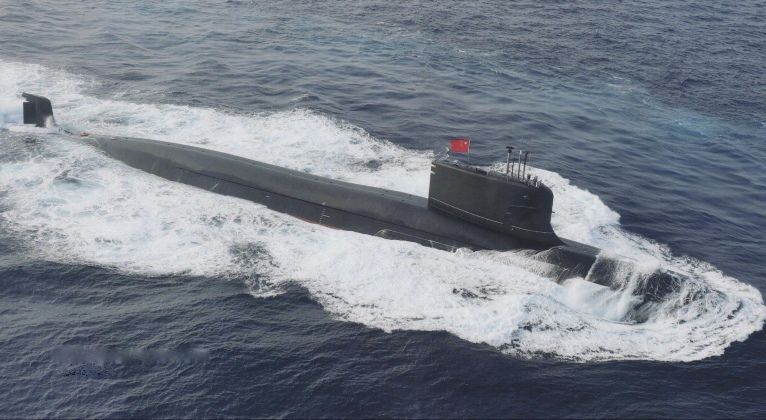
Chinese PLA Navy Type 093B Class Nuclear Powered Attack Submarine
A growing body of reports has indicated that the Bohai Shipyard in the Chinese city of Huludao has launched the first Type 095 class nuclear powered attack submarine, marking a major milestone on the modernisation of the People’s Liberation Army Navy as the first of a large fleet of planned third generation submarines. The Type 095 class is intended to succeed and significantly outperform the earlier Type 093 class ships that currently form the backbone of the nuclear powered combat fleet. Early reports and satellite imagery suggest that the new submarine class incorporates major advances in stealth, propulsion, sensors, and weapons systems, making it a peer level competitor to the new Seawolf class and Yasen-M class ships developed by the world leaders in the industry the United States and Russia.
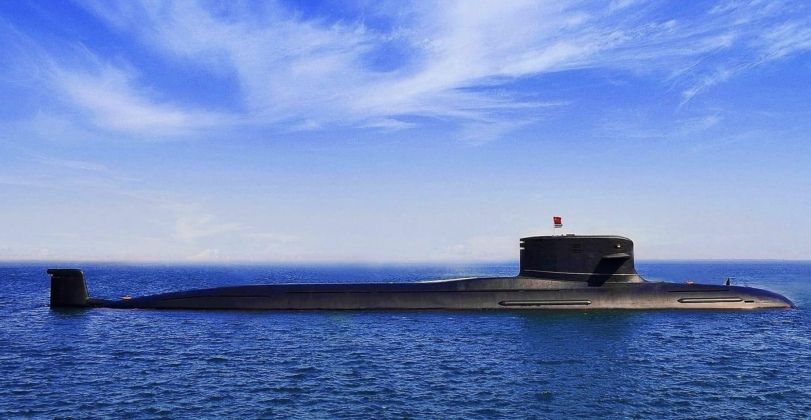
One of the most important improvements made to the Type 095 class compared to the previous Type 093 class is its dramatically reduced acoustic signature. The Type 093 program made very significant progress in this regard, as the incremental improvements made across the class’ 23 ship production run meant that later Type 093B variants were already very considerably quieter than the baseline Type 093 and the improved Type 093A variants. These improvements have led the U.S. Navy to perceive a much greater challenge from the capabilities of the Chinese submarine fleet, with improved quietness singled out as an area where performance had made particularly major advances. Technologies reported to have been integrated to make the Type 095 class ships quieter and more survivable include magnetic drive technologies and Rim Driven Propellers, which the first ship of the class is thought to be the first in the world to integrate.
The Type 095 has an entirely revised hull form, advanced vibration isolation, improved reactor quieting, and probable pump-jet propulsion, with recent satellite imagery indicating it uses a pump-jet propulsor rather than a conventional propeller. Pump-jets reduce cavitation and significantly lower underwater noise at high speeds, making detection far more difficult. The submarine also appears to feature an X-shaped stern control surface arrangement, marking the first known use of such a design on a Chinese nuclear submarine. The X-tail configuration improves manoeuvrability, especially in shallow waters and during complex evasive manoeuvres, while also contributing to hydrodynamic efficiency and reduced turbulence noise. It is also thought to use retractable bow planes integrated into the hull, rather than being mounted on the sail.
Recently commenting on the Type 095 program, former U.S. Navy officer Christopher Carlson observed: “The Type 095 will be a very quiet submarine, which will complicate the situation.” Senior researcher at the Heritage Foundation think tank Brent Sadler similarly warned that Chinese submarine technologies appeared to be making significant strides, making the ships more difficult to track. All that is known of the Type 095’s design indicates a strong emphasis on cleaner hydrodynamic shaping and stealth-oriented engineering. The ships are also though to integrate more sophisticated flank-array sonar systems, high- and low-frequency towed arrays, and improved passive acoustic detection systems, allowing them to detect enemy vessels at longer distances while remaining harder to detect itself. This optimises the ships to serve as escorts for carrier strike groups, which requires advanced situational awareness and long-range submarine-hunting capability, allowing the new vessels to complement the fast expanding capabilities of the Chinese carrier fleet.
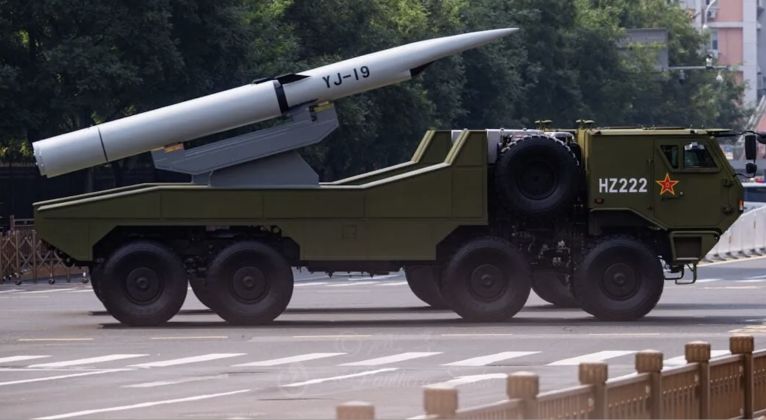
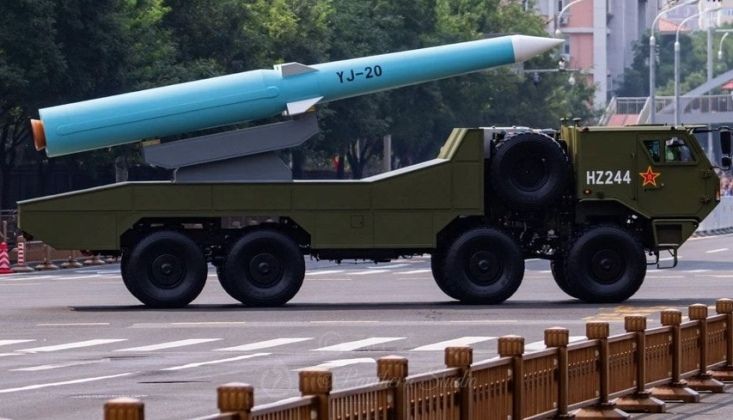
The Type 095 class’ capabilities have particularly significant implications due to both the scale on which they are projected to be built, and due to the major advances in weaponry already seen on the Type 093 class. The Type 093’s combination of YJ-20 hypersonic ballistic missiles and YJ-19 hypersonic cruise missiles as a primary armaments, alongside advanced torpedo types, is currently unrivalled, with these same weapons expected to be integrated onto the Type 095. The newer ships are estimated to be close to 50 percent larger at approximately 10,000 tons, compared to an estimated 6,700-7,000 tons for the Type 093 class, which is expected to allow for an armaments suite close to twice as large.
China in 2025 for the first time overtook the United States in the production of nuclear powered submarines, as U.S. industry has for years failed to address its major production bottlenecks. Multiple precedents indicate that production will further expand as a new generation of much more capable assets is brought into service. Nuclear powered submarines have remained one of the last types of military equipment where the capabilities of Chinese products lag behind those of the United States, with the Type 095 class program expected to mark a turning point in this regard that will further significantly shift the balance of power at sea in China’s favour. This would follow similar landmarks in a wide range of areas, from the service entry of the world’s first non-U.S. stealth fighters in the country in February 2017, to the launching of the first Type 055 class destroyer, which is widely considered the world’s most capable surface combat ship design, four months later. As has been the case for multiple high profile Chinese weapons programs, the Type 095 program has highly significant implications for a potential conflict in the Pacific.
