
U.S. Navy Commissions New Nuclear Powered Attack Submarine as Fleet Shortage Worsens
Military Watch Magazine Editorial Staff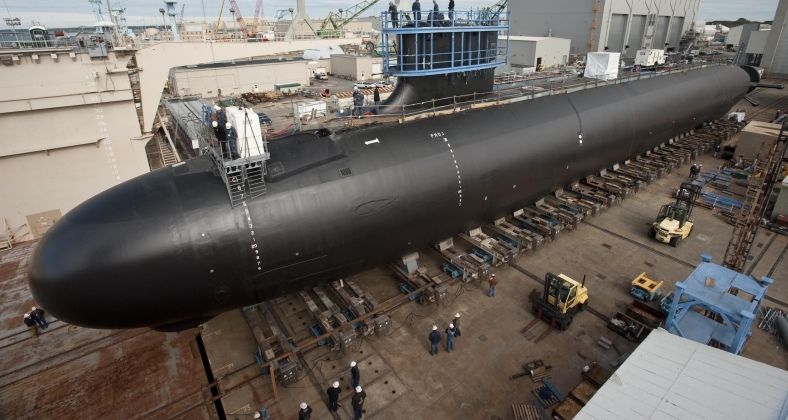
U.S. Navy Virginia Class Nuclear Powered Attack Submarine
The U.S. Navy has commissioned its newest Virginia class attack submarine, the USS Idaho, at Naval Submarine Base New London, which is the 26th vessel of its class. Costing an estimated $4.4 billion each, Virginia class ships currently form the backbone of the Navy’s attack fleet, with the service planning to field 66 ships, of which 43 have been ordered, of which the 27th to 34th are currently under construction. The relatively light ships integrate only 12 vertical launch cells each for cruise missiles, compared to the 154 cells on heavier Ohio class attack submarines. Virginia class ships instead rely on 25 torpedo tubes as their primary armament, which can fire either Mk-48 torpedoes or UGM-84 Harpoon subsonic anti-ship missiles.
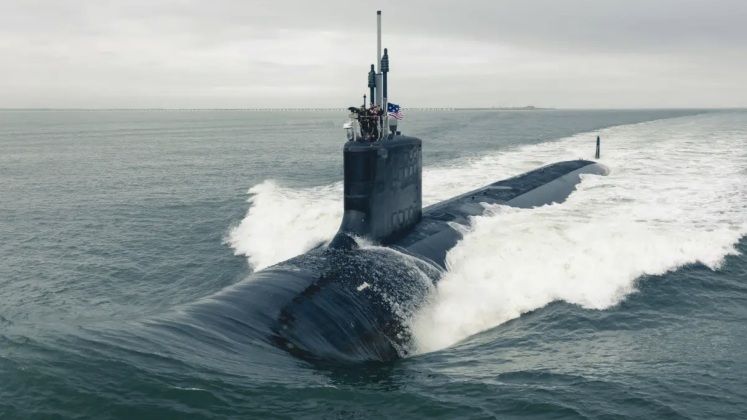
While the armament of Virginia class submarines is relatively unremarkable, it was confirmed in late 2024 that a new class of nuclear-tipped cruise missile would be developed for the warships, allowing them to contribute to the global deterrence posture with capabilities complementing those of the Navy’s ballistic missile submarines, and to launch tactical nuclear strikes. The Navy’s attack submarine fleet has been increasingly heavily concentrated in the Pacific theatre as part of the Pivot to Asia initiative, which is intended to ensure the perpetuation of a Western dominated balance of power in East Asia in the face of mounting challenges from China and increasingly from North Korea as well. The Navy in November 2024 begun its first permanent forward deployment of a Virginia class submarine to Guam as part of this pivot.
Commenting on the decision to station Virginia class submarines on Guam, the Navy announced in 2024: “The security environment in the Indo-Pacific requires that the U.S. Navy station the most capable units forward. This posture allows flexibility for maritime and joint force operations, with forward-deployed units ready to rapidly respond to deter aggression and promote a peaceful and prosperous Indo-Pacific region.” Lieutenant Commander Rick Moore, a Submarine Force Pacific spokesman, elaborated that the ship “adds a next-generation attack submarine with advanced capabilities to the forward-deployed naval force.” Virginia class ships are highly capable of carrying out surveillance, and intelligence gathering, delivering and recovering special operations forces, laying mines, conduct anti-submarine warfare, alongside their limited land attack capabilities.
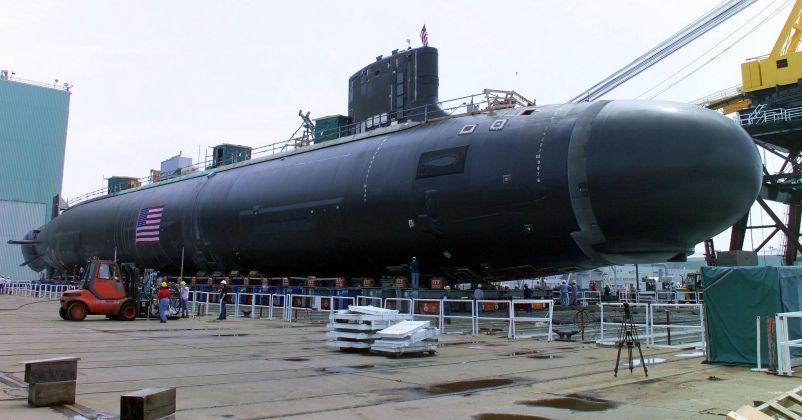
In 2020 then-Secretary of Defence Mark Esper announced that the Pentagon plans to expand the U.S. Navy‘s attack submarine fleet to up to 80 vessels by 2045, under part of a drastic and much broader fleet expansion plan named Battle Force 45. "Under our proposal, Battle Force 45 will posses the following characteristics: first, a larger and more capable submarine force... The study reached a clear consensus on the need to rapidly increase [inaudible] of attack submarines, the most survivable strike platform in a future great power conflict, to the range of 70 to 80 in the fleet,” he stated at the time. Esper added that the Navy should, at the very least, quickly begin building three new Virginia class submarines per year. There were at the time 19 Virginia class attack submarines in service. Assessments of the U.S. nuclear powered submarine production capacity have consistently been highly pessimistic, with China assessed to have overtaken the United States, while its ships have demonstrated growing performance advantages, despite much lower levels of investment in the fleet.
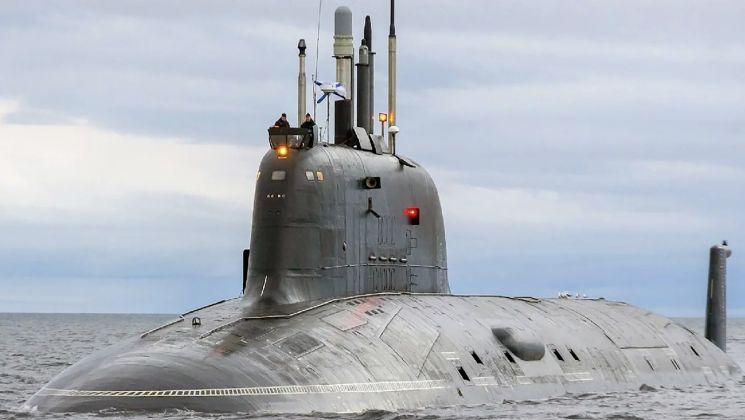
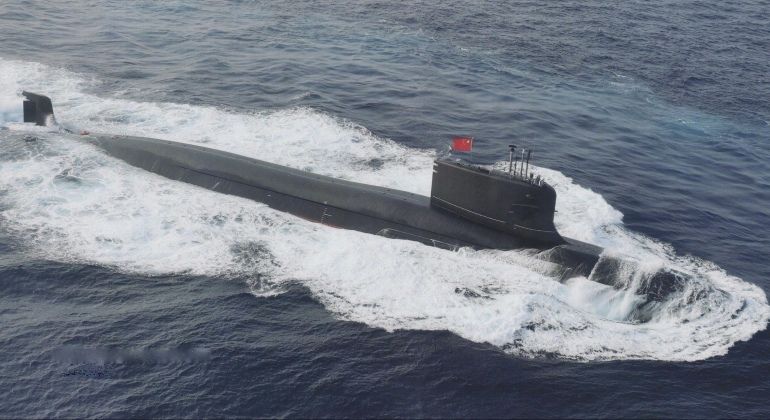
The result of major shortfalls in submarine production capacity in the United States has been a much smaller fleet than the U.S. Navy intended to operate. China appears poised to lead the world in bringing a new generation of nuclear powered attack submarines in to service, beginning construction of the first Type 095 class ship, which will introduce a wide range of new features such as magnetic drive technologies and Rim Driven Propellers not seen abroad. While China’s submarine fleet is poised to lead the world by a growing margin in terms of size and performance, the U.S. also faces major challenges from the Russian fleet built around the Yasen-M class ships, and an emerging challenge from North Korea which is poised to field its first nuclear powered attack submarine before 2030. The Korean program is likely to have benefitted from Chinese and Russian support and technology transfers.
