
U.S. Mainland in the Crosshairs: North Korea to Unveil New Solid Fuelled Strategic Ballistic Missiles - Reports
Military Watch Magazine Editorial Staff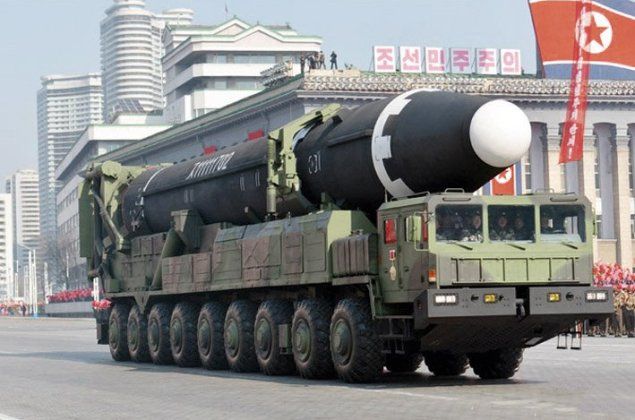
Korean Hwasong-15 Intercontinental Range Ballistic Missile
North Korea last carried out a parade displaying strategic ballistic missiles in February 2018, following a year of major tests and the unveiling of three entirely new platforms including the Hwasong-12 ‘Guam Killer’ and the Hwasong-14 and 15 intercontinental range platforms. The East Asian state carried out its last test firing of a strategic ballistic missile in November 2017, the Hwasong-15, which for the first time demonstrated the range required to strike targets across the entire United States mainland with nuclear warheads. The subsequent freeze in testing came as a result of both satisfaction with the existing deterrence capability and a willingness to pursue detente with its longstanding adversary the United States from a position of strength. Frustration with the slow pace of negotiations, and with U.S. demands for Korea’s unilateral disarmament in February 2019, led Pyongyang to resume testing of ballistic missiles, albeit short ranged tactical ones, from April that year. With the Hwasong-15 and other strategic ballistic missile designs having been under serial production for well over two years, the possibility is significant that Pyongyang intends to replace at least some of these in production with newer and more sophisticated designs.
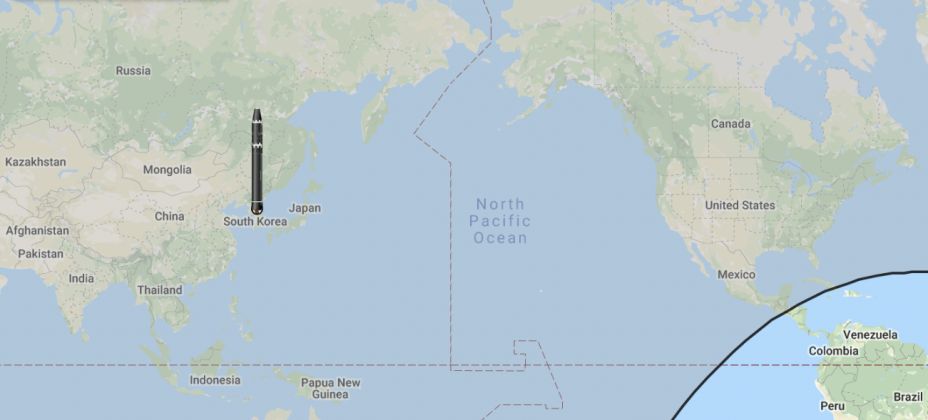
South Korea’s Defence Ministry has indicated that North Korea is likely to showcase new strategic weapons to mark the 75th anniversary of the rule of the Korean Workers’ Party - which has been in power for longer than any other party in the world. Defence Minister Suh Wook told the National Assembly’s defence committee to this effect: “We believe the North will mobilise various strategic weapons as a show of force,” although it is considered unlikely the any of these new weapons could be flight tested before the U.S. presidential election on November 3rd. New missiles are expected to use solid fuel composites, which allow them to be stored fully fuelled and thereby reduce the launch time considerably. Harry J. Kazianis, senior director for Korean Studies at the Centre for the National Interest, stated regarding this development: “A senior White House official, as well as multiple U.S. intelligence officials I have spoken with ... strongly suspect Pyongyang will unveil a solid-fuelled ICBM at its October 10 military parade.” All modern Korean tactical missile types currently use solid fuel composites, as do its submarine launched Pukkuksong series of missiles and their land based derivative the Pukkuksong-2. The use of solid fuel on an intercontinental range ballistic missile, however, would strengthen the Korean strategic deterrent considerably.
