
U.S. Forward Deploys Second Group of F-22 Stealth Fighters Near Iran as Military Buildup Escalates
Military Watch Magazine Editorial Staff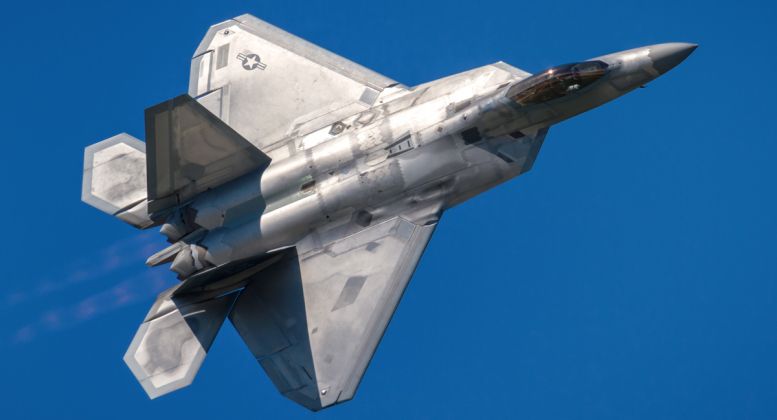
U.S. Air Force F-22 Fighter
USAF
The U.S. Air Force has reportedly deployed a second group of F-22 Raptor fifth generation fighters to forward bases in the Middle East, as part of a large scale military buildup in the region aimed at Iran. The Raptors were observed transiting through RAF Mildenhall in the United Kingdom on February 20. This closely follows the deployment of newer Air Force F-35A and Marine Corps F-35C fifth generation fighters to the region, and the British Armed Forces’ deployment of F-35B fighters to Cyprus where they will also be in range to support operations. Other deployments to the region have included F-15E strike fighters and EA-18G electronic attack jets, which have been stationed at Muwaffaq Salti Air Base in Jordan, and F-16CJ air defence suppression aircraft which have deployed to an unknown location in the region.
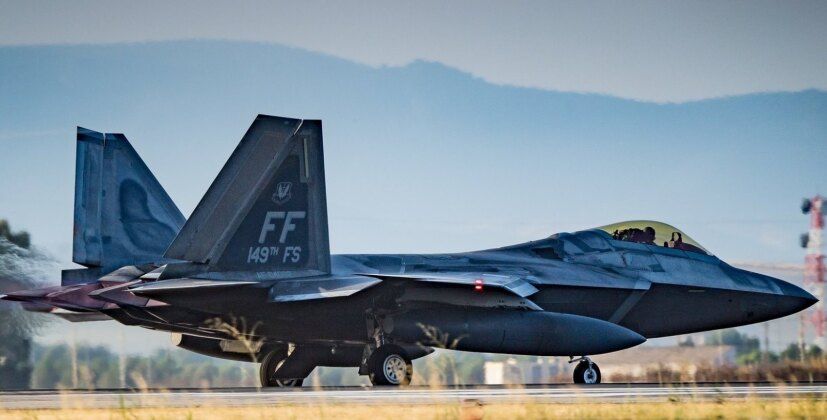
The deployment of F-22s to the Middle East closely coincides with the arrival of the U.S. Navy supercarrier USS Gerald Ford and its strike group in the Eastern Mediterranean, with range of operations against Iran, after the warship was diverted to support the military buildup. While aircraft carriers are protected by the AEGIS systems of accompanying Arleigh Burke class destroyers, of which 16 are reported to now be in the Middle East, major bases have been fortified against Iranian missiles attacks with deployments of Patriot and THAAD missile defence systems. The viability of these air defences against Iranian missile attacks has been seriously questioned, however.
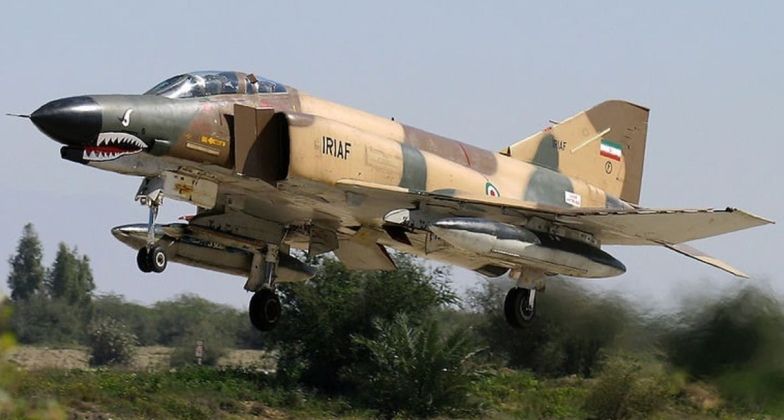
The F-22 was developed as a dedicated air-dominance platform, combining a kinematic performance that far exceeds those of other Western fighter types, with advanced stealth capabilities. Although the fighter first flew in 1990, it only entered service in December 2005 due to major development delays, with its avionics by then already considered out of date. Using an ageing radar and data links, the F-22’s avionics are today very far from cutting edge, leaving it at a disadvantage against even some of the more advanced ‘4+ generation’ fighters such as the J-16 in the Pacific. Nevertheless, Iran’s total lack of modern fighter aircraft, and fielding of a predominantly Vietnam War era fleet comprised primarily of F-4 and F-5 fighters, still leaves its fleet at an overwhelming disadvantage against the F-22 or any other post-Cold War fighter type. With the F-22 scheduled for an early retirement, and having never seen air-to-air combat against manned targets, an air campaign against Iran may come to represent the only high intensity combat the type is ever involved in.
