
U.S. Equipping its Most Capable Fighters for Air-to-Ground Operations for the First Time
Military Watch Magazine Editorial Staff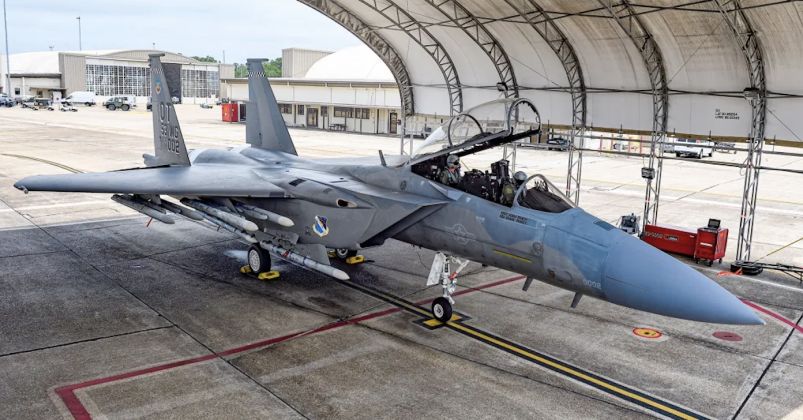
F-15EX Fighter
Recent images have confirmed that the U.S. Air Force is beginning to equip its newest fighter type, the F-15EX Eagle II, for air-to-ground operations, and successfully conducted live releases of precision-guided air-to-ground weapons. Tests are intended to validate strike capabilities while maintaining the aircraft’s primary air dominance role, with their initiation representing a major landmark in the new fighter type’s service history. Although the F-15EX entered U.S. service as the successor to the F-15C air superiority fighter, it is a derivative of the F-15E Strike Eagle which was developed as an adaptation of the design for air-to-ground missions. As a result, the aircraft was designed from the outset with multirole capabilities, although shortages of long range air superiority fighters led the Air Force to focus its operational employment almost exclusively on the air-to-air mission.
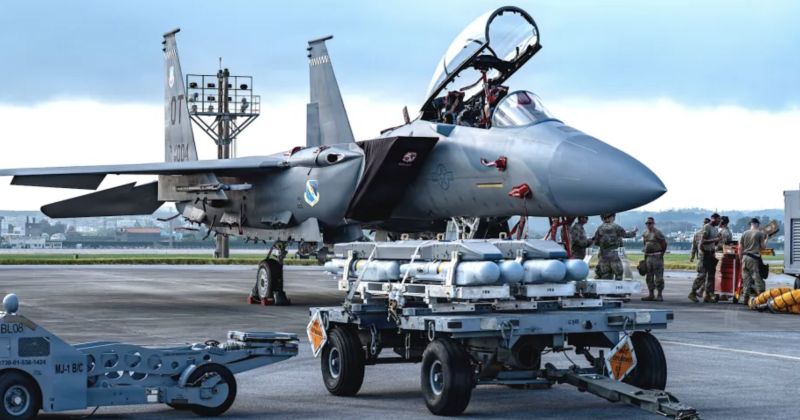
The decision to begin training pilots and equipping fighters for air-to-ground missions is likely a response to confirmation that the Air Force will significantly expand procurements of the F-15EX. The Air Force’s budget for the Fiscal Year 2027 was confirmed in April to have increased planned procurements of F-15EX fighters to 267 aircraft, up from a previously planned 129. This will ensure that there are enough of the aircraft to operate in roles other than air defence duties on the U.S. mainland and a permanent foreign deployment near the Taiwan Strait on Okinawa, which are the roles in which the fighters will directly replace the F-15C/D.
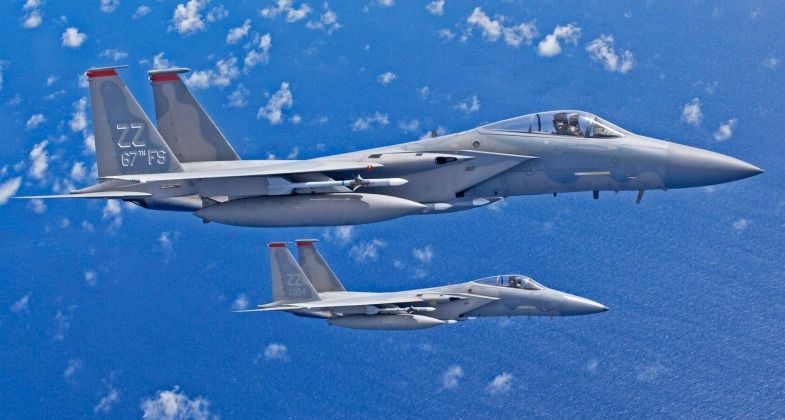
An Air Force spokesperson in April commented that procurements are intended to “begin to recapitalise the aging F-15E fleet,” expanding on the previous primary rationale for procurements which was to replace the even older F-15C/D fleet. This indicates that approximately half of the planned aircraft will be configured largely for air-to-ground operations. The importance attributed to the F-15 fleet grew significantly from April 2024, and again from March 2026, as they played central roles in U.S.-led military campaigns against Iran. This contrasted sharply with the limited utility of the new F-35 fifth generation fighter, and moreso the problematic F-22 that was initially intended to replace the F-15.
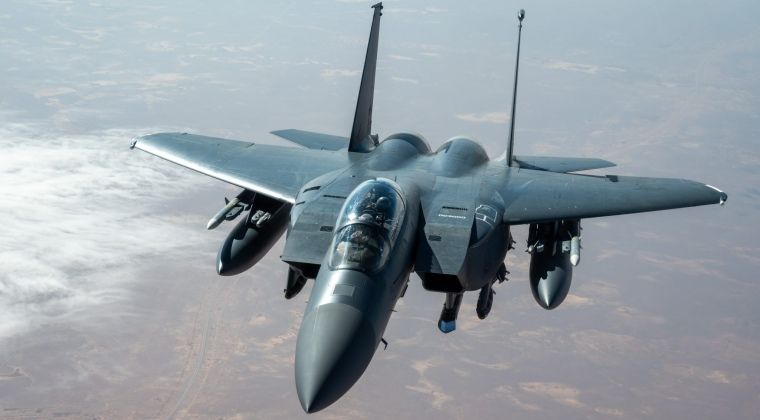
The F-15EX possesses significant advantages as a strike platform, and unlike the F-15C/D and F-15E, the new fighter incorporates a digital fly-by-wire flight control system that has increased its weapons carrying capacity and revolutionised its flight performance. It further integrates powerful AN/APG-82(V)1 Active Electronically Scanned Array (AESA) radar, the Eagle Passive Active Warning Survivability System (EPAWSS), advanced mission computers, and an open mission systems architecture that allows relatively rapid integration of new weapons and software. These upgrades make it substantially more capable than earlier F-15 variants, while providing room for future growth.
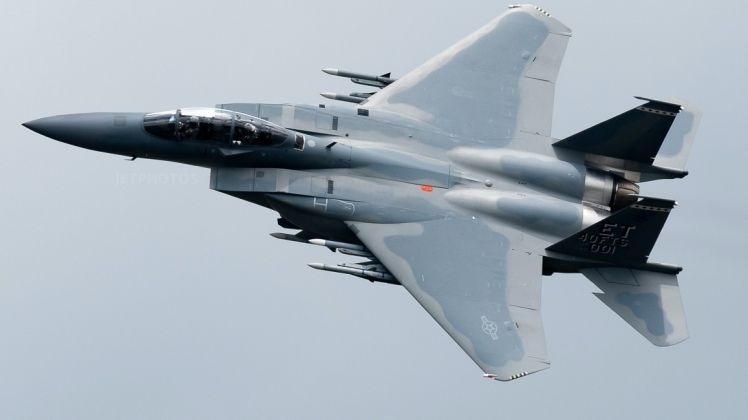
With the United States’ ongoing conflict with Iran having highlighted the vulnerability of shorter ranged fighter types to the destruction of air bases near hostile territory, F-15s have been relied on particularly heavily for strike operations due to their long ranges, leading the type to be highly prized. One of the aircraft’s greatest strengths is its exceptional payload capacity, with the F-15EX able carry more weapons than any other Western fighter type by a considerable margin, including up to 12 air-to-air missiles in a standard configuration and considerably larger loads when equipped for strike missions. Its large external payload stations also allow it to carry oversized standoff weapons that cannot easily be accommodated by stealth aircraft such as the F-35. This has increasingly positioned the fighter as a “missile truck” capable of launching long-range weapons while remaining outside the most heavily defended airspace.
