
New Longest Ranged U.S. Fighter Continues Evaluations: F-15EX Poised to Deploy on China’s Doorstep
Military Watch Magazine Editorial Staff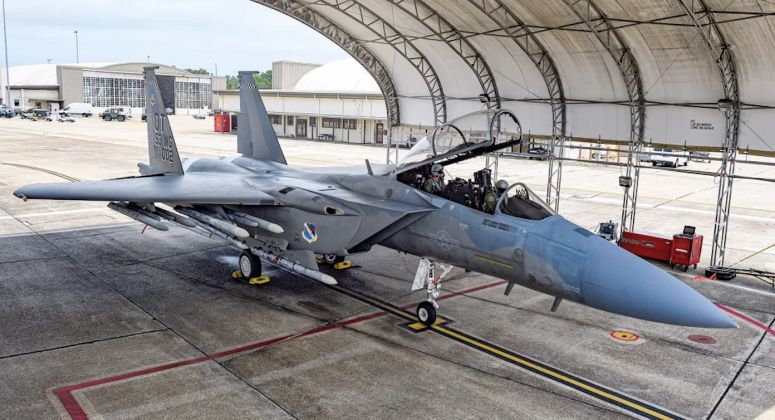
F-15EX Fighter
USAF
The U.S. Air Force is continuing developmental and operational testing of its newest fighter type, the F-15EX Eagle II, as the 96th Test Wing and 53rd Wing focus on next-generation survivability systems, radar performance, sensor integration, and networking capabilities. Air Force testers are also holding focus groups with operational maintainers to revise and correct technical orders used for servicing the new fighter. Testing has gained considerably urgency as the F-15EX is expected to be relied on not only for the defence of the U.S. mainland, but also for the closest deployment to Chinese territory at Kadena Air Base in Japan, adjacent to the Taiwan Strait which is a leading potential hotspot for hostilities.
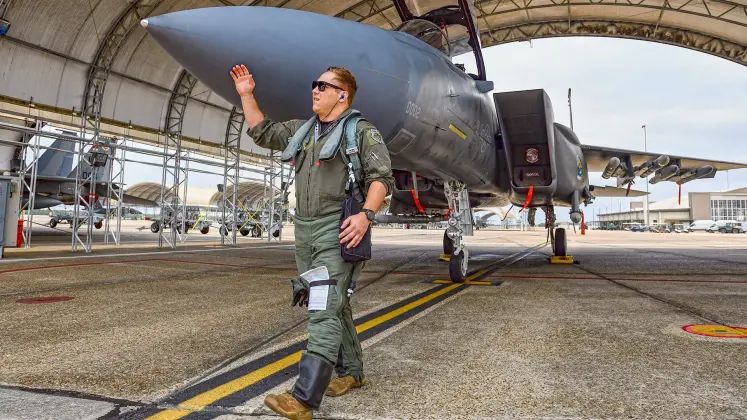
The Air Force first deployed F-15EX fighters to Kadena Air Base in July 2025, albeit only to “conduct integration and familiarisation training with local units,” with the aircraft deployed under the 85th Test and Evaluation Squadron from Eglin Air Force Base. The facility previously hosted 48 F-15C/D air superiority fighters on permanent deployment, which served far longer than expected due to the shortcomings of the F-22 program which prevented it from providing a viable replacement. After it was announced in October 2022 that the F-15C/D fighters would be withdrawn after 44 years stationed there, it was confirmed in July 2024 that 36 F-15EX fighters would be permanently deployed to replace them. The Air Force has struggled with serious shortages of the new F-15s, due to significant delays to production, with the aircraft remaining in high demand both for deployments to the Pacific, and to serve in the Air National Guard.
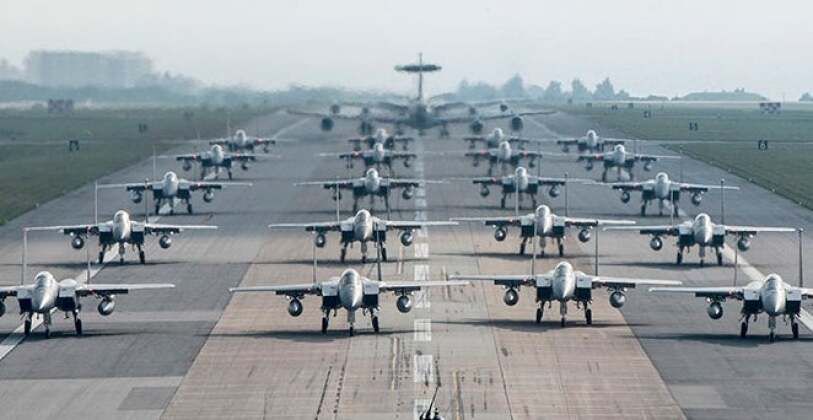
The Air Force significantly increased procurements of F-15EX fighter aircraft under the Fiscal Year 2026 budget, laying out plans to increase the intended fleet size from 98 to 129 of the aircraft. Alongside a halving of procurements of F-35A fifth generation fighters, and a surge in funding for developing the sixth generation F-47, the budget proposed setting aside $3 billion for the F-15EX. Despite the F-15EX’s priority status, supply chain issues have contributed to delays in bringing more of the aircraft into service. The importance attributed to the F-15 fleet has grown significantly in March 2026, as the U.S.-led military campaign against Iran highlighted the vulnerability of shorter ranged fighters to the destruction of air bases near hostile territory within the first hours and days of hostilities breaking out, leading F-15E fighters to be relied on particularly heavily for operations.
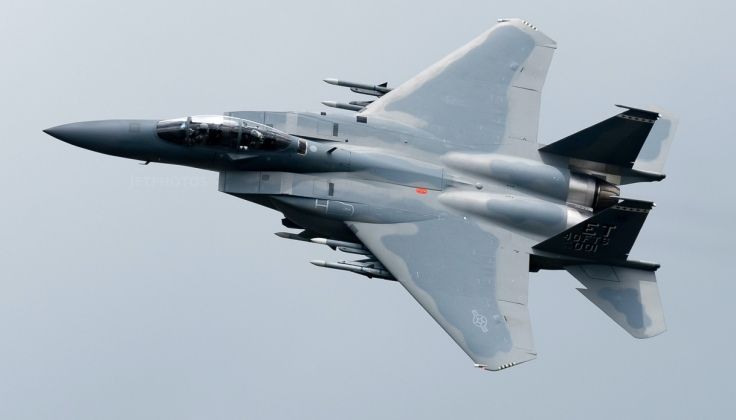
Senior Air Force officers have long advocated expanded F-15EX orders, with commander of the Air National Guard Lieutenant General Michael Loh having observed in 2022 that although “some people are still looking at this as a 1970s-technology aircraft,” incremental modernisation had made it cutting edge. Notable examples he highlighted among its avionics systems included its open mission system architecture, electronic warfare suite and the AN/APG-82 radar. The F-15 is the only fighter in production in the Western world from a comparable weight range to larger Russian and Chinese aircraft such as the Su-30, J-16 and J-20, with its endurance, weapons carrying capacity, and radar size, all being in a league entirely of their own in the Western world.
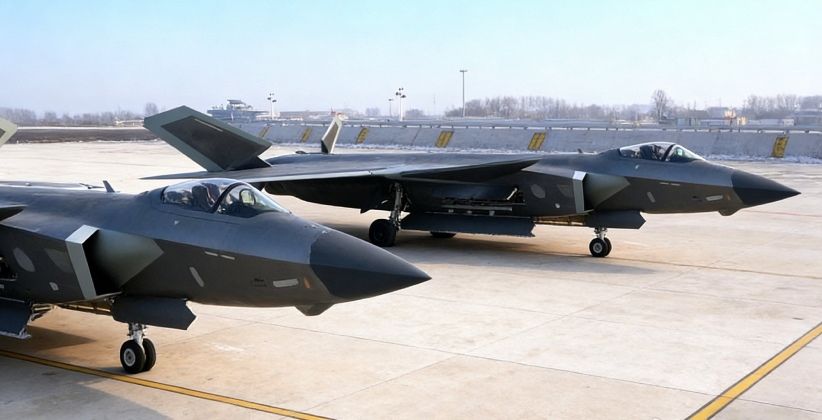
In October 2026 defence contractor Raytheon confirmed it had developed a new primary radar, the APG-82(V)X, which uses “cutting-edge gallium nitride (GaN) technology” to further bolster the capabilities of the F-15 fleet. Procurement of the new radar for later F-15EX variants is expected. The U.S. Armed Forces’ continued reliance on the F-15 as its sole heavyweight and long range fighter type is largely a result of post-Cold War decline of the country’s defence sector, which prevented the F-22 from being developed into a viable successor, or other similarly heavy high endurance fighters from being developed with fifth generation capabilities. The F-15EX is considered far outmatched by new Chinese J-20 fifth generation fighters, which are similarly large but benefit from much longer ranges and cutting edge stealth capabilities, and already integrate gallium nitride radars. China is set to introduce its first sixth generation fighters into service in the early 2030s, meaning they could begin operating in the region not long after the last ‘4+ generation’ F-15EX fighters arrive at Kadena Air Base.
