
China’s Top Air Superiority Fighter Just Beat the U.S. F-35 to Integrate a Next Generation Gallium Nitride Radar
Military Watch Magazine Editorial Staff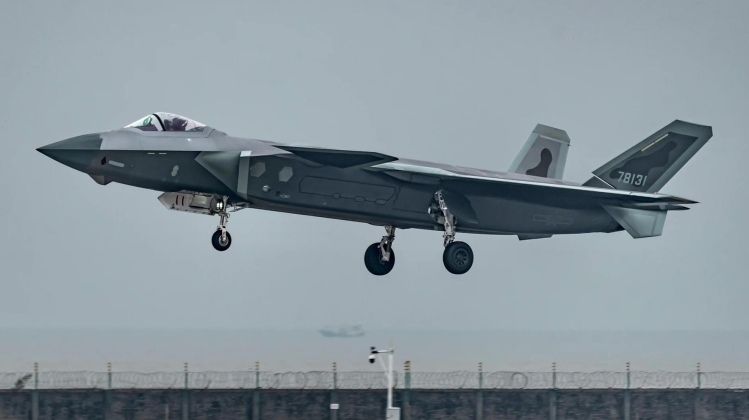
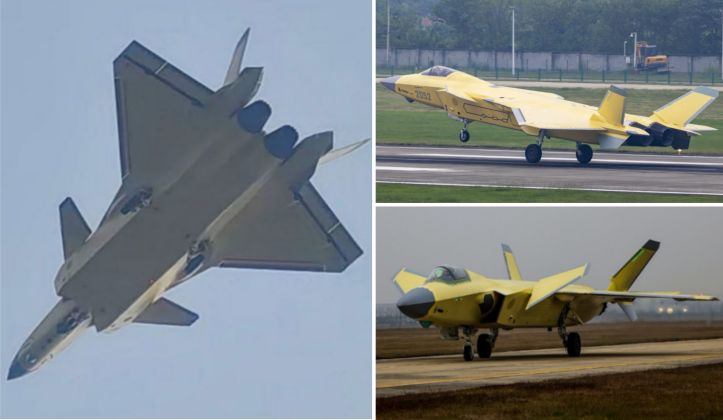
Chinese J-20 Fifth Generation Fighter From the First Serial Production Batch in 2016
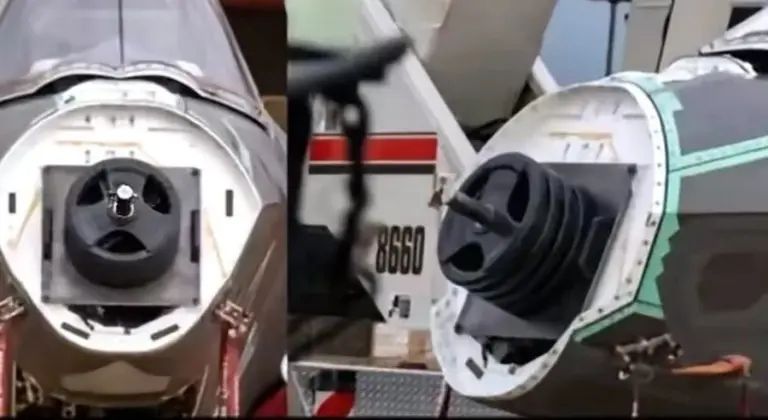
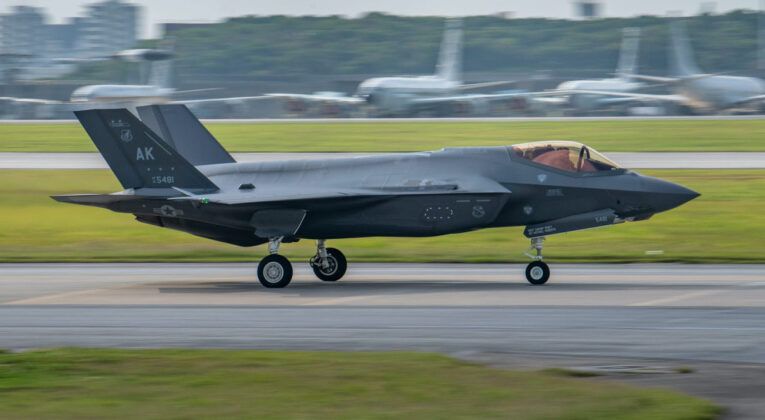
New footage of J-20A fifth generation fighters serving under the Chinese People’s Liberation Army Southern Theatre Command has shown ten of the aircraft with new radar domes that clearly differ from those of older production models, with analysts observing a high likelihood that this is an indicator of a radar upgrade. This has occurred as the U.S. Armed Forces and defence sector have continued to struggle to integrate the new AN/APG-85 radar onto the country’s own primary fighter the F-35, after production of the preceding AN/APG-81 was cut short primarily due to its perceived insufficiency to stay up to date with pacing Chinese challenges to U.S. air dominance. The radar’s developer Northrop Grumman described it as one which would “help ensure air superiority,” providing an indication as to what primary arguments had been made to justify the program. This led analysts to widely conclude that the challenge to air superiority posed by the J-20 program was a primary factor stimulating investment in the new radar program.
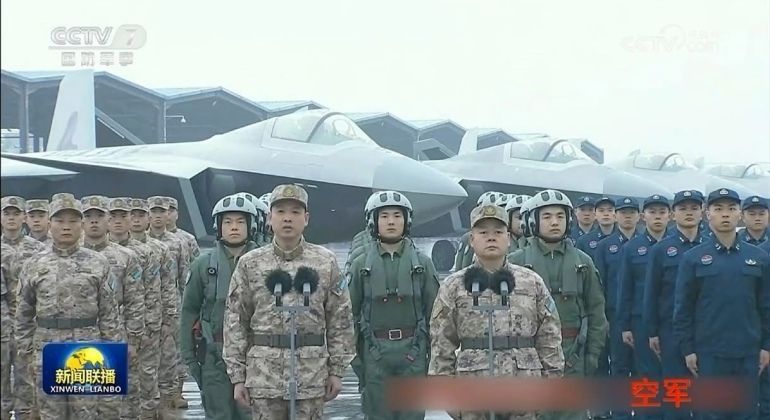
The AN/APG-85 was marketed as being capable of “defeating all current & projected air & surface threats,” with its operationalisation of a Gallium Nitride based system providing one option to significantly ease conflict between signal strength and power usage, and thus more effectively lock on to stealth targets. The timing of the release of footage of J-20s with a new radar nose cone, as the U.S. Air Force has faced a scandal for being forced to put weights in the noses of its F-35s due to difficulties integrating the AN/APG-85, may have been intended to show up the U.S. Armed Forces. The significantly larger size of the AN/APG-85 compared to the AN/APG-81 has required the development of a new forward fuselage for the F-35, resulting in considerable delays to its integration. The F-35 is currently considered the only peer level rival to the J-20 and its lighter counterpart the J-35 in terms of its sophistication and advanced capabilities, although the American aircraft is significantly lighter, carries a smaller radar, and is much more restricted in its range and flight performance.
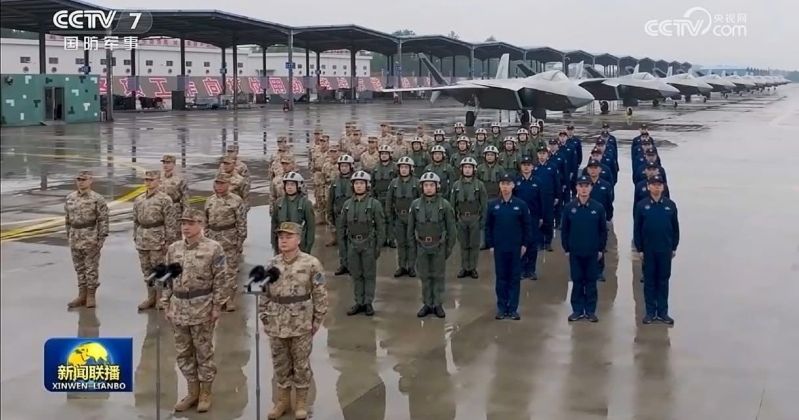
The J-20A has revised airframe design from baseline fighter, with the most conspicuous difference being its redesigned rear canopy which reduces aerodynamic drag, enhances its efficiency in supersonic flight, and is thought to significantly further improve its stealth capabilities. The new variant’s most notable known improvement is the integration of the WS-15 next generation engine, with the first footage of a serial production fighter with the new powerplant having been published in late December 2025. In January footage released by the fighter’s primary developer, the Chengdu Aircraft Industry Group, and for the first time showed several of the J-20A undergoing flight tests.
The F-35 program has suffered from significant performance issues due to the limited power and cooling capacity provided by its F135 engines, which have restricted its ability to incorporate energy-intensive new subsystems. Two ambitious programs to develop engines with greater potentials for the fighter, including the F136 and the Adaptive Engine Transition Program, were both cancelled in 2011 and 2023 respectively. The J-20, by contrast, has transitioned from a stopgap AL-31FM2 procured from Russia for the first 40 units, to the much more capable indigenous WS-10C, and most recently the next generation WS-15, which is estimated to provide the fighter with significantly more thrust and power for onboard systems than any other fighter type. This is expected to allow the J-20 to continue to integrate new subsystems, including new generations of radars, far more smoothly.
The ability to integrate new radars is critical for premier Chinese and U.S. fighter types, as the two countries continue to rapidly improve their aircraft’s electronic warfare and stealth capabilities. A more advanced radar provides a greater potential for jamming, but most importantly provides both lower vulnerability to enemy jamming, and a greater capability to detect, track, and form weapons locks against adversary stealth aircraft. The J-20 is inherently at an advantage in this regard as its nose cone can accommodate a much larger radar than the F-35, meaning the F-35 would need a significant technological lead in the radar it integrates to provide comparable capabilities.
Chinese fighters have also long retained an advantage due to the integration of active electronically scanned array radars onto their air-to-air missiles, including the PL-15, PL-16 and PL-17, where the U.S. AIM-120 does not integrate a similarly advanced radar. The development of the AIM-260 air-to-air missile, which is expected to integrate a similarly advanced radar, has faced continued delays, with the J-20 program having been a considered a primary factor stimulating its development. Trends towards a Chinese advantage in the capabilities of its fighter radars reflect broader trends in the Chinese and U.S. combat aviation sectors, as Chinese sixth generation fighters are expected to enter service more than half a decade ahead of rival fighters under development in the U.S., with the American F-47 intended to make its first flight only in 2028, while three separate Chinese sixth generation fighter flights already made their first flights in late 2024 and early 2025.
