
U.S. Surging AIM-120 Air-to-Air Missile Production as Challenges to Air Dominance Grow
Military Watch Magazine Editorial Staff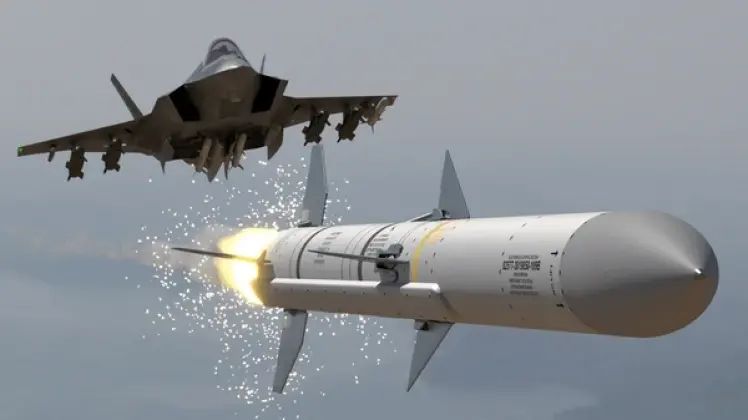
F-35 Launches AIM-120 Missile - Artwork
Raytheon has announced a multiyear deal with the Pentagon to increase annual production of the U.S. Armed Forces’ primary air-to-air missile type, the AIM-120 AMRAAM, to reach levels of at least 1,900 annually, or at least 158 percent of levels seen in 2024 when 1,200 of the missiles were produced. Although a successor to the missile, the AIM-260, has been under development since 2017, not only have there been significant delays in bringing it into service, but it is expected to be unaffordable for widespread deployments across the Air Force, Navy and Marine Corps. Where the AIM-260 arsenal is expected to be concentrated in the Pacific theatre to face peer level challenges from Chinese air units, the heavily enhanced AIM-120D is likely to continue to be relied on as American fighter units’ primary air-to-air missile in other theatres for the foreseeable future.
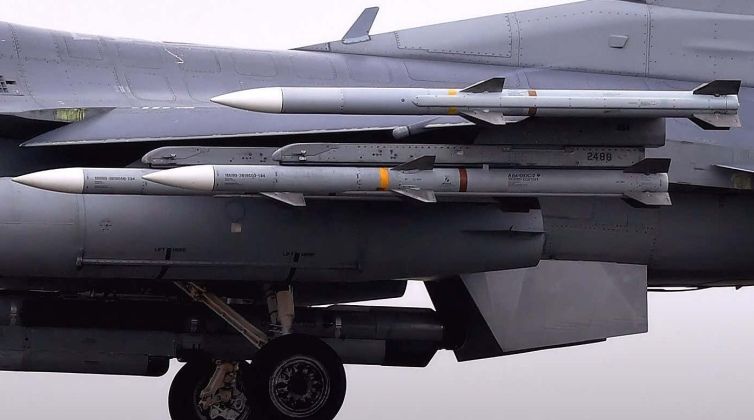
The AIM-120 is in service with 43 American defence clients, with the production surge likely to have been motivated not only by an increase in the U.S. Armed Forces’ own demand for greater quantities of the latest AIM-120D variant, but also by rising export demand. The United States has had significant success in increasing its share of global fighter market sales, primarily due to its offering of the F-35 as the only NATO compatible fifth generation fighter. Other than a Russian Su-57 sale to Algeria, all fifth generation fighter sales on record have been F-35s, with the fighter consistently vastly outperforming rival Western fighters such as the F-18E/F and Eurofighter on foreign markets. Although the F-35 currently carries just four AIM-120 missiles internally in standard configuration, this will increase to six missiles for the F-35A and F-35C variants once they are brought up to the Block 4 standard in the early 2030s.

In September 2025 the U.S. Air Force was confirmed to have conducted the longest ranged air-to-air engagement on record using the AIM-120, with the upgrade to the missile having been trialled at Eglin Air Force Base in the Autumn of 2024 using an F-22 fighter as the launch platform. The engagement validated an extended flight profile for the missile, confirming that new upgrades under the Form, Fit, Function Refresh (F3R) program has been successful in significantly improving its performance. The new AIM-120D3 variant tested had been developed in the 2010s specifically to respond to advances in China’s own air-to-air missile capabilities, most significantly the development of the PL-15 to equip its new J-20 fifth generation fighters. Significant successes in improving the AIM-120’s performance are likely to have influenced the decision to surge production levels.
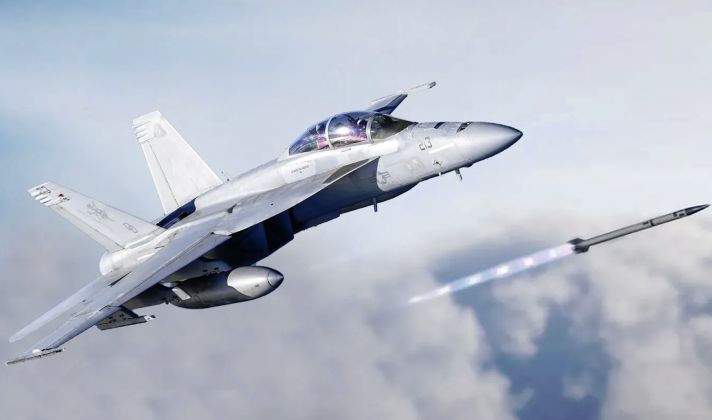
A leading shortcoming of the AIM-120 is its lack of a similarly advanced radar in its seeker to the active electronically scanned array (AESA) radars guiding the Chinese PL-15, PL-16, and PL-17, with plans to integrate an AESA radar onto the AIM-120D variant having been cancelled to reduce costs. The use of less advanced radars limits the missiles’ ability to resist jamming, and to lock onto targets with advanced stealth capabilities. Succeeding the AIM-120, the newer AIM-260 was initially intended to enter service around 2022, with multiple delays thought to have pushed this back by at least four to five years. Although the extent progress towards development remains uncertain, requests for funding for serial production and procurements by both the Air Force and the Navy indicate that the program has already neared or reached an end to development testing. Although much regarding the testing process remains, it was confirmed in late 2021 that the Air Force had begun using its reserves of retired F-16 fighters as aerial targets for this purpose. Questions also remain regarding whether it will be permitted for export, with anticipated export restrictions expected to ensure that significant markets for the AIM-120 remain open.
