
U.S. More Than Doubles Planned Orders For Western World’s Longest Ranged Fighter
Military Watch Magazine Editorial Staff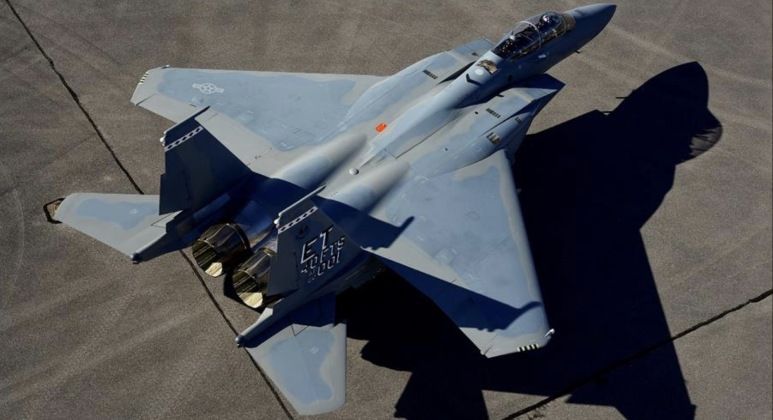
The U.S. Air Force’s budget for the Fiscal Year 2027 has increased planned procurements of F-15EX fighters to 267 aircraft, up from a previously planned 129. Of these, 24 of the fighters will be procured in 2027 at a cost of $3 billion. An Air Force spokesperson commented that procurements are intended to “begin to recapitalise the aging F-15E fleet,” expanding on the previous primary rationale for procurements which was to replace the even older F-15C/D fleet. Plans to surge annual defence spending to approximately $1.5 trillion are reportedly key to allowing the Air Force to expand its total planned procurements. The service is expected to see its budget increase by approximately 38 percent compared to fiscal 2026, reaching $338.8 billion, providing much needed relief following years of increasingly severe budgetary strain.
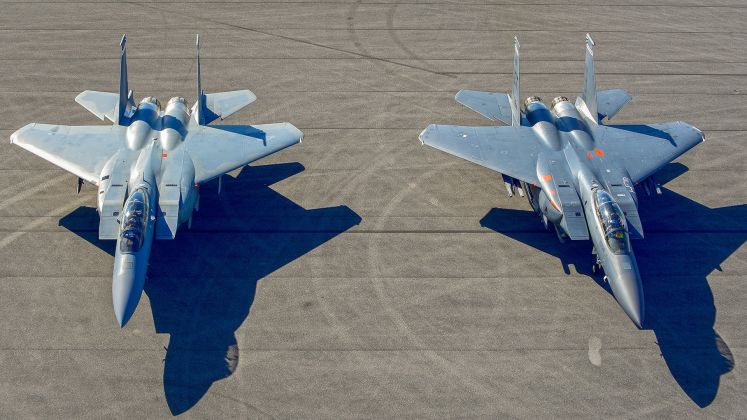
The significant increase in F-15EX procurements is being made despite a fall in procurement numbers of the second fighter type currently being produced for the U.S. Air Force, the F-35A, indicating that the F-15 fleet is being prioritised. Major delays in bringing the F-35 up to the Block 4 standard, which is considered necessary for high intensity combat, are considered one major actor, with the fighter type’s very low availability rates considered another. The F-35 is the only fifth generation fighter type in production in the Western world, and while its advanced capabilities were expected to leave all fourth generation fighter types obsolete, tens of billions of dollars in investment in enhancing the F-15 from the early 2000s allowed the F-15EX to be developed as a very heavily improved variant that can in some respects remain viable in the fifth and sixth generation eras.
The confirmation of plans to procure the F-15EX in significantly increased numbers closely follows the signing of a letter to Congress in early April by Air National Guard adjutant generals from more than 20 states, which requested multiyear funding for the acquisition of between 72 and 100 new fighters each year. Current procurements have remained at around 48-64 fighters, with 24 F-35A and 24 F-15EX fighters having been funded for procurement in 2026. F-15EX fighters are expected to continue to see their training and armament heavy shaped by the requirement to serve as interceptors in the National Guard, with all by 36 of the currently planned fighters expected to serve protecting U.S. territory. The 36 fighters in question will replace F-15C/D fighters at Kadena Air Base on Okinawa.
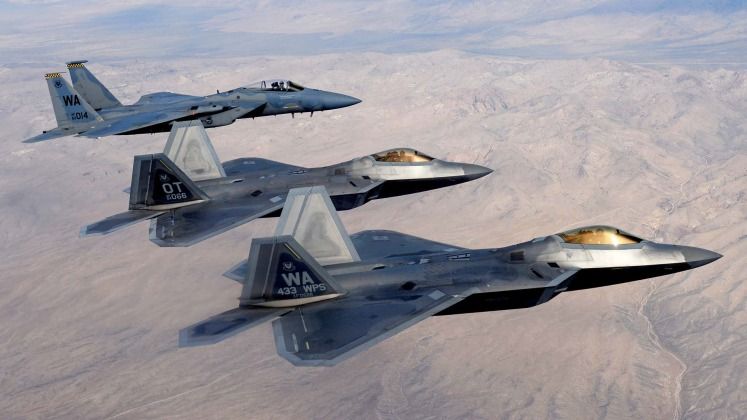
The F-15EX is the only heavyweight fighter type currently in production in the Western world, and was ordered largely due to the failure of the F-22 Raptor program to provide a viable successor to the F-15. The F-22 had otherwise been expected to replace the F-15 production and phase it out of service entirely, much as the F-15 replaced the F-4 from the mid-1970s. The F-15EX is in most respects a much more capable fighter than the F-22, integrating a radar that is technologically two decades ahead and considerably larger, as well as far more advanced computer architecture, data links, and other avionics. Its range is also considerably longer, while it does not suffer from the extreme maintenance needs and operational costs that have hampered the F-22 leet since it first entered service.
