
U.S. Air Force Deploys Its Most Capable Long Range Fighters to Key Forward Base Near Taiwan Strait
Military Watch Magazine Editorial Staff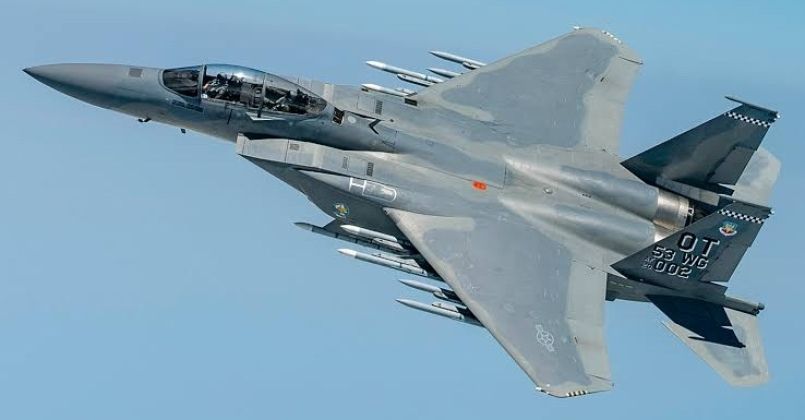
F-15EX Carrying AIM-120 Missiles
USAF
The U.S. Air Force on June 29 deployed F-15EX long range fighters to Kadena Air Base on Okinawa, Japan, which represented part of the service’s gradual preparation to permanently station the fighter type at the facility. While the decision to permanently station the new fighters on Okinawa was first announced in 2022, replacing F-15C/D fighters that were long since considered obsolete, the program has suffered from significant delays. Rather than an operational deployment, the aircraft's visit is primarily intended to familiarise maintenance personnel, logisticians, and support crews with the F-15s before the first operational squadron arrives between 2027 and 2029. The aircraft are accordingly assigned to the 85th Test and Evaluation Squadron, rather than a frontline unit.
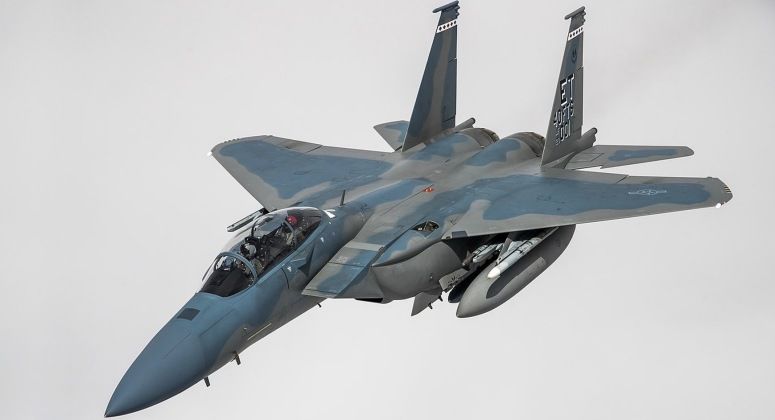
Although the visit includes flying activities, one of its principal objectives is maintenance and logistics training. The F-15EX incorporates significantly more advanced electronics than the F-15C/D fighters they are replacing, making it important to give ground crews hands-on experience maintaining the aircraft's digital architecture, mission computers, electronic warfare equipment, and diagnostic systems. Developing this expertise before permanent deployment is intended to reduce maintenance delays and improve aircraft availability once operational squadrons arrive. Particular attention is being paid to two of the Eagle II's most advanced systems. The AN/APG-82(V)1 AESA radar provides substantially greater detection range, improved resistance to electronic jamming, simultaneous air-to-air and air-to-ground operation, and enhanced reliability very considerably compared to the obsoletemechanically scanned radars of the retiring F-15C/D fighters.
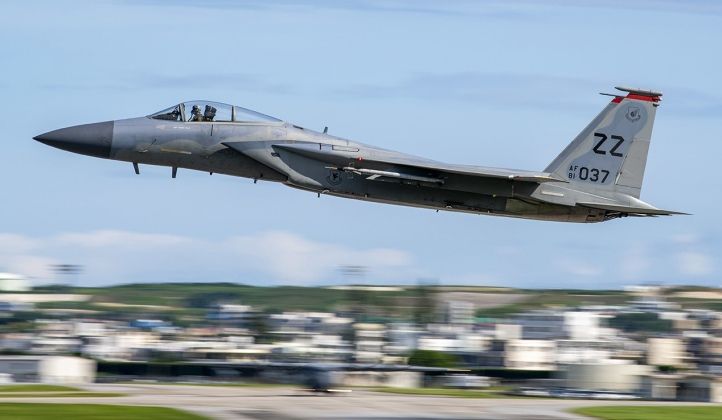
The Air Force plans to station 36 F-15EX fighters at Kadena, which reflects the strategic importance of the facility due to its proximity to a leading potential hotspot for Sino-U.S. tensions, namely the Taiwan Strait. The F-15EX is in many respects the most capable fighter type in the Western world, with its range, radar power, and weapons carrying capacity all being unrivalled both other NATO standard fighter types. Although it lacks many of the advanced subsystems of the F-35, or its stealth capabilities, the F-35 has continued to suffer from severe limitations in its ability to operate in frontline roles due to delays bringing the aircraft up to the Block 4 standard. The F-15EX’s ability to contribute to protracted operations is also far greater due to the type’s significantly higher availability rates, as F-35s continue to suffer from major maintenance issues.
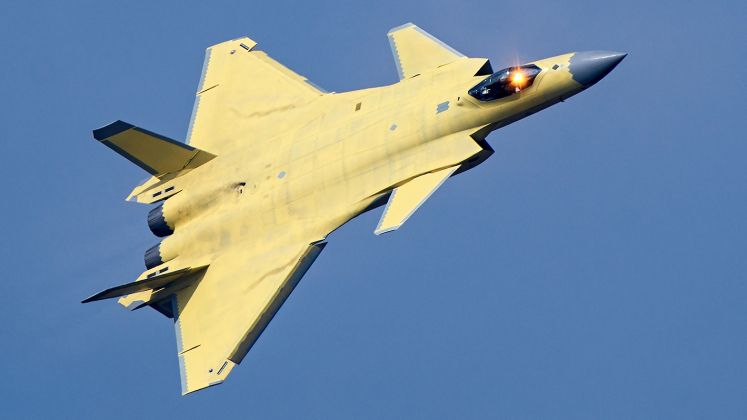
Although the F-15EX is highly capable, it is considered far outmatched by new Chinese J-20 fifth generation fighters, which are similarly large but benefit from much longer ranges, cutting edge stealth capabilities, and the recent integration of far more efficient next generation engines. China is set to introduce its first sixth generation fighters into service in the early 2030s, meaning they could begin operating in the region not long after the last ‘4+ generation’ F-15s are delivered to deploy to Kadena. Although the F-15 is the oldest fighter type in production anywhere in the world, and the only heavyweight fighter type in production in the Western world, it continues to be relied on heavily due to the failure of the F-22 fifth generation fighter program to provide a viable successor. In April the U.S. Air Force’s budget for the Fiscal Year 2027 was revealed to have increased planned procurements of F-15EX fighters to 267 aircraft, up from a previously planned 129, reflecting a longstanding demand for an expanded scale of deliveries.
