
U.S. Air Force Academy Report Calls For Massive Expansion of F-47 Fighter and B-21 Bomber Acquisition Plans to Fight China
Military Watch Magazine Editorial Staff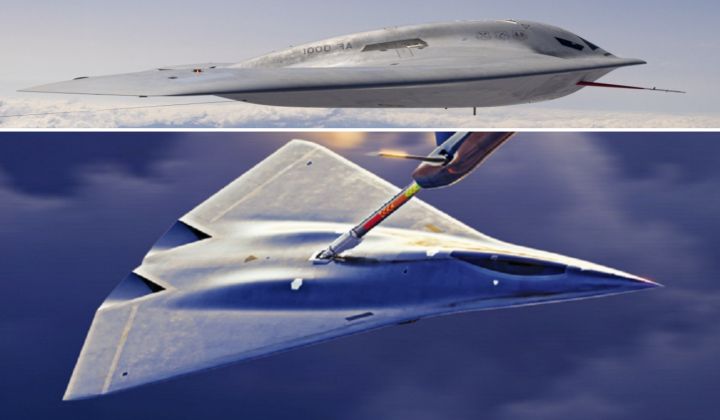
B-21 Bomber and F-47 Fighter Artwork
A new report from U.S. Air Force Academy Mitchell Institute for Aerospace Studies has warned that the Air Force needs to very significantly increase planned procurements of the F-47 sixth generation fighter and B-21 next generation bomber. Authors of the report ‘Strategic Attack: Maintaining the Air Force’s Capacity to Deny Enemy Sanctuaries’ highlighted that the two new aircraft are expected to attempt to penetrate adversary airspace jointly and fight “from the inside out,” delivering decisive blows against bases and other critical infrastructure deep within the Chinese interior. The Air Force’s currently planned procurement of “at least” 100 B-21s and 185 F-47s were assessed to be sufficient only for one-off missions into enemy airspace, but will be insufficient to sustain pressure in a broader conflict, forming only “a raid force, not a campaign force.”
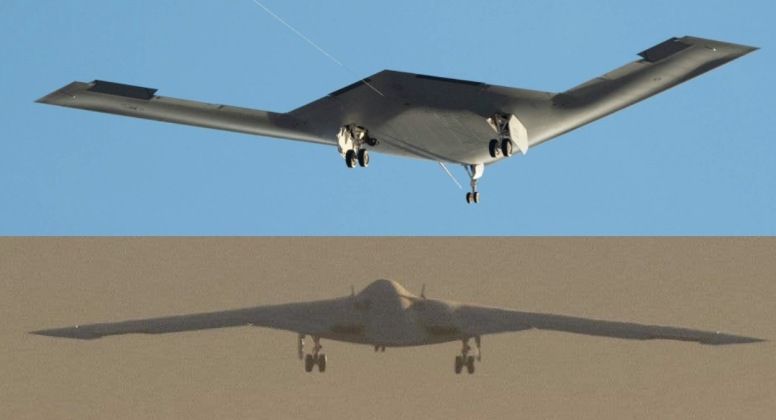
“F-47s operating with B-21s and other aircraft in the Air Force long-range strike family can be [the Pentagon’s] ‘sanctuary denial force,’” according to the report, although it noted that it could take a decade or more to build out expanded fleets. “Two hundred [B-21s] isn’t based off of a full-up World War III scenario, but it does look at what’s the number needed for ‘hold back’ and how do you be credible and effective in denying that sanctuary and hitting those key centres of gravity in China, and also having enough attrition reserve to be able to sustain a protracted conflict?” Heather Penney, one of the authors, noted. “The service’s current combat force mix is now weighted toward earlier-generation non-stealthy bombers and fighters… If not modernised with the right quantities of next-generation stealthy aircraft, this legacy force would have to close thousands of long-range kill chains in hundreds of hours in a peer conflict, a feat that is beyond the Air Force’s current and projected capacity,” the assessment concluded.
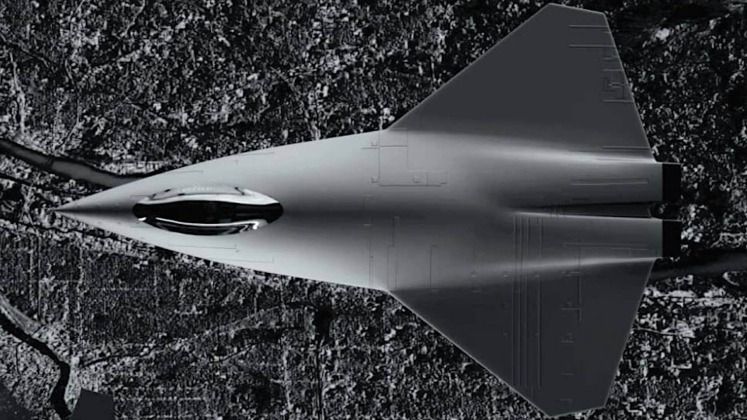
The B-21 bomber has long been considered a high priority program due to the significant advances seen in Chinese air defence capabilities, and to lesser extents those of Russia, North Korea and other potential targets. The preceding B-2 stealth bomber program saw just 20 serial production airframes built, with the remaining 112 cancelled, and has suffered from low availability rates and ageing of its radar evading technologies into near obsolescence. The B-21 is a lighter and shorter ranged bomber type, but is considered more maintenance friendly and more affordable for large scale procurements. With a much more limited payload, however, the aircraft will need to generate significantly more sorties to delivery an equivalent amount of ordinance to the B-2. Their limited ranges also leave them highly reliant on tanker support for operations in the Pacific theatre, which may be a major vulnerability.
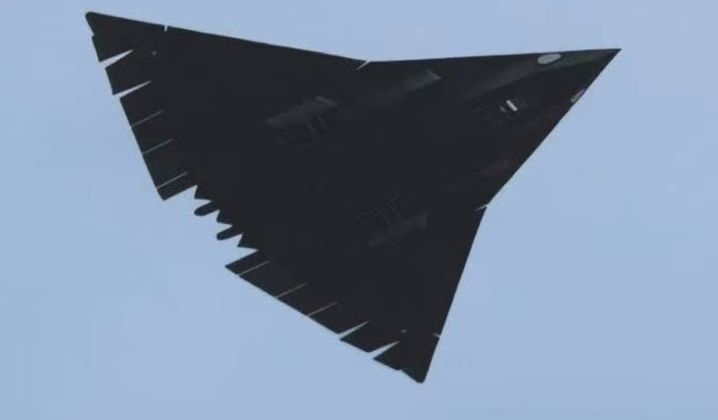
Before 2025 the future of the F-47 remained highly uncertain, with officials increasingly raising the possibility that the Air Force’s sixth generation fighter development efforts may be abandoned altogether, while further upgrades to the F-35 to develop a ‘5+ generation’ variant was increasingly seriously considered as an alternative. The first flights of two separate Chinese sixth generation fighter designs in December 2024 were credited with spurring the new Donald Trump administration to strongly back the program from early 2025, although severe funding shortages have meant that this has largely come at the expense of the Navy’s more urgently needed F/A-XX program. U.S. Air Force Chief of Staff General David Allvin on November 12, 2025, confirmed that the F-47 is intended to make its first flight in 2028, positioning it three to four years behind rival Chinese programs.
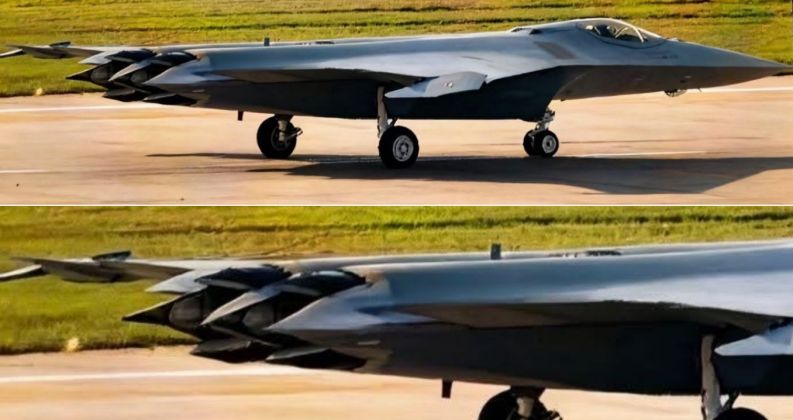
China’s expected lead of at least half a decade in bringing sixth generation fighters into service, and its far greater scale of fifth generation procurements, has brought the viability of the U.S. launching penetration strikes into serious question even if a major surge in B-21 and F-47 procurement numbers is financed. The country’s development of its own intercontinental range stealth aircraft, which appear to be bombers that are heavier and longer ranged than the B-21, has also made it likely that any U.S. offensives will be effectively deterred. New sixth generation fighters are meanwhile expected to exponentially increase the threat to tankers which are vital to ferrying American fighters and bombers across the Pacific. China’s lead in developing a range of next generation technologies, such as quantum sensors and communications systems, further limits the possibility of a large U.S. bomber fleet with a fighter escort being able to take to the offensive into its airspace.
