
First Clear Look at China’s New Intercontinental Range Stealth Bomber
Military Watch Magazine Editorial Staff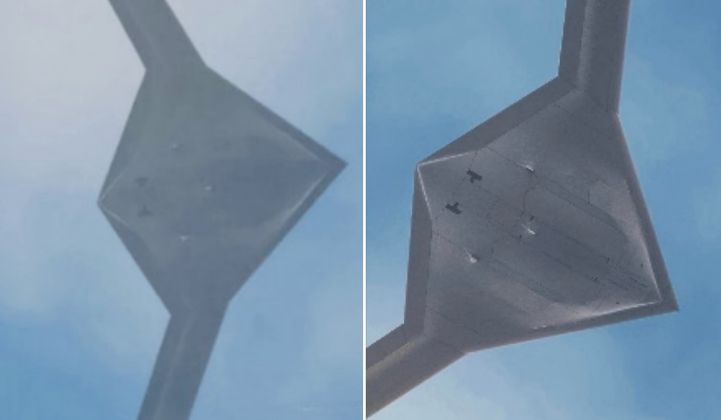
Chinese Intercontinental Range Unmanned Stealth Aircraft
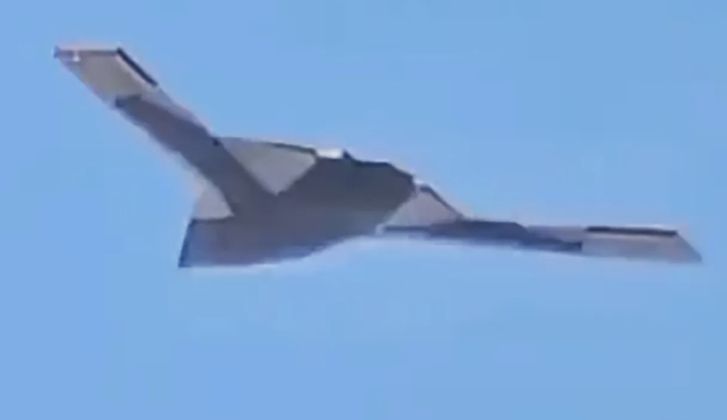
New images have provided the first clear look at China’s first intercontinental range stealth aircraft, showing what appear to be twin internal weapons bays that would confirm the aircraft is intended to serve as a long range bomber. The unmanned aircraft was first seen in satellite footage from a People’s Liberation Army Air Force test base near Malan, Xinjiang province, which was published in mid-June. Subsequently on October 19 images or the first time showed the aircraft in flight. The aircraft is expected to benefit from the signifiant advances to radar evading stealth capabilities that have ben demonstrated across multiple programs, including the J-20 and J-35 fifth generation fighters, three sixth generation fighter programs currently in flight testing stages, and various unmanned flying wing aircraft such as the new CH-7 long range reconnaissance aircraft.
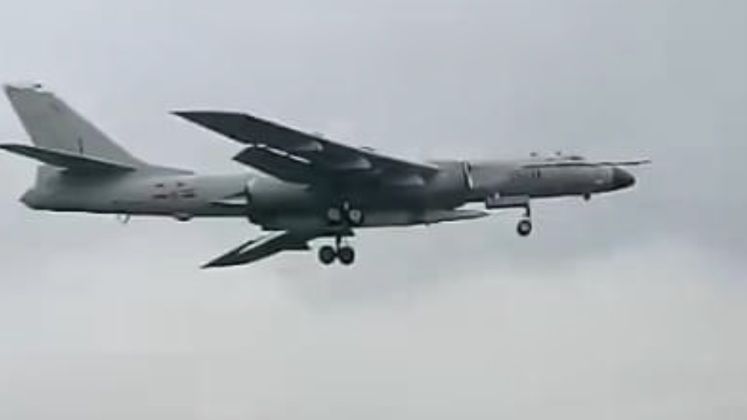
China currently lacks an intercontinental range bomber, relying solely on the H-6 medium range bomber, although the much smaller aircraft, can employ long range ballistic missiles capable of striking targets at intercontinental ranges including the United States mainland. The H-6 has also seen its range extended by integrating more fuel-efficient engines, and through greater support for the fleet from a growing number of YY-20 tankers which can provide aerial refuelling support. A growing ability to use bases in Russia as stopovers for refuelling as been a further critical factor allowing the H-6 fleet to operate near the continental United States. Fielding an intercontinental range bomber with advanced stealth capabilities would build on these capabilities to significantly strengthen the Chinese nuclear deterrent, as well as its ability to project power and launch conventional strikes far beyond its territory.
Only one type of intercontinental range bomber is currently in serial production anywhere in the world, namely the Russian Tu-160M, which although world leading in its capabilities among operational aircraft, is expected to be left far behind as new Chinese and American flying wing stealth designs are brought into service. Stealth capabilities not only allow bombers to potentially launch penetration strikes into well defended enemy airspace, but also reduce the possibility of detection, and thus increase survivability and minimise warning times when used to launch missile attacks. It remains uncertain whether the new Chinese unmanned stealth bomber is the only intercontinental range bomber currently being developed, or whether a long anticipated manned counterpart will also enter service.
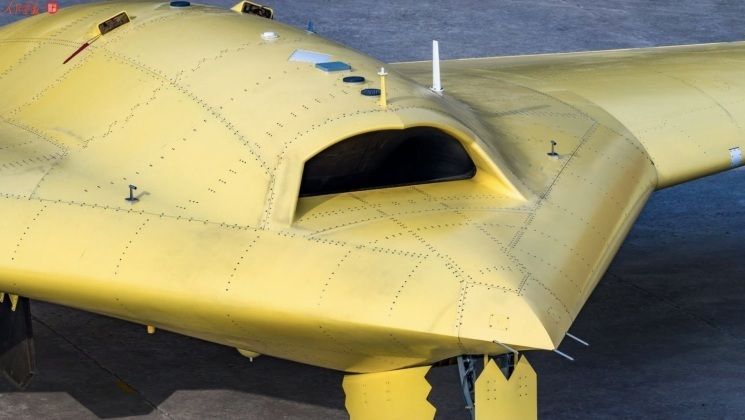
The United States currently fields a single type of stealth bomber, the B-2 Spirit, although its radar evading technologies date back to the 1980s and are considered far out of date, while its small numbers with less than 20 in service, and its poor availability rates and proneness to accidents, has limited the fleet’s utility. A successor is currently under development under the B-21 program, although this much smaller aircraft as a far more limited weapons carrying capacity and a much shorter range, which appear to be compromises intended to reduce costs and thus allow for a larger fleet to be fielded. Like the B-21, China’s unmanned stealth aircraft is speculated to have multiple roles including air-to-air combat, reconnaissance, and supporting communications for far sea operations. The Chinese aircraft is significantly larger, however, with a comparable wingspan to the B-2 and an expected intercontinental range and a greater weapons carrying capacity.
