
Chinese H-6K vs. U.S. B-1B in the Pacific: Which Ship Hunting Bomber Has the Advantage?
Military Watch Magazine Editorial Staff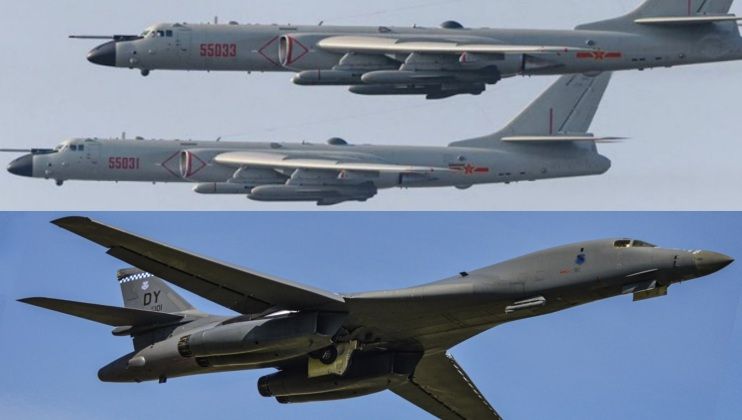
Chinese H-6 (top) and U.S. B-1B Bombers
The U.S. Air Force is expected to increase the concentrate of deployments of its remaining fleet of B-1B Lancer strategic bombers in the Pacific in for the remainder of the 2020s and into the 2030s, as the integration of the AGM-158C Long Range Anti-Ship Missile (LRASM) has made the aircraft in many respects the most capable in the Western world in its ability to threaten adversary surface fleets. The bombers have been presented as an asymmetric asset that would allow the U.S. Armed Forces to more effectively respond to the growing dominance of the Chinese surface fleet in the region, as new generations of Chinese destroyers in particular have entered service at close to five times the rate of those in the United States, while boasting capabilities that are in many respects more formidable.
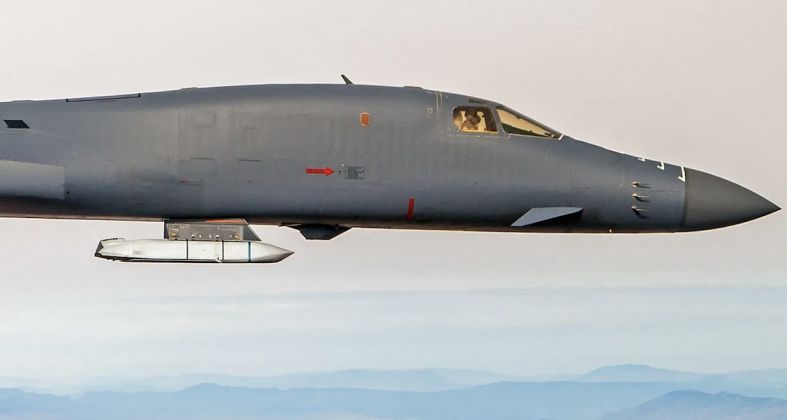
The U.S. Navy and Lockheed Martin conducted the first free flight launch of the LRASM from a B-1B bomber in August 2025. The missile has a range of approximately 900 kilometres, which while long by the standards of Western anti-ship missile types, more limited than many of its new Chinese rivals. Although it retains limited radar evading capabilities, the LRASM is relegated to a subsonic speed and carries a small 450 kilogram warhead, limiting the damage it can cause and making it less challenging than high supersonic or hypersonic missile types to intercept. As B-1B bombers begin to be deployed to the Pacific equipped with the LRASM, they will be challenged by the Chinese People’s Liberation Army’s own bomber fleet equipped for long range anti-shipping operations, which have demonstrated a growing global lead in their capabilities.
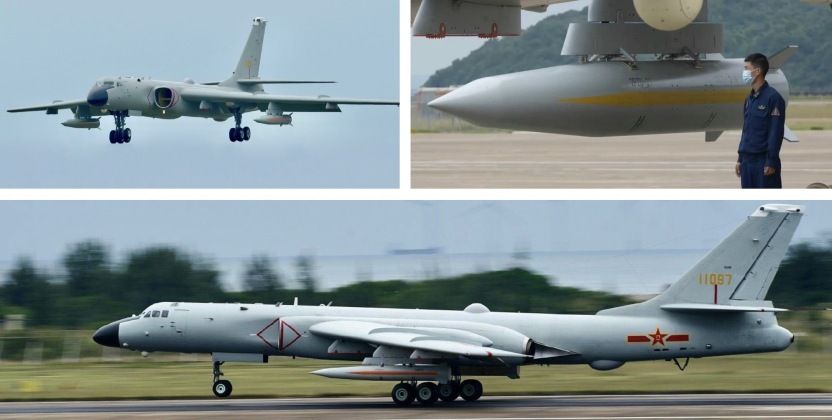
The H-6 is fielded in approximately five times the numbers as the B-1B, and has been fielded for anti-shipping roles for considerably longer, with a wider range of anti-ship missile types having been integrated as a result. The older YJ-12 missile combines a speed approaching Mach 4 with a 400 kilometre range and a 200 kilogram warhead, meaning it has less than half of the LRASM’s payload and range, but strikes with considerably more energy at close to five times the speed. The H-6’s shorter range and lower speed than the B-1B further advantages the American bomber type, although the B-1B’s very high maintenance needs and low availability rates compare poorly to those of the H-6.
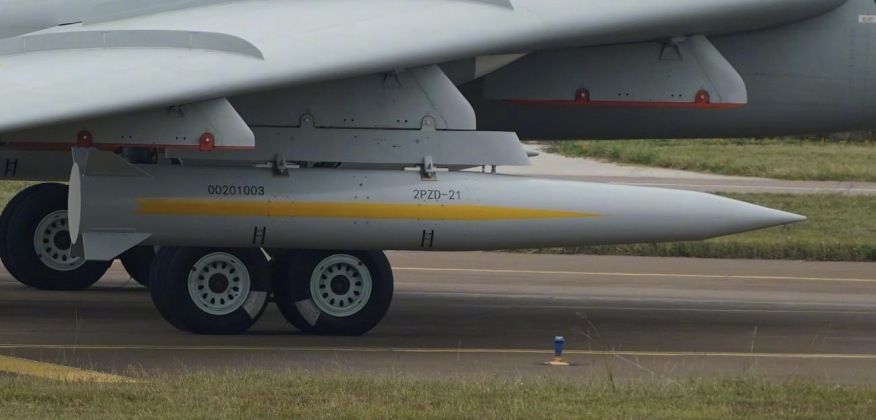
The H-6 gained a distinct advantage in its anti-shipping capabilities with the integration of the YJ-21 hypersonic anti-ship ballistic missile, of which each bomber is estimated to be able to carry between two and four. The YJ-21 has a 2,000 kilometre range, a cruising speed of over Mach 6, and a Mach 10 terminal speed, making it among the most capable air- or ship-launched anti-ship missile types in the world. The missile is closely related to the ship-launched YJ-20, which has given Chinese destroyers a distinct advantage over surface combat vessels deployed by other countries. The YJ-21’s speed and manoeuvrability make in nearly impossible to intercept, while the sheer force of its impact is expected to allow it to disable even large warships with a single well placed hit. The missile has for years given Chinese bombers a distinct advantage in their anti-shipping capabilities in the Pacific long before the B-1B armed with the LRASM could be introduced into service. H-6 bombers equipped with a wide range of anti-ship missile types including new hypersonic missiles are among a wide range of assets that recent Pentagon studies have highlighted seriously limit the survivability of American warships in the Pacific.
