
China Confirms CH-7 Unmanned Stealth Recon Plane Now in Flight Testing: Long Range Allows Ops Across the Pacific
Military Watch Magazine Editorial Staff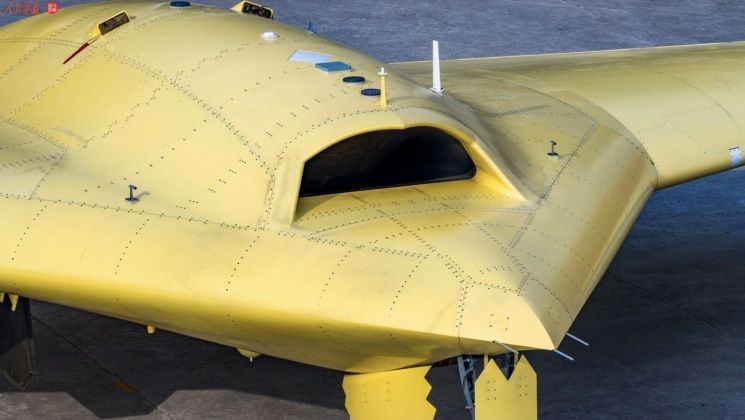
Chinese CH-7 Unmanned Stealth Reconnaissance Aircraft
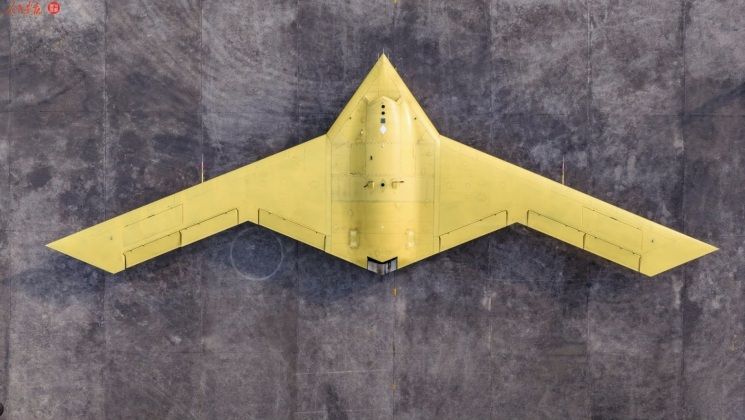
The 11th Academy of China Aerospace Science and Technology Corp has confirmed that the CH-7 unmanned high altitude stealth reconnaissance aircraft recently completed its first flight at an airfield in Northwest China. The program’s entry into its flight testing stages is expected to pave the way for service entry in the early 2030s, marking a major milestone in China’s emergence as a global leader in unmanned aviation capabilities. Developed with a high-aspect-ratio flying-wing aerodynamic configuration, the large flying-wing aircraft was designed with a long endurance, high flight ceiling, fast cruise speed and strong mission capability, which was previously expected to allow it to serve as a medium range bomber. The aircraft has more recently been confirmed to have been developed for reconnaissance purposes, with customisable configurations accommodating a wide range of sensor packages.
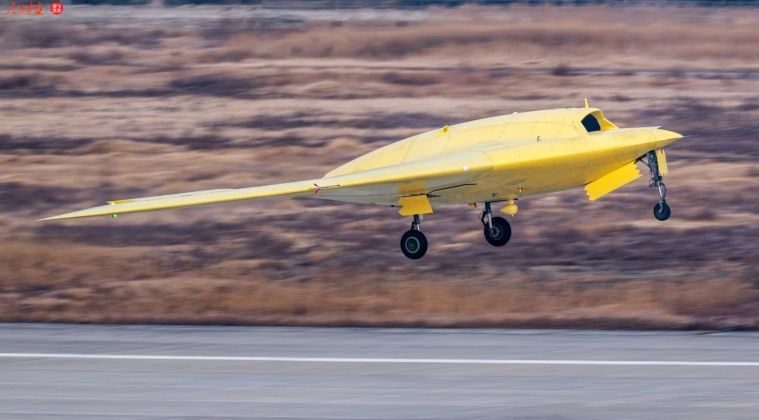
The CH-7 required testing for a greater number of critical technologies compared to other types of unmanned aircraft, with its tailless flying-wing aerodynamic configuration maximising stealth, but also making its design more complex and contributing to greater challenges achieving directional stability. The aircraft nevertheless demonstrated the ability to smoothly carry out autonomous taxiing, takeoff and landing, as well as controlling its altitude and trajectory. After testing the stealth aircraft’s most basic flight characteristics, additional tests are expected to more rigorously assess various aspects of its flight performance and verify its payload functionality. Upon entering service, the CH-7 is expected to provide a significant improvement to situational awareness across the Pacific, and potentially provide invaluable targeting data for China’s increasingly vast and sophisticated missile arsenals.
Alongside the CH-7, a much heavier type of unmanned flying wing stealth aircraft of unknown designation has also been under development, and made its first flight in October. This appears to be intercontinental range strategic aircraft, and has a wingspan significantly wider than that of the B-21 Raider strategic bomber currently under development for the U.S. Air Force, fuelling speculation that it may be an unmanned bomber designed to be able to reach the continental United States. Flight testing under both programs are expected to help provide information for one another due to a number of design commonalities. While the CH-7 has not been developed for combat roles, there remains a significant possibility that the design will be used as a basis for developing a medium ranged unmanned stealth bomber in future. As a reconnaissance aircraft, it is expected to provide support for operations beyond Guam, and may serve in both the Chinese People’s Liberation Army Navy and the Air Force.
