
U.S. Air Force and Marines Forced to Continue Receiving Radarless F-35 Fighters Due to Development Delays
Military Watch Magazine Editorial Staff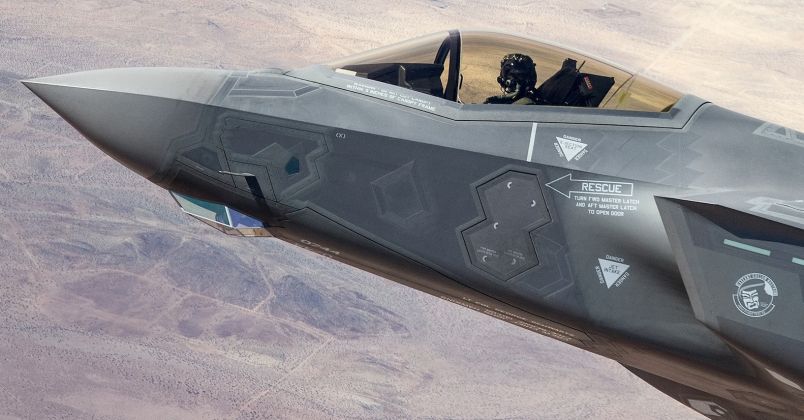
F-35 Fighter
The U.S. Armed Forces have been confirmed to have begun accepting F-35 fighters without their primary radars installed, following reports near the beginning of the year that radarless fighters had begun being delivered to the Air Force. This is the result of delays affecting the new AN/APG-85 active electronically scanned array radar program, and has already affected the Air Force and Marine Corps. The AN/APG-85 was developed to replace the existing AN/APG-81 as part of the F-35's much delayed broader Block 4 modernisation, as the older radar is no longer considered competitive with new generations of Chinese sensors. The F-35’s close Chinese rival the J-20 fifth generation fighter is thought to have already long since introduced its own next generation radar based on similar gallium nitride technologies.
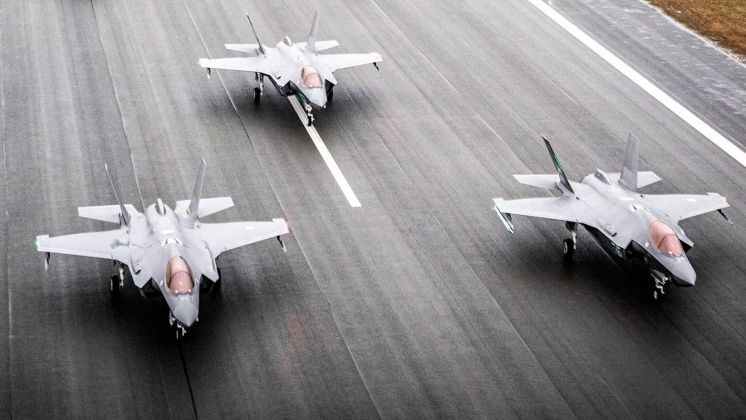
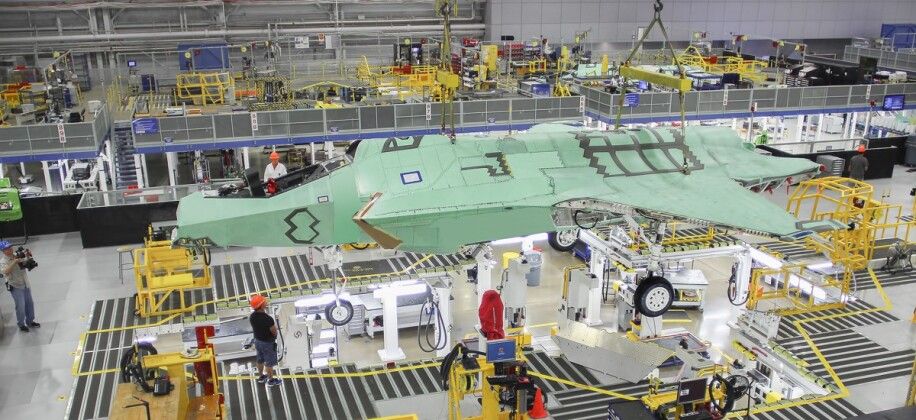
Beginning with Lot 17 production aircraft, the F-35's forward fuselage was redesigned specifically to accommodate the APG-85. However, because the new radar has been delayed, the older APG-81 cannot simply be installed as a substitute due to incompatible mounting arrangements. As a result, the aircraft are being delivered without any radar at all, with ballast installed to maintain the aircraft's centre of gravity. The continuation of aircraft production while radar deliveries have fallen behind schedule has ensured a mismatch between the nose cones of the aircraft being built, and the radars that are currently available. Current plans indicate that the first production APG-85 radars are not expected until 2028, although the precise schedule remains subject to change. This could result in close to 300 F-35s leaving production lines without radars to equip them.
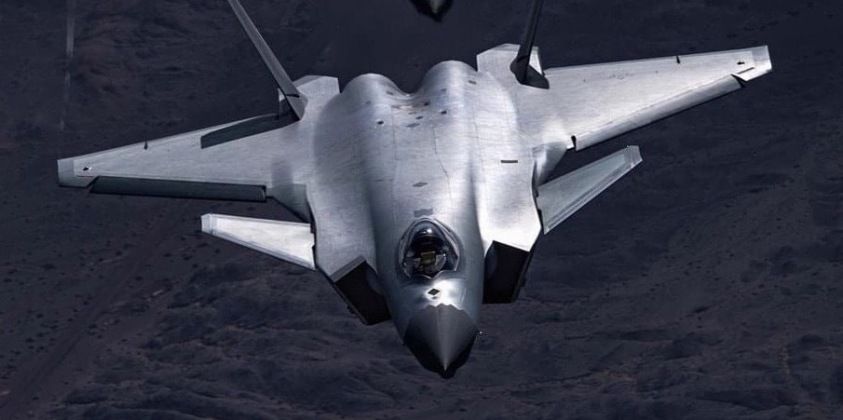
The rapid advancement of China's stealth fighter programs has been one of the principal drivers behind the development of the AN/APG-85, with the new radar considered vital to improving situational awareness against aircraft like the J-20, as well as other types of stealth aircraft such as strategic bombers and drones. The significant incremental enhancements made to the J-20’s stealth capabilities, and signs of rapid progress developing stealthier sixth generation fighters, has added further urgency to operationalising a new radar for the F-35. The AN/APG-85 is intended to achieve substantial improvements over the AN/APG-81 in detection range, sensitivity, tracking capacity, resistance to jamming, and low-probability-of-intercept operation. Although many of its capabilities remain classified, the radar is speculated to incorporate advances derived from technologies developed for the B-21 strategic bomber, providing greater processing power and improved software-defined functionality. This should enable the F-35 to detect smaller radar cross sections at longer distances while operating more effectively against advanced electronic warfare systems.
F-35s being delivered without the radars are still complete airframes with functioning engines, flight controls, stealth characteristics, communications systems, and most other avionics. They can thus still be used for many kinds of training for both ground crews and pilots, and can potentially employ a wide range of weaponry using data links and targeting data from offboard sensors, such as other F-35s, or using the fighter’s Electro-Optical Targeting System. The aircraft can also use their passive sensor arrays to operate in electronic intelligence collection roles, as F-35s have done widely in war zones in the Middle East and Eastern Europe. Analysts have projected that close to 100 F-35s will be delivered without radars.
