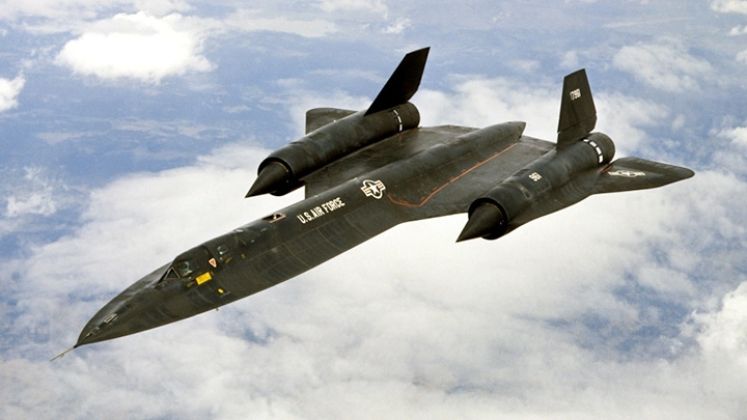
U.S. Air Force F-12 Interceptor: What Could Have Been the World's Fastest Combat Aircraft Ever
Military Watch Magazine Editorial Staff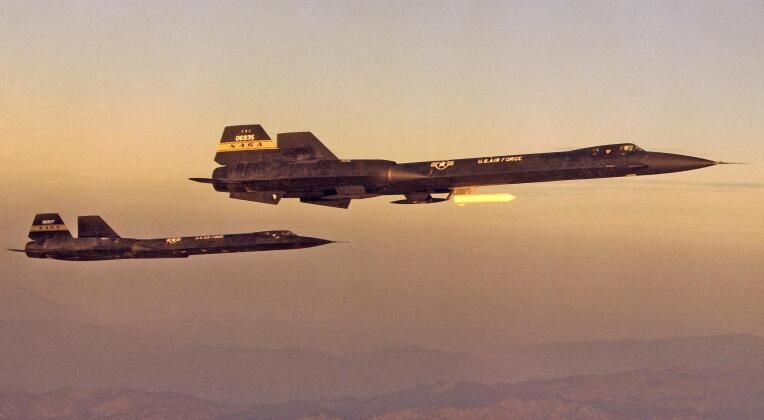
Prototype YF-12 Interceptors
During the Cold War the United States and Soviet Union both developed a number of combat and reconnaissance aircraft capable of operating at extreme speeds. Of those which entered service, the most notable where the Soviet MiG-25 which had interceptor, reconnaissance, strike and SEAD variants, its successor the MiG-31 which was built in interceptor and anti satellite variants, the CIA's A-12 reconnaissance jet, and its more reliable successor which served with the U.S. Air Force the SR-71 Blackbird. The MiG-25 set records for altitude, and among combat aircraft was the fastest ever designed with the ability to surpass Mach 3.2, while the SR-71 was the fastest non-combat aircraft with a Mach 3.3 speed. A U.S. military project the late 1960s notably sought to capitalise on investments sunk into developing the SR-71 to develop a derivative capable of operating as an interceptor much as the MiG-25 did. With the F-108 interceptor program having been cancelled due to budgetary constraints, the U.S. Air Force still required a modern high speed interceptor for which a combat adaptation of the Blackbird, named the YF-12, was seen as the solution. The aircraft, which was expected to enter service as the 'F-12,' was set to be equipped by Lockheed Martin with a powerful AN/ASG-18 radar capable of detecting aerial targets over 800km away. The interceptor was also set to carry four long range AIM-47 missiles with ranges of over 160km and potent 100 pound high explosive warheads. Such an aircraft was ideally suited to intercepting Soviet bombers and reconnaissance aircraft near the U.S. mainland, with its high speed allowing it to respond quickly to any airborne threats detected.