
When North Korea Tried to Shoot Down the World’s Fastest Aircraft: S-75 Air Defences vs. SR-71 Blackbird
Military Watch Magazine Editorial Staff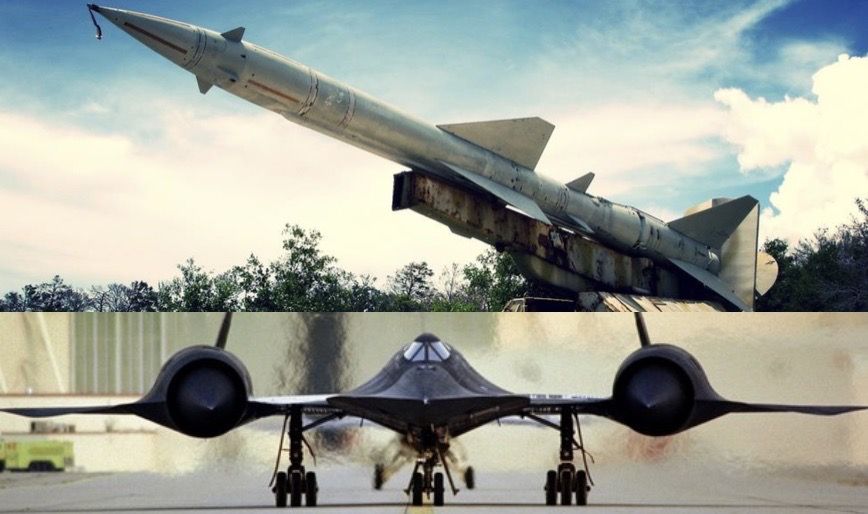
S-75 Missile Battery (top) and SR-71 Surveillance Jet
North Korea and the United States have been technically at war since the year 1950, with the U.S. Military maintaining a vast presence in South Korea today and deploying tens of thousands of personnel across the heavily militarised border. While the Korean War concluded in an armistice in 1953, the conflict remains technically ongoing to this day and has seen multiple clashes between the two parties. One of the lesser known but highly significant incidents across the Korean border occurred in August 1981 - when North Korean air defences attempted to shoot down an American SR-71 Blackbird surveillance aircraft which Pyongyang claimed was operating in its airspace. The SR-71 entered service in 1966, and with the ability to reach Mach 3.32 speeds and 26km altitudes it was the fastest aircraft ever developed and one of the highest flying. While plans for a combat variant, the F-12, were terminated due to high costs, the original SR-71 would make multiple incursions into the airspace of the Soviet Union, North Korea and other Western adversaries.
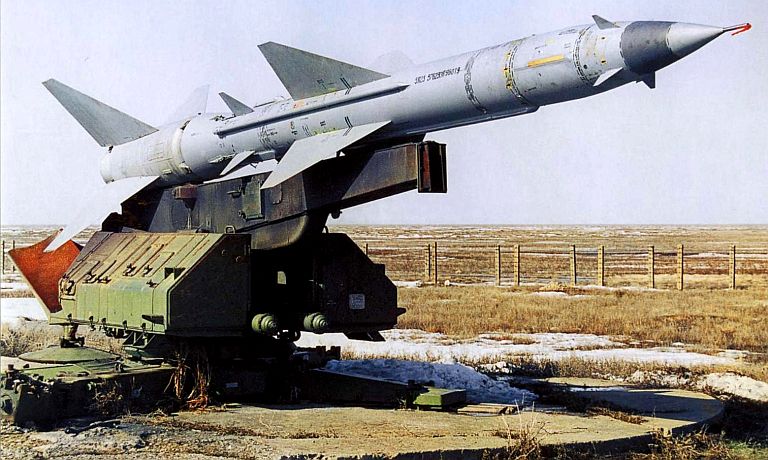
The North Korean attempt to intercept the SR-71 is the only officially reported incident of a missile being fired at the Blackbird, and on August 26 1981 the American aircraft came under attack while flying over Korea. Korean air defence units used an S-75 air defence system supplied by the Soviet Union to fire two missiles at the aircraft, which succeeded in tracking the Blackbird on radar. The S-75 system, which although modernised since dates back in its service to 1957, faced considerable difficulties targeting the SR-71 due to target geometry issues. While the missile was faster than its American analogues such as the MIM-23, and at Mach 3.5 was slightly faster than the American surveillance aircraft, it had to launch, accelerate, climb, and track to the plane. When flying at over Mach 3 and near its maximum altitude, this made the SR-71 effectively impossible to intercept for the older air defence system. Reports indicate that the North Koreans may have come close however, with the missiles reaching the Blackbird’s altitude and coming close enough that the pilots could see them fly past. The Korean attack reportedly failed to strike the target due to the SR-71’s powerful electronic warfare systems, which were used to disrupt the missile system’s guidance and cause it to veer off target. The attack reportedly came close enough that it led the U.S. Air Force to adopt a far more cautious approach when carrying out future surveillance flights over the Korean Peninsula.
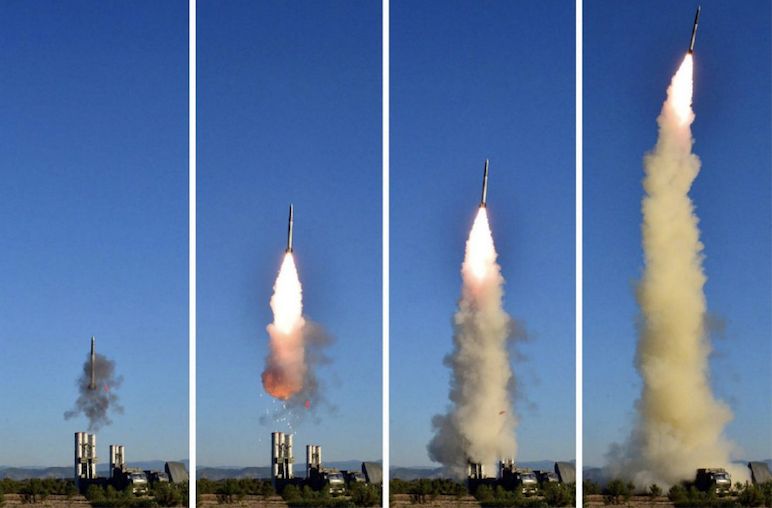
The SR-71 would eventually meet its match with the Soviet MiG-31 Foxhound interceptor, and by the development of more capable surface to air missile systems such as the S-200 and S-300 which seriously undermined the surveillance jet's ability to operate. North Korea’s induction of the S-200 system in the mid 1980s would provide a much more capable deterrent to overflights by such aircraft, with the new system retaining over four times the engagement range of the S-75 and able to engage targets at extreme altitudes. Russian sources would reported that North Korea acquired the S-300 in the 1990s - likely either the PMU-1 or PMU-2 variant - which was followed by the development of the indigenous KN-06 (Pyongae-5) system and by a more capable successor revealed in 2020.
The SR-71 was phased out of service in 1998, although Lockheed Martin is currently developing a more capable surveillance aircraft which will be able to fly considerably higher and faster to challenge more modern air defences. While Russia has developed a range of more advanced air defence systems, including the S-500 hypersonic surface to air missile system with an extreme Mach 14+ interception speed an 600km range and the R-37 hypersonic air to air missile, North Korea does not currently have access to any such systems. The fact that the new ‘SR-72' aircraft is also being developed into a bomber variant only furthers the threat it could pose to Korean defences. Given North Korea’s vital strategic location bordering both China and Russia, the possibility remains that it may be provided with more capable air defence systems to intercept future threats or missile technologies needed to develop such defence systems by itself.
