
Ukrainian Drone Attack Takes Out Russian S-400 Launcher After Multiple Ballistic Missile Strikes: Can it Wear Down the Air Defence Arsenal?
Military Watch Magazine Editorial Staff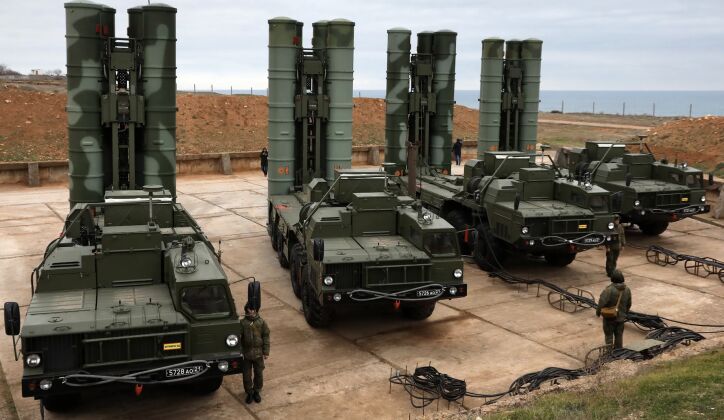
Missile Launchers From S-400 System
A Ukrainian drone strike launched by the country’s Unmanned Systems Forces has destroyed a launcher from a Russian S-400 long range air defence system, which was deployed near the Black Sea resort town of Gelendzhik in Russia’s Krasnodar region. According to Ukrainian sources, the launcher was part of a system that had carried out six ballistic missile launches against Ukraine the day before the strike. The drone strike was but part of a broader overnight operation that struck multiple Russian targets, including other air defence systems. The S-400 is not well optimised to engage low value drones, and relies on supporting systems such as the Pantsir-S and S-350 for these roles.
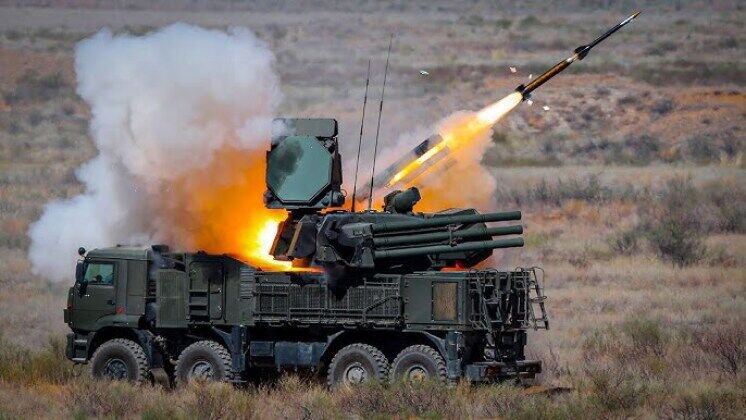
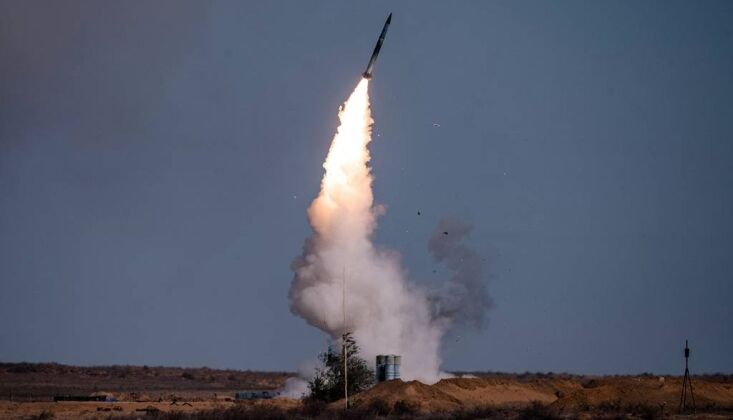
The S-400 has recently repeatedly demonstrated a new ballistic missile strike capability, with the system having been modified to launch RM-48U missiles against ground targets. These have recently gained prominence for their use against industrial targets in Ukraine, triggering a major fire in Kiev’s Sviatoshynskyi District. The RM-48U is understood to be a modified derivative of the 48N6 interceptor family originally developed for the S-300PM and later integrated into the S-400. Designed to engage aerial targets at speeds exceeding Mach 6, the missile retains extremely high velocity even when employed in a ballistic attack profile. It is considerably less costly and more effective for anti-surface strikes than the surface-to-air missiles the S-400 was originally designed to integrate.
The Ukrainian Armed Forces have singled out components of the S-400 for targeting, in several cases using U.S.-supplied ATACMS ballistic missiles, which in one case in November 2024 destroyed two launchers. In mid-2025 an attack targeted an S-400 system in Crimea, with footage released by Ukraine’s Main Directorate of Intelligence showing the destruction of two 92N2E multi-functional fire control radars, two 91N6E long range surveillance radars, and one surface-to-air missile battery. These Ukrainian attacks have benefited from tremendous support from Western satellites, electronic intelligence from Western aircraft operating near the theatre, and the presence of Western active duty and contractor personnel who have provided significant targeting support.
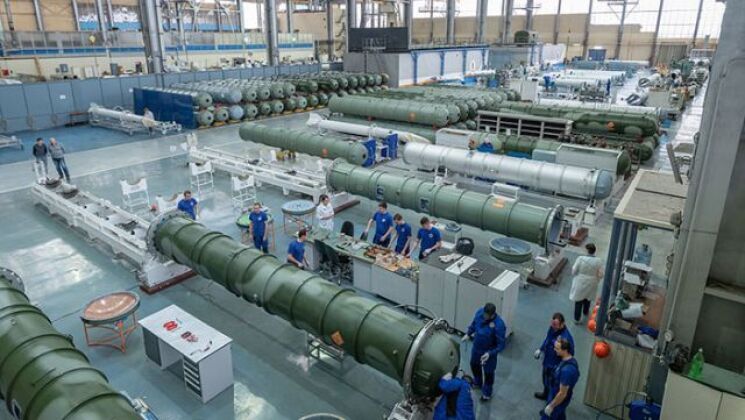
The success of Russian efforts to tremendously increase the S-400’s scale of production, which today far exceeds that of any comparable system fielded abroad, has limited Ukraine’s ability to seriously erode its defences. A new program to support the S-400’s development and production through rejuvenation of the Russian missile industry was authorised by the Kremlin on August 25, 2000, and saw three major new facilities built including a new wing of the Obukhov Plant in St. Petersburg, the Avitek Plant in Kirov which was thoroughly modernised, and the NMP Plant in Nizhniy Novgorod. After work was completed in the mid-2010s, the facilities between them contribute to a massive scale of production, allowing multiple regiments worth of S-400s to be produced annually.
