
Russia’s S-400 Air Defence System Demonstrates New Ballistic Missile Strike Capability to Take Out Ukrainian Industrial Targets
Military Watch Magazine Editorial Staff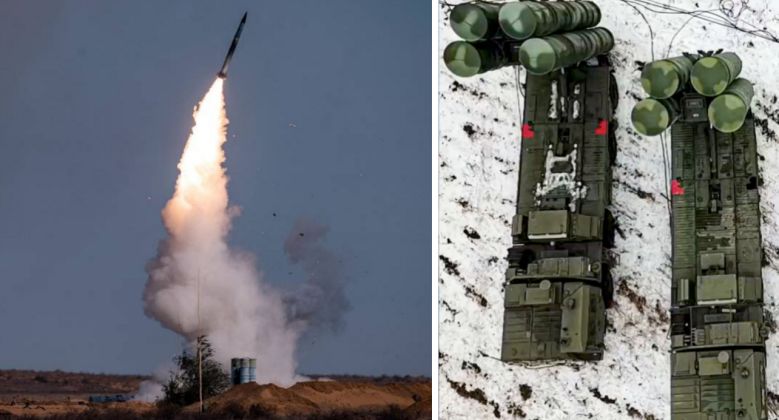
Launch and Launchers from S-400 Air Defence System
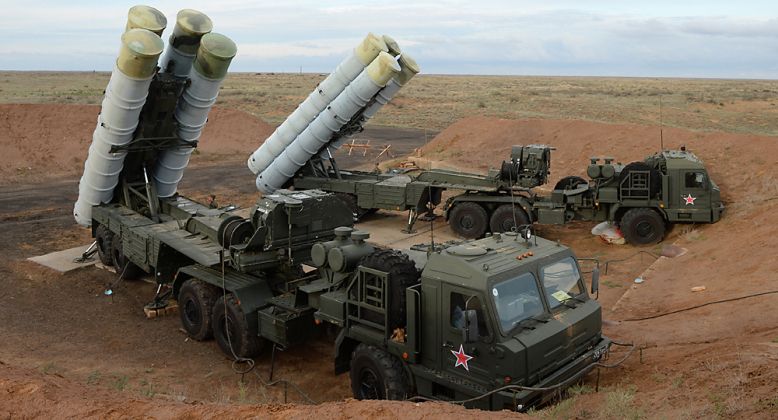
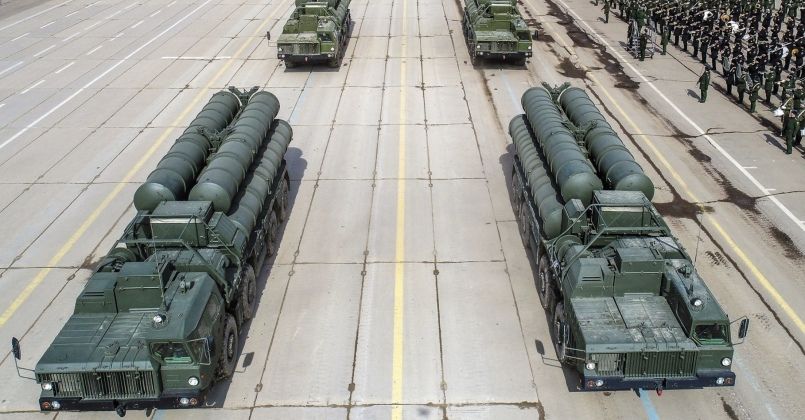
The S-400 long range surface-to-air missile system that forms the backbone of Russia’s air defence network has demonstrated a new ballistic missile strike capability in the Ukrainian theatre, with the system having been modified to launch RM-48U missiles against ground targets. These missiles have recently gained prominence for their use against industrial targets in Ukraine, with the attacks triggering a major fire in Kiev’s Sviatoshynskyi District. Videos circulating on social media appear to show multiple high-speed ballistic impacts consistent with previous attacks conducted using S-300 or S-400 systems in surface-to-surface roles.
Additional footage released following the strikes reportedly shows further RM-48U impacts across Kiev. There are also reports that the JSC Meridian, otherwise known as the Korolev Plant, which is located in the Solomianskyi District, was among the facilities targeted. The Meridian plant has long been associated with Ukraine’s defence-industrial base, manufacturing electronic equipment, communications systems and components with both military and civilian applications. While the full extent of the damage remains unclear, the reported targeting is consistent with Russia’s sustained campaign against Ukrainian defence production facilities.
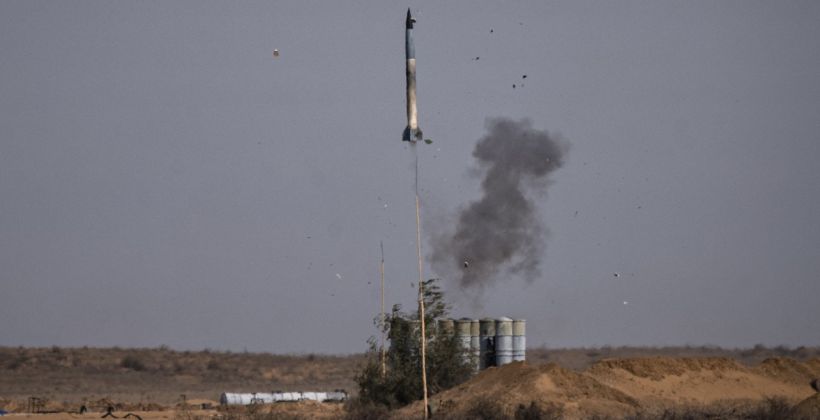
The strikes demonstrate the S-400’s capability to supplement dedicated tactical ballistic missile forces by conducting long-range strikes against fixed infrastructure. The RM-48U is understood to be a modified derivative of the 48N6 interceptor family originally developed for the S-300PM and later integrated into the S-400. Designed to engage aerial targets at speeds exceeding Mach 6, the missile retains extremely high velocity even when employed in a ballistic attack profile. Its high kinetic energy, combined with a substantial fragmentation warhead, makes it capable of inflicting severe damage against large industrial facilities despite not having been originally designed as a precision strike weapon.
Unlike purpose-built tactical ballistic missiles, converted interceptor missiles generally possess lower accuracy because their guidance systems were designed to engage manoeuvring aerial targets rather than fixed ground objectives. As a result, they are typically employed against large-area targets such as industrial complexes, logistics centres, warehouses and military facilities, where even moderate circular error probable values remain operationally effective. With the RM-48U having been developed specifically for surface-to-surface roles, however, it is likely to not only be much less costly than surface-to-air missiles, but also more accurate against ground targets.
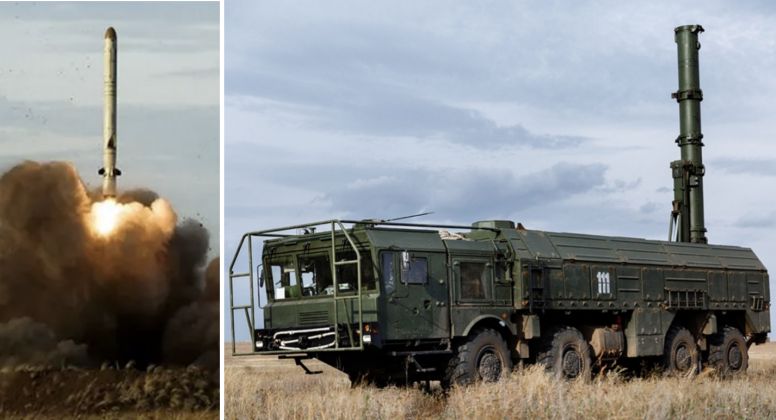
Ukrainian sources indicate that Russia has more than doubled the production rate of the RM-48U, with output set to reach approximately 500 missiles in 2026, compared to just 200 in 2025. Each integrates a 180 kilogram high-explosive fragmentation warhead. The reported launch of four RM-48U missiles against industrial targets suggests that Russia continues refining the surface-to-surface employment of S-400 interceptor missiles as part of its broader precision strike campaign. This complements the rapid expansion of output of ground-launched ballistic and cruise missiles for the Iskander-M, Iskander-K and Bastion systems, as well as ballistic missile procurements from North Korea.
