
UAE Seeks to Become ‘Another Israel’ Through Militarisation - Iranian Foreign Minister Claims
Military Watch Magazine Editorial Staff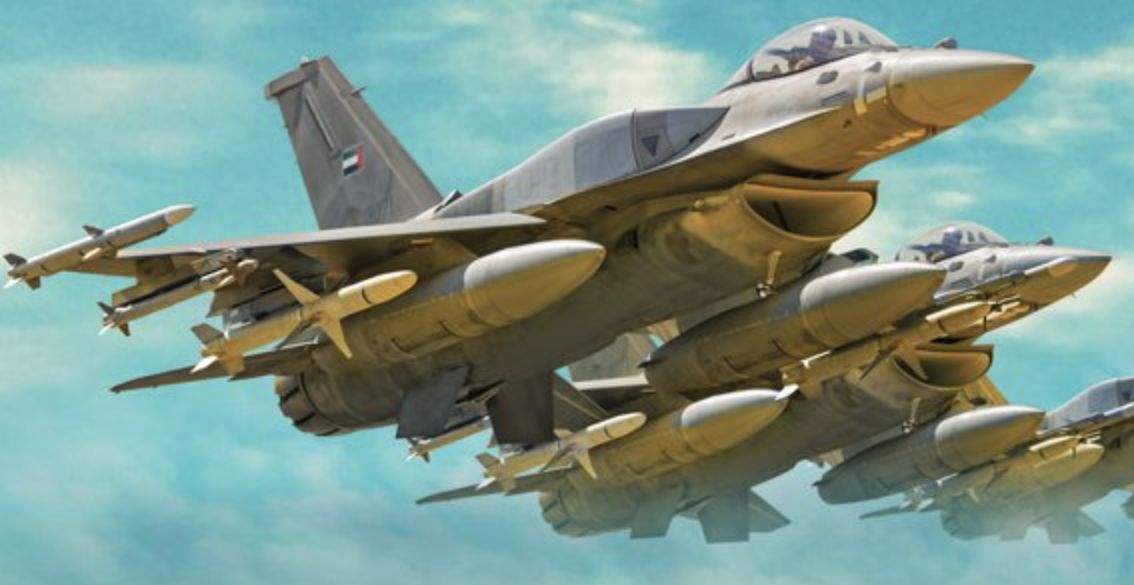
UAE Air Force F-16E Fighting Falcons
At a time of high tensions in the Persian Gulf, which have seen the United States deploy considerable aerial, naval and missile assets to the region with the full support of its Arab allies, Iran has perceived a growing threat to its security from the increasingly heavily armed and apparently hostile alliance. The U.S. led alliance retains a considerable advantage in its conventional armaments not only due to deployments by the United States itself, but also by due to the consistently very high defence expenditure of American allies - particularly the United Arab Emirates (UAE) and the Kingdom of Saudi Arabia. This discrepancy in military capabilities is particularly great in terms of aerial warfare systems, with all nine Saudi fighter squadrons and half of the UAE’s six fighter squadrons equipped with modern long range air to air missiles - namely the American AIM-120C AMRAAM. Iran by contrast has been able to equip just two of its seventeen squadrons with modern air to air missiles, and the vast majority of its fleet is comprised of ageing Vietnam War era combat jets.
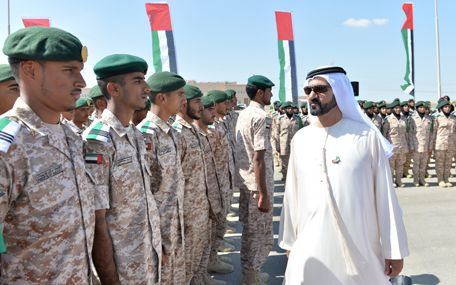
Following U.S. allegations that Iran was responsible for an attack on an oil tanker in the Gulf of Oman in May, the UAE has begun an investigation into the incident. Iran's Foreign Minister Mohammad Javad Zarif on June 11th slammed Abu Dhabi for its dependance on the U.S. and in particular its high expenditure on Western armaments. He stated in this regard: "three countries in the region believe they can maintain their security through their relations with the United States... The United Arab Emirates is spending billions of dollars on armaments and wants to be a second Israel in the region.” The ‘three countries’ aligned with the Western Bloc referred to Saudi Arabia, the UAE and Israel - the last which while not in the Persian Gulf is in the Middle East. Referring to the UAE as the “next Israel” was likely in response to the country's growing dependence on the Western Bloc for its defence, considerable investment in acquiring American and European military hardware, and growing interventionism beyond its borders with Western support - namely in Yemen. Despite it’s small size, the UAE outspends Iran in defence with $22.8 billion spent in 2014 (the most recent estimate.) This figure is speculated to have increased since, with the country having joined the war against Yemen’s Ausnurullah Coalition forces in March 2015. How Iran’s complicated relationship with the UAE will evolve remains to be seen, but both states retain a strong mutual interest in retaining peaceful retains due to their heavy reliance on bilateral trade. Both states serve as the other's largest trading partner, and given their proximity and their considerable strike assets - from European Black Shaheen cruise missiles in Emirati service to the North Korean Rodong-1 and Musudan ballistic missiles in Iranian service among others - any direct conflict between the two parties would be disastrous for both.
