
U.S. Deploys Elite Commandos to Target Missile Sites in Yemen as Arab Allies Fail to Make Battlefield Gains
Military Watch Magazine Editorial Staff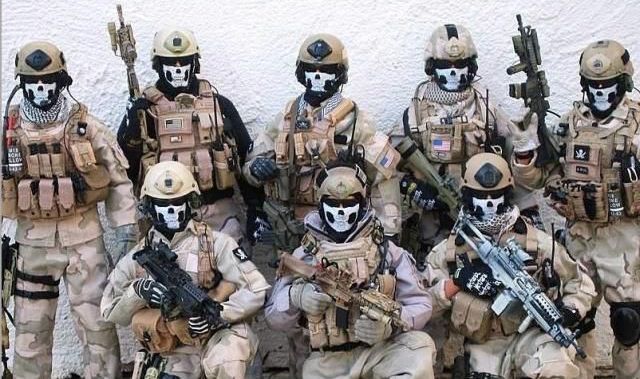
U.S. Commandos in Desert Camouflage
Following over three years of Saudi Arabian military intervention in Yemen, since the beginning of a campaign in March 2015 expected to end within weeks, the Arab kingdom and its allies have continued to take heavy losses against Yemeni Ansurullah coalition forces while failing to make tangible gains. With the war having taken well over ten thousand lives at the most conservative estimates, and cost the increasingly cash strapped Saudi state billions of dollars, the Arab kingdom has increasingly resorted to relying on external assistance to continue its campaign. Western states including Sweden, Britain, France and the United States as well as mercenary forces from South America and Africa and a number of allied Arab states have all contributed to the war effort. With Saudi led coalition forces continuing to flounder on the battlefield, the United States military has as of May 2018 escalated its involvement in the Middle Eastern war in the hopes of resolving the conflict quickly in favour of its ally.
While U.S. involvement was previously confined to servicing Arab military equipment, refuelling their aircraft, and carrying out surveillance from air and sea and drone strikes on Ansurullah targets, escalation came in the form of a sizeable deployment of U.S commandos to Yemeni territory. Following growing numbers of ballistic missile attacks by Ansurullah coalition forces on Saudi targets, retaliation for the Arab Kingdom’s massive airstrikes on Yemeni population centres, American personnel have been tasked with seeking out and destroying the Yemeni missile capabilities and thus neutralising their ability to retaliate. Ansurullah forces have reportedly received assistance from North Korean specialists in developing makeshift ballistic missiles domestically, and while their technology dates back to the Vietnam War era it has nevertheless proved a formidable threat to Saudi security. With Saudi Arabia and their allies possessing an overwhelming conventional advantage, Ansurullah's missile forces have been one of its key assets allowing it to wage an asymmetric war - thus making these missile capabilities a primary target for their adversaries.
The decision to deploy U.S. personnel to Yemen comes as Washington is increasingly reliant on Riyadh’s support, both for its arms industries as by far its largest military client and for its position in the Middle East, with the influential Arab state strongly supporting the Western bloc’s initiatives against Iran. With tensions between the Western bloc and Iran fast growing, the support of Riyadh and other Arab nations is viewed as a critical asset, and Saudi diplomatic clout has proven key to isolating Tehran throughout the region - thus weakening the Western bloc's primary regional adversary. Intervention against Ansurullah forces in Yemen, particularly following the repeated failures of U.S. made air defences to protect Saudi airspace from Yemeni missile attacks, could well be viewed as part of a quid pro quo needed to maintain the favour of its leading regional strategic partner.
