
U.S. Expands Arsenal of New Enhanced MOAB Bunker Busters for Confrontation with North Korea, Iran
Military Watch Magazine Editorial Staff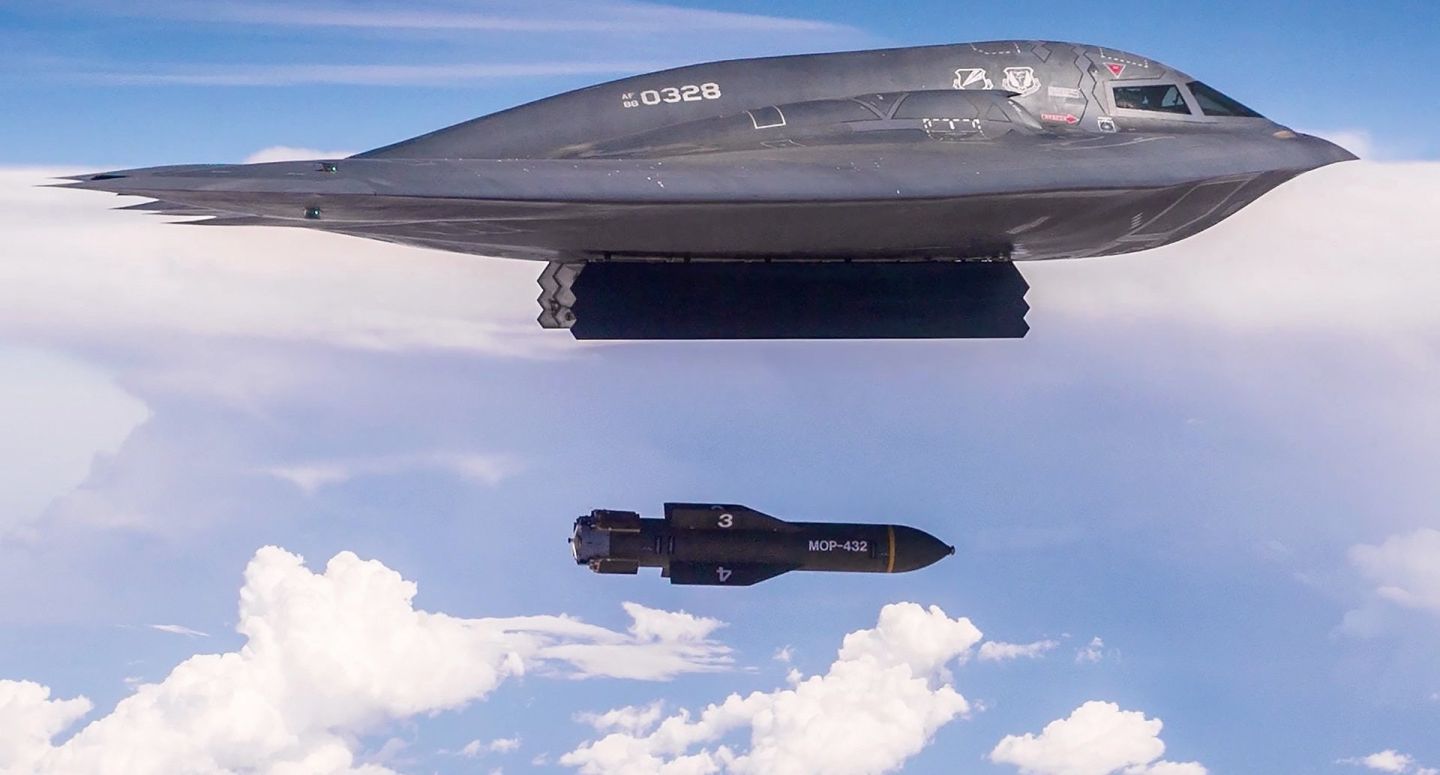
U.S. Air Force B-2 Spirit Deploys GBU-57 MOAB
The U.S. Air Force has announced plans for continued investment in the production of GBU-57 Massive Ordinance Penetrator (MOAB) bunker busting tactical warheads. The bombs are the heaviest non-nuclear warheads fielded by any Western military at 30,000 pounds, and are designed specifically to penetrate hardened fortifications such as bunkers, underground weapons caches and tunnel networks. The number of bombs ordered, and the total number currently in service, remain unspecified, but due to their considerable cost only a few dozen are thought to be in service. It was confirmed over eight years prior in 2011 that 20 bombs were in service, but orders have continued since as the U.S. has seen tensions grow with near peer adversaries all boasting heavily fortified military facilities.
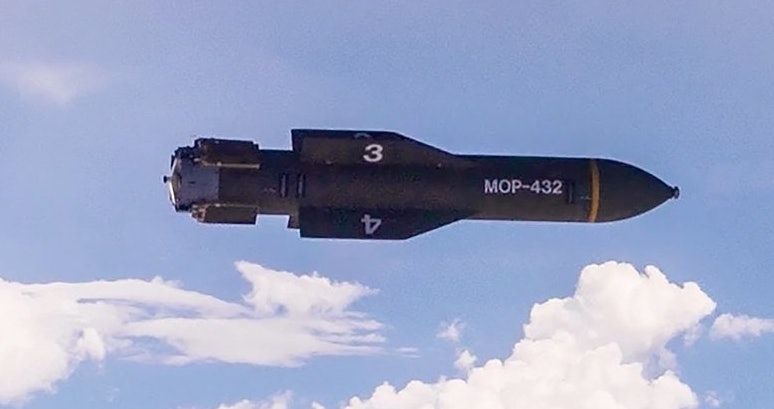
Bunker busters such as the GBU-57 are deigned to maximise penetrative capability and ensure that the majority of an explosion’s force is channeled downwards into the earth - rather than being reflected upwards as is the case with conventional bombs. The need for such systems first arose during the Korean War, when all weapons in the U.S. arsenal including nuclear warheads of the time were deemed insufficient to penetrate heavily fortified North Korean and Chinese defence lines - although no bunker busters were ready for service before the war’s end. Bunker busters achieve a channeling of energy into the ground through a combination of technologies, but common to all bunker busters both conventional and nuclear is an engineering of explosions to ensure they take place underground rather than above the earth's surface.
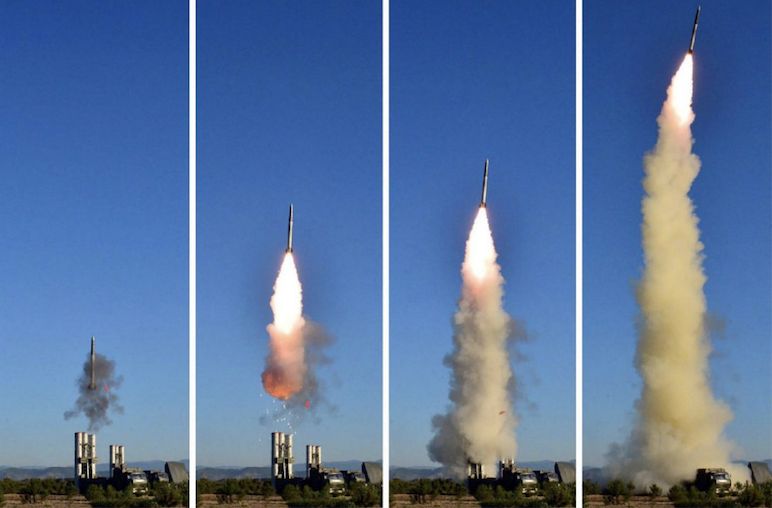
Investment by the U.S. Air Force in GBU-57 bombs comes amid rising tensions with North Korea and Iran, the former which has seen a deadlock in negotiations over sanctions relief and concessions over its nuclear program and threatened to resume testing of strategic weapons from January 2020 should Washington fail to bring more reasonable terms to the table. The U.S. withdrawal from the JCPOA nuclear deal with Iran, and subsequent moves by Tehran towards resuming uranium enrichment and reaching a threshold nuclear capability, has led to spiking tensions between the Middle Eastern state and the Western superpower. Iranian officials also threatened in April to withdraw from the nuclear non-proliferation treaty should threats from the United States continue. Moves to increase stockpiles of bunker buster bombs also follows a major test of the GBU-57 in May 2019. Bunker busters ordered were notably of the enhanced GBU-57E/B variant, which entered service from 2016 and boasts a new and more sophisticated warhead.
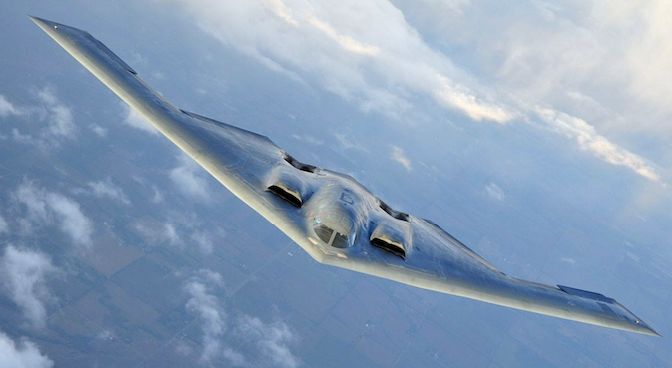
North Korea is considered the most heavily tunnelled country in the world, with civilian bomb shelters built as deep as 110m underground and possibly deeper and fortified with steel doors and poured concrete. Sites from air defence radars to ballistic missile factories and nuclear facilities are all well fortified enough to withstand attacks by the vast majority of American air to ground weapons, meaning advanced penetrative munitions will need to be fielded in very large numbers should Washington countenance an attack on the country. Iran too has heavily fortified its missile and nuclear sites with North Korean assistance, although its less mountainous territory has provided reduced possibility for fortification. Although a single GBU-57 is insufficient to penetrate the more heavily fortified Korean facilities based on published specifications, the bombs are notably precision guided and designed to allow multiple warheads to be dropped on a single spot - each digging deeper following on from its predecessor to reach a target. B-2 Spirit subsonic stealth bombers are the only aircraft confirmed to deploy the heavy bombs, and multiple Spirits can potentially deliver enough firepower to penetrate even the most heavily fortified positions. 20 of these bombers are currently in service in the U.S. Air Force. While acquisition of the GBU-57 does not necessarily indicate that the U.S. intends to initiate hostiles with either North Korea or Iran, to of its oldest adversaries, it does demonstrate that the Air Force is taking into consideration the kind of armaments it will need to wage such wars should it become necessary.
