
U.S. F-15 Fighters to Integrate Enhanced Infrared Sensor to Counter Chinese Stealth Fighters in the Pacific
Military Watch Magazine Editorial Staff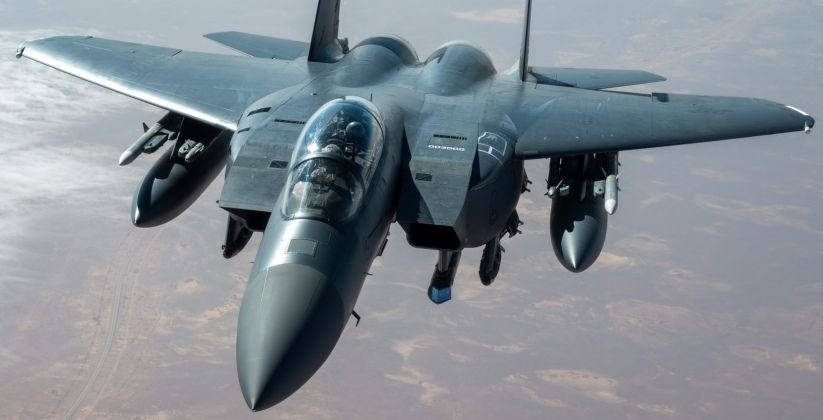
U.S. Air Force F-15E Strike Eagle Fighter
The U.S. Air Force has begun exploring a major upgrade to the infrared sensing capabilities of its F-15 fleet, issuing a request to industry for proposals to develop a next-generation Infrared Search and Track (IRST) system for the fighters. The initiative reflects growing concern that existing F-15 infrared sensors no longer provide the performance needed to compete against increasingly sophisticated Chinese fighters in highly contested air combat environments, and to a lesser extent newer Russian fighters. Unlike conventional radar, which actively emits radio waves and can alert enemy aircraft equipped with radar warning receivers, an IRST passively detects the heat signatures generated by aircraft engines and airframes.
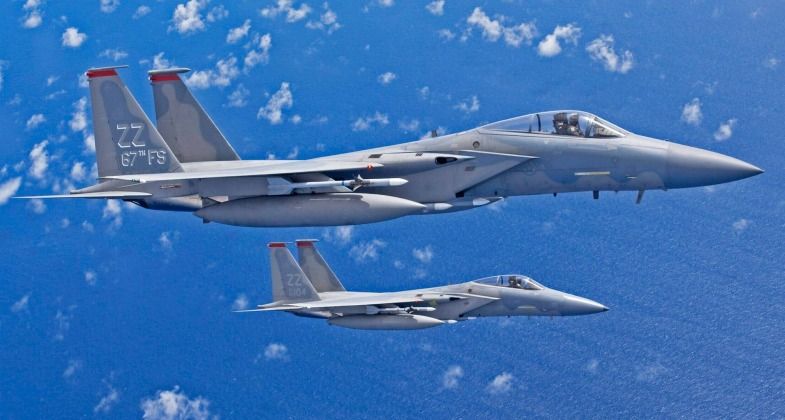
Infrared sensors passively detect heat emitted by engine exhaust, hot turbine components, heated skin caused by aerodynamic friction, as well as weapons bays and other warm internal systems. Since stealth shaping has little effect on infrared radiation, an aircraft with a very small radar cross section can still produce a detectable heat signature. IRSTs also allow fighters to detect, track, and potentially engage targets without revealing their own positions. Passive infrared sensors are also much less vulnerable to electronic warfare and radar jamming, making them increasingly valuable as modern battlefields become saturated with electronic attack systems particularly in the Pacific theatre.
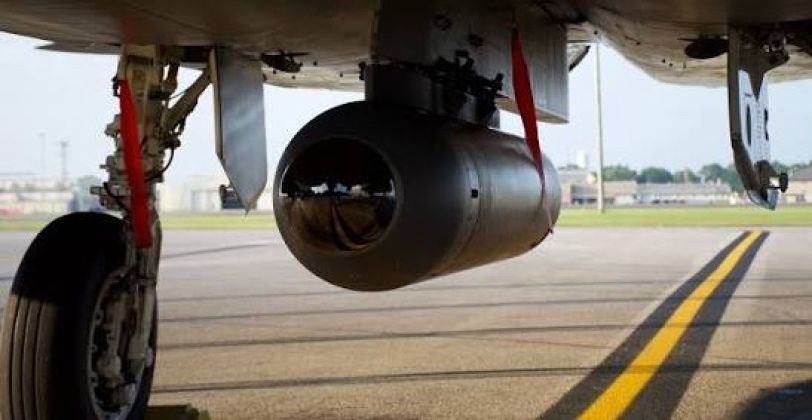
The U.S. Air Force’s current Legion Pod carrying the AN/ASG-34 infrared sensor, and entered operational service in F-15C/D fighter units in 2022. While it significantly improved the fighter’s passive detection capabilities, the externally mounted pod has several drawbacks. It occupies the aircraft’s centreline station, reducing flexibility for carrying fuel or weapons, while flight testing identified manoeuvring restrictions and other limitations that prevented the system from fully meeting operational requirements. The new program is expected to focus particularly on the F-15EX Eagle II, the modern digital mission architecture of which offers far greater potential for integrating an internal, fully fused infrared sensor. Despite its lack of stealth capabilities, the F-15EX is in many respects the most capable fighter type in the Western world, and is rivalled only by the F-35 which emphasises a very different set of capabilities.
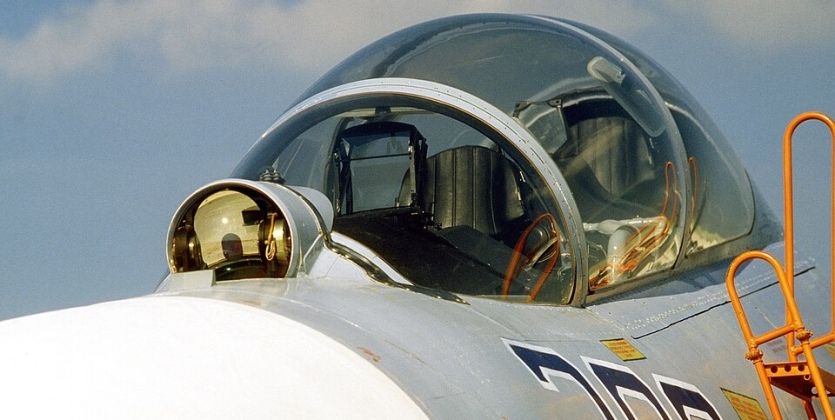
Boeing has previously demonstrated what appeared to be a nose-mounted IRST installation ahead of the cockpit, suggesting that future F-15EXs could receive an integrated sensor rather than relying on an external pod. Such a configuration would provide a wider field of view while avoiding aerodynamic penalties and preserving external hardpoints for additional weapons or fuel tanks. Soviet fighters have from the early 1980s integrated their own IRST systems, beginning with the MiG-29 and Su-27, with U.S. fighters having begun to do so in the 2010s with the F-35 and F-18E Block 3.
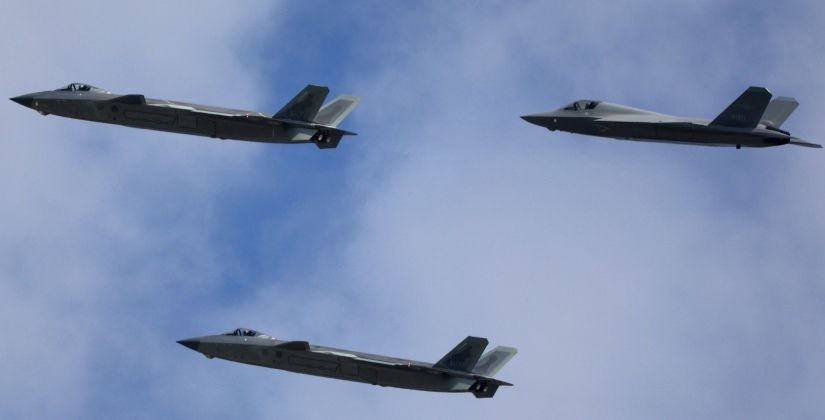
IRST systems are considered particularly critical in the pacific, where F-15EX deployments will initially be concentrated, as China continues to procure advanced stealth fighters far faster than any other country. These include the J-20 and its new lighter counterpart the J-35, and well as at least two types of sixth generation fighter which are scheduled to enter service in the early 2030s. The U.S. Air Force may be planning to pair F-15EX fighters with advanced electronic warfare aircraft, such as the EA-18G, to limit advanced Chinese fighters’ ability to target them at long or medium ranges, in order to allow the American aircraft to engage at shorter ranges where their lack of stealth capabilities will be less of a disadvantage. China’s fielding of the world’s largest medium weight and heavyweight AEW&C ‘flying radar’ fleet, however, may limit the viability of this approach.
