
U.S. Escalates Arctic Shows of Force with Deployments of B-2 Stealth Bombers and B-1B Lancers
Military Watch Magazine Editorial Staff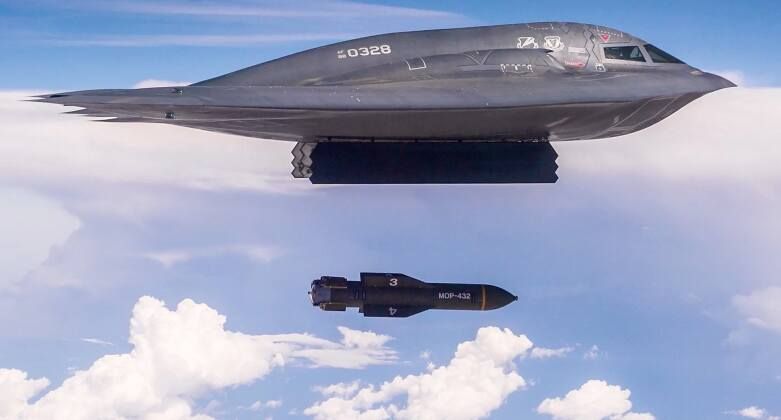
B-2 Spirit Deploys GBU-57 Bomb
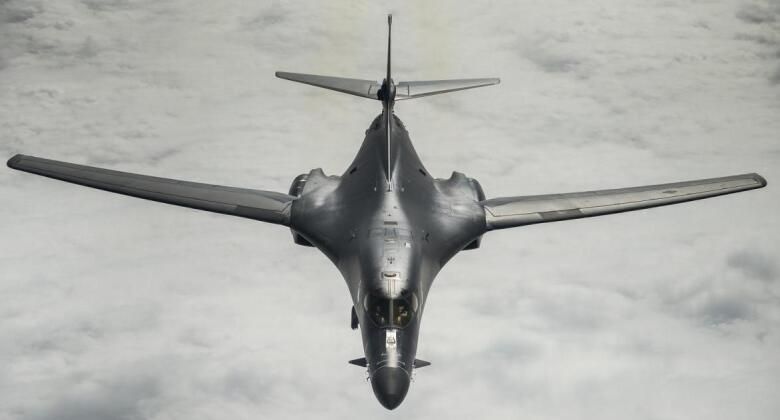
Following the first ever landing of a B-1B bomber in the Arctic Circle, and deployments of four of the aircraft to Norway where a growing U.S. Marine presence has increasingly focused on preparations for Arctic warfare, the U.S. Military has conducted another significant show of force in the region with the deployment of B-2 Spirit stealth bombers. On March 16th, two B-2s joined two B-1B bombers for a mission off the coast of Iceland - which was described by the U.S. Air Force as “long-range integration in the High North.” The B-1s were deployed from Norway’s Ørland Main Air Station, while the B-2s were flown over from the U.S. mainland. Deputy Commander of U.S. Air Forces in Europe, Lieutenant General Stephen Basham, state regarding the mission: “Bomber Task Force missions are critical to maintaining our global competitive edge. The importance of providing airmen the opportunity to train in unique environments can’t be overstated.”
The B-2 bomber is the most expensive combat aircraft in service anywhere in the world, with the aircraft costing approximately $2 billion each. The aircraft have been in service since 1997, but have suffered considerable performance difficulties due to their fragility, their extreme maintenance requirements and their often troubled sensor suites. The aircraft cannot be deployed outside U.S. territory for extended periods due to their need for special air conditioned hangers, although their long ranges allow them to reach targets anywhere in the world from bases in the U.S. with sorties at times taking over 20 hours. With an operational cost of over $130,000 per flight hour, which reflects their extreme maintenance needs, the B-2 is an extremely costly asset which is prized for its advanced stealth capabilities and its ability to carry a very high payload of guided weapons including large warheads and penetrative ‘bunker buster’ bombs such as the GBU-57.
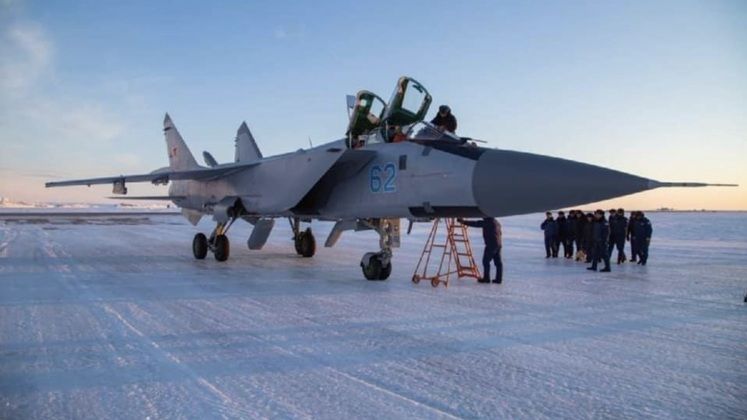
The U.S. deployments near the Arctic follow Russia’s own escalation of its military presence in the region, which has included not only deployments of air defence system such as the S-400, Tor and Pantsir, but also a formidable contingent of some of its most capable combat aircraft. Russia’s two heaviest combat jets other than its heavy bombers, its Su-34 strike fighter and MiG-31 heavy interceptor, have both been deployed to forward positions at newly expanded airbases with the latter stationed above the Arctic circle. MiG-31s deployed to secure the Arctic include not only MiG-31BM aircraft designed for long range air to air combat, but also MiG-31K strike platforms equipped with hypersonic ballistic missiles.
