
Su-35 Fighters Deployed to Support Major Russian Offensives in Kursk
Military Watch Magazine Editorial Staff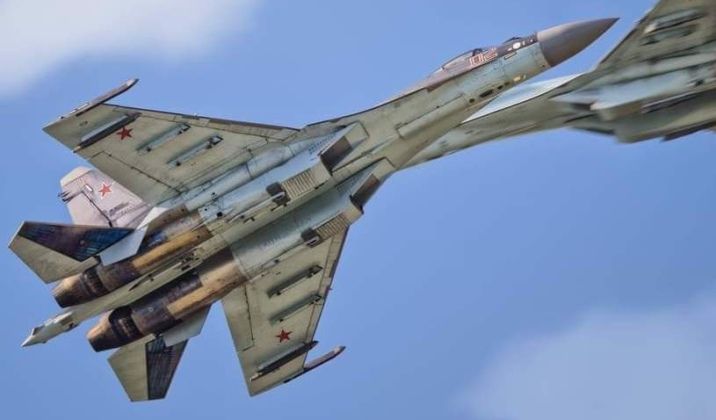
Russian Air Force Su-35 Fighter
The Russian Air Force has deployed Su-35 fighter aircraft to support ongoing air to surface operations against Ukrainian and allied Western forces in the Kursk region, where a major Russian offensive is currently underway to fully secure the territory. The Su-35 is Russia’s premier class of air superiority fighter, and although optimised for air to air combat it also retains significant secondary air to ground capabilities. The Russian Defence Ministry reported regarding the fighter class’ participation in ongoing operations: "While performing their combat missions, crews of Su-35S multipurpose fighter jets worked to provide air cover in the designated area of operations of bomber and ground-attack aircraft, as well as helicopters of the army aviation as they carried out airstrikes on Ukrainian armoured vehicles and servicemen.” It added that one of the fighters used onboard weapons systems to detect enemy air defence sites, as a number of mobile air defence systems having been deployed by Ukrainian forces to provide cover for their assault on Kursk since early August.
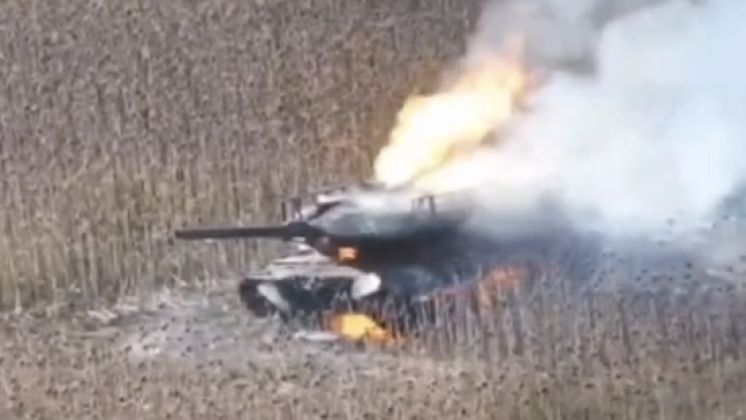
The deployment of Su-35s to support strikes in Kursk was reported just a day after the state run United Aircraft Corporation announced that a new batch of the aircraft had been delivered to the Russian Air Force, alongside a batch of Su-57 fifth generation fighters. Su-35s have played a leading role in air to air operations in the Russian-Ukrainian War since February 2022, with one of the class’ most notable successes occurring in the war’s initial days on March 5, 2022, when the aircraft reportedly shot down four of the Ukrainian Air Force Su-27s near the city of Zhytomir. Multiple further kills have included more Su-27s, as well as MiG-29s, Su-24M strike fighters, Su-25 ground attack jets, Mi-8 helicopters, and a wide range of drone classes. Although Ukrainian air power has been diminished considerably, some of the country’s remaining Su-27 fighters have been deployed to attempt to provide air support to forces in Kursk, albeit on missions that were far from successful. The limited capabilities of Ukrainian air power make the need for fighter escorts for Russian strike missions questionable, and it remains highly likely that Su-35s involved were armed for both air to air and air to surface missions allowing them to contribute to air strikes.
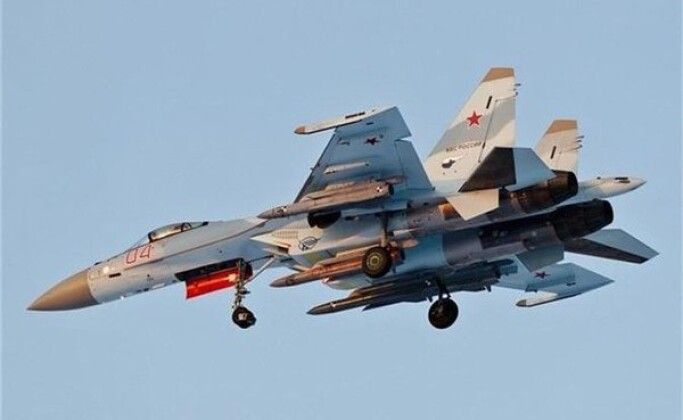
The Su-35 is closely based on the Soviet Su-27 Flanker air superiority fighter, but has been comprehensively modernised with new engines, sensors, avionics, weaponry and a high composite airframe with a reduced radar cross section. Where the Su-27 was near unanimously considered the world’s most capable fighter for air to air missions in the waning years of the Cold War, however, the Su-35’s standing today is considerably lower, and while totally unrivalled in the Ukrainian theatre it is less advanced than rival fighters such as the Chinese J-20 and the American F-35. The fighter class has been involved in multiple close encounters with American combat aircraft, including U.S. Air Force MQ-9 Reaper drones over Syria, against which Su-35s have at times conducted aggressive manoeuvres which in one incident resulted in severe damage to one of the drones. More recently in September a Su-35 made a threatening approach to a U.S. Air Force F-16 near Alaska, cutting in front of and across the American fighter’s path at very close range, in what has been referred to by some sources as a ‘headbutting’ manoeuvre. The fighter class is expected to see production continue until close to 2030, bringing the total production run to close to 250 fighters.
