
Russia’s New BuK-M3 Built For Frontline Air Defence Shoots Down Ukrainian Su-27 Fighter Over Kursk: Glide Bombing Raid Thwarted
Military Watch Magazine Editorial Staff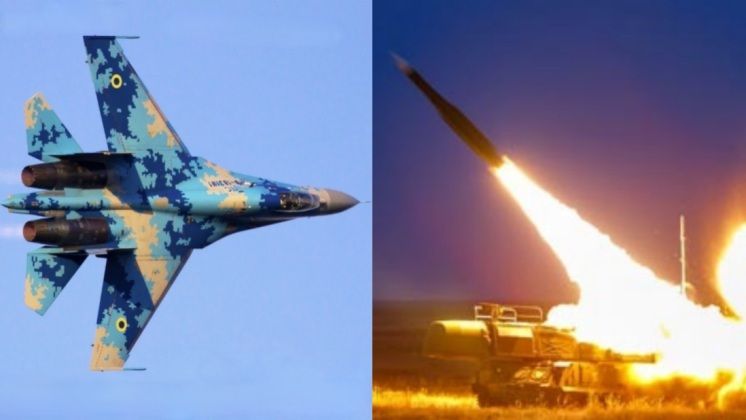
Ukrainian Su-27 Fighter and Russian BuK-M3 Launch
A Russian BuK-M3 medium range surface to air missile system shot down a Ukrainian Air Force Su-27 Flanker fighter aircraft at 18:12 local time on August 21, as the fighter was attempting to drop guided glide bombs on Russian forces in the Kursk region. The missile system was operating under the 6th Air Defence Force’s 5th Brigade. The shootdown occurred 15 days into a major Ukrainian incursion into the Russian Kursk region at a strength estimated at 15,000 personnel, which has seen the country’s most elite forces committed to an incursion deep into Russian territory, but has resulted in very heavy losses for the attackers. The Su-27 is by far the most capable fighter class fielded by the Ukrainian Air Force, with its range and weapons carrying capacities being overwhelmingly superior to those of any other aircraft in the country’s inventory, allowing it to launch glide bombing raids on faraway targets such as Kursk, and to carry heavy bomb payloads on such missions.
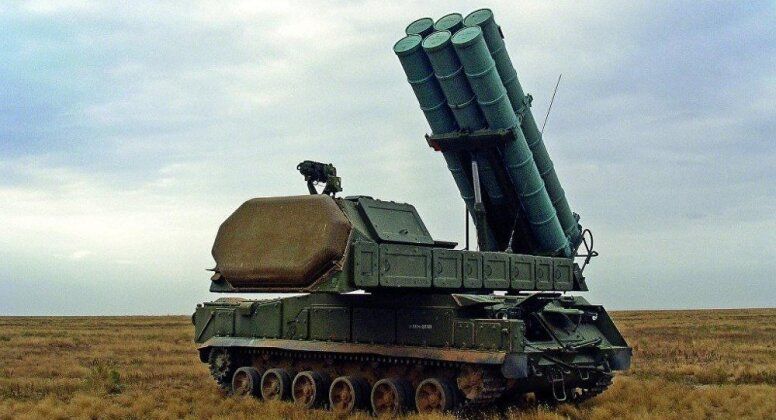
Introduced into service in the late 2010s, the BuK-M3 makes use of a tracked launch vehicle, and boasts far higher mobility than the more widely fielded BuK-M2 as well as a much extended maximum range reportedly as long as 70km - although some sources have indicated that it could exceed 100km when networked with other systems’ radars. This range is achieved through the integration of the new 9R31M missile. BuK-M3 systems are usually organised into battalions of three batteries each, with battalions themselves operating in groupings of four which between them share one command vehicle and one search radar. Each launcher carries up to six missiles, providing increased firepower over older BuK variants. Optical trackers on previous Buk models are replaced by a thermal target imaging designator, while the system boasts a new digital computer and high-speed data exchange system not seen on older models. It is notable that while the BuK-M2 and BuK-M3 have been used on a significant scale by Russian forces, older Soviet-built BuK-M1 systems have formed the backbone of Ukraine’s own air defences alongside Soviet era variants of the S-300 system. Kiev has attempted unsuccessfully to re-purchase BuK-M1 systems exported to Georgia in the 2000s, as its own inventories have been increasingly depleted. BuK-M1 batteries have been widely sighted in the Kursk region providing localised air defence to the attacking forces. The ability to accompany ground forces for forward deployments, including rapid offensives, has made BuK systems highly prized by both sides.
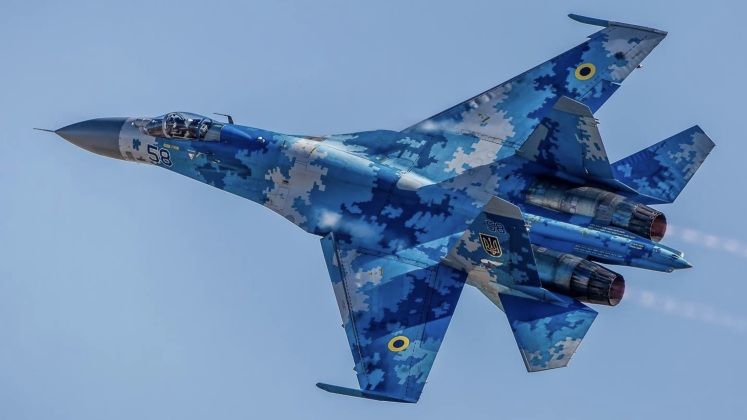
The Su-27 was considered by far the world’s most capable class of air superiority fighter in the 1980s and 1990s, and was inherited by Ukraine in significant numbers when the Soviet Union disintegrated with approximately 70 thought to have been in the country’s inventory. Numbers have since diminished considerably, with the aircraft having taken very significant losses from February 2022 in both air to air combat and to missile strikes on Ukrainian bases. Footage released on August 13 showed the destruction of one of the aircraft at Mirgorod Airbase. Drone footage released on July 2 showed the destruction of two Su-27s in Russian missile strikes, and serious damage to two more possibly beyond repair, at the very same facility. Unlike the country’s lighter MiG-29 fighters, which were widely fielded in Eastern Europe, Ukraine’s Su-27s cannot be replenished by allied states as the class is not operated by other Western-aligned countries. The aircraft have since early 2022 seen their strike capabilities enhanced through the integration of both British Storm Shadow cruise missiles and American Joint Direct Attack Munition-Extended Range (JDAM-ER) glide glide bombs.
