
F-35 Numbers Surpass 1000 Fighters: How America’s Stealth Fleet Gained a Coveted Numerical Edge
Military Watch Magazine Editorial Staff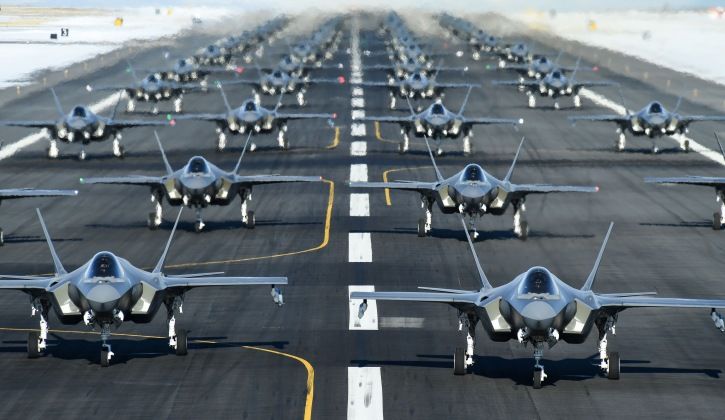
F-35A Fifth Generation Fighters
The Lockheed Martin F-35 program has surpassed a milestone of 1000 fighters in service in fleets across the world, cementing its position as by far the most widely produced post-Cold War fighter class in the world, as the aircraft continues to receive new orders both from the Pentagon and from strategic partners of the United States. Despite the significant numbers commissioned, the fighter program remains significantly behind schedule, with approval for full scale production having been given only in March 2024 after seven years of delays, while the aircraft are still not considered fully combat ready for high intensity combat due to years long delays with the Block 4 software upgrade package among other issues. Once these issues are resolved, however, the fighter promises to revolutionise the combat capabilities of frontline combat aviation units across much of the world, with its performance advantages over Cold War era F-15, F-16, and F-18 fighters which is primarily replacing considered to be revolutionary. Over 3000 F-35s are expected to be produced, which will make it the most widely produced post-Vietnam War fighter class in the Western world other than its direct predecessor the F-16 Fighting Falcon. The largest foreign clients for the fighters include Japan, which has ordered 147 fighters, and Canada which has ordered 88. With the F-35 widely considered a fighter for the Western Bloc states, only four non-Western countries have the aircraft on order including Japan, South Korea, Singapore and Israel.
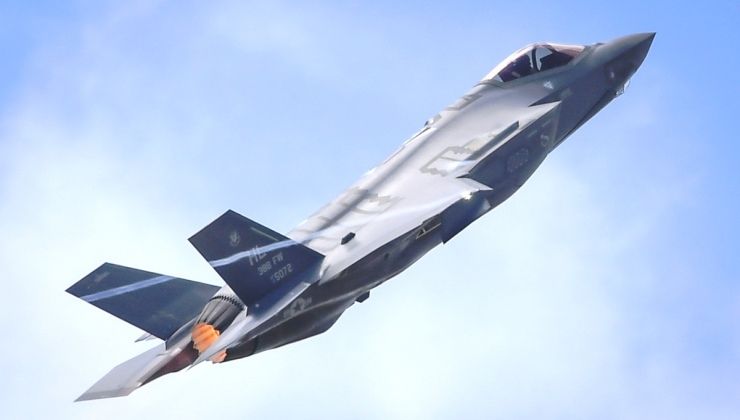
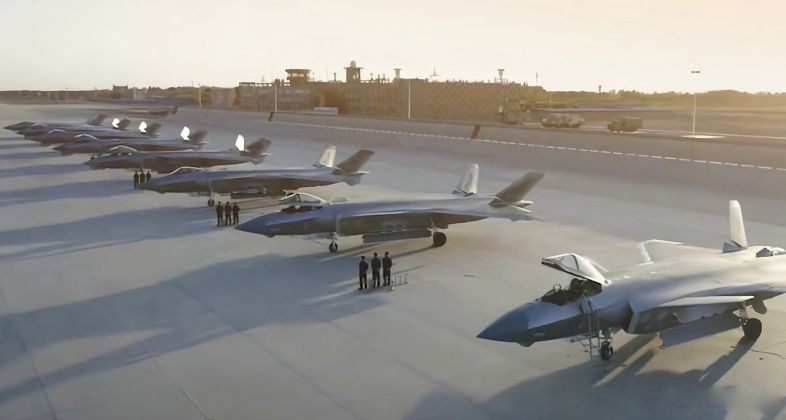
The F-35 is one of just two fifth generation fighters currently in large scale production worldwide, alongside the Chinese J-20 which has seen over 300 fighters commissioned by the Chinese People’s Liberation Army. Three primary differences between the rival programs have allowed the F-35 to be fielded in much larger numbers, including its pursuit as a joint program and aggressive marketing for export, where the J-20 is fielded exclusively by China’s air force, as well as the F-35’s development into three separate variants, the F-35A, F-35B and F-35C with very different takeoff and landing capabilities to meet the requirements of the U.S. Air Force, Marines and Navy. Thirdly, the F-35, was designed as a relatively light single engine fighter with minimal production and operational costs, although this has also resulted in a short range, poor manoeuvrability, and a limited weapons carrying capacity and radar size compared to larger high performance twin engine fighters like the J-20. Although outnumbered, the J-20 fleet reportedly boasts far higher availability rates and much lower rates of qualitative deficiencies than the F-35.
Although over 1000 F-35s are now in service, approximately 19 percent of these, or 189 aircraft, are highly troubled early production aircraft, which continue to suffer from wide ranging performance defects that have drawn their viability for combat to question. Many of these are expected to fly for a small fraction of their intended service lives due to structural defects. The aircraft are accordingly relegated to serving as aggressor trainers and in other similar roles. The F-35’s vast numerical superiority within its generation is largely a result of the end of the Cold War, with the Soviet Union most numerous fighters from the first, second and third generations having notably all been produced in much greater numbers than their American rivals. The F-35’s direct predecessor the F-16 was accordingly the first Western fighter to be the most numerous in its generation, largely due to the disintegration of the USSR which cut short production of the rival MiG-29. With a far poorer economic standing than the USSR, a much smaller defence budget, and military doctrine that places a far lower focus on tactical combat aviation, post-Soviet Russia has yet to field its first regiment of fifth generation fighters, with production rates of its Su-57 fighter expected to remain at under a quarter those of the F-35.
