
Russian Air Force Receives New Su-57 Fighters: Can It Meet the Ambitious 2024 Acquisition Surge Target?
Military Watch Magazine Editorial Staff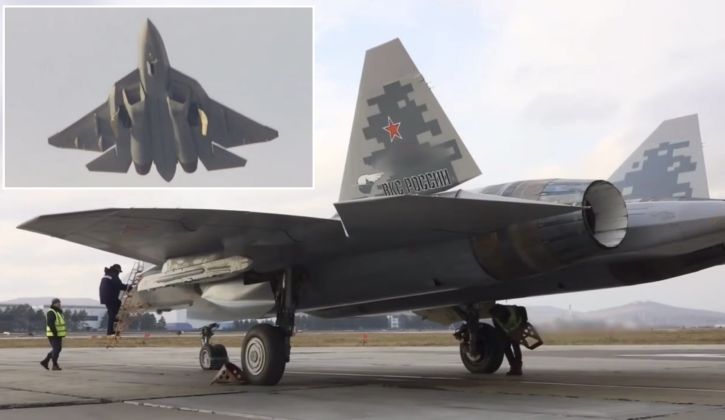
Footage From Su-57 Delivery (November 11)
The Russian Air Force has received a new batch of Su-57 fifth generation fighters, with footage of the aircraft delivered by the state owned United Aircraft Corporation (UAC) released on November 11. This follows the receipt of the previous batch in mid-September, at which time Russian military pilots were cited expressing satisfaction with the aircraft’s performance. UAC CEO Vadim Badekha stated regarding the latest delivery: "UAC enterprises continue rhythmical operation to fulfil the commitments. Other batches of Su-57 fifth generation and Su-35S multirole fighter jets of generation 4++ will be delivered by the end of the year. The aircraft are at various production and test stages.” Regarding expected further deliveries over the next 50 days, he added that “other batches of Su-57 fifth-generation and Su-35S multirole fighter jets of generation 4++ will be delivered by the end of the year.”
Russian industry has set a highly ambitious target of a 67 percent surge in the production of Su-57s in 2024, with 20 fighters expected to enter service this year compared to just 12 fighters in 2023. The increase is nevertheless considered likely to be achieved, with industry having achieved an increase in deliveries by six fighters in 2023 - as only six fighters were delivered in 2022. Should the program avoid further delays, the fleet will nearly double in size this year, from 22 to 42 fighters, although one may have been lost in a Ukrainian long range strike on a Russian airbase in the Astrakhan region in early June.
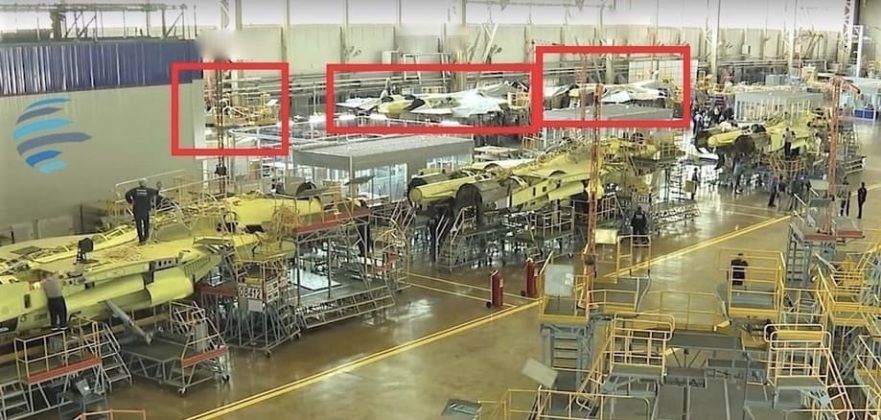
The Komsomolsk-on-Amur Aviation Plant in the Russian Far East in August saw new facilities opened to facilitate expanded production of the Su-57. The fighter’s production scale is currently rivalled only by that of the Su-34 strike fighter within Russia, although it is dwarfed by the massive production scales of the American F-35 and Chinese J-20 fifth generation fighters which are built at rates of approximately 140 and 100 per year respectively. J-20 production is expected to reach 120 aircraft in 2025. A significant advantage the Russian Su-57 retains is its degree of high intensity combat testing, which remains wholly without equal for a fighter of its generation due to its operations in the Ukrainian theatre from early 2022. Operations have included air defence suppression, air to air combat, and operations in heavily defended enemy airspace, as well as a range of precision strike missions using both internally and externally deployed missiles.
Su-57 production is expected to expand to between 40 and 50 per year, and possibly significantly more, by the early 2030s, as Russia gradually phases its older Su-30 and Su-35 fighters out of production, and as the new aircraft receives anticipated export orders. A number of unconfirmed reports indicate that Algeria has already placed orders for the fighters, while India has continued to show a strong interest in them, and Moscow’s growing ties with North Korea have fuelled speculation that loopholes in the UN arms embargo could be found to facilitate a sale. The future of the fighter program depends heavily on the scale of export orders received, as well as the extent to which reports of an expansion of the number of operational Russian fighter squadrons materialise, with a larger fleet being able to accommodate a much greater production capacity. The scale of production will also very likely be influenced significantly by the Russian Air Force’s satisfaction with the Su-57’s performance in the Ukrainian theatre, much as many weapons systems such as the T-80 tank have received much greater attention since open hostilities began due to their demonstrated high performances.
