
South Korea’s New L-SAM Challenges U.S. Patriot Air Defence System to Compete For Swiss Orders
Military Watch Magazine Editorial Staff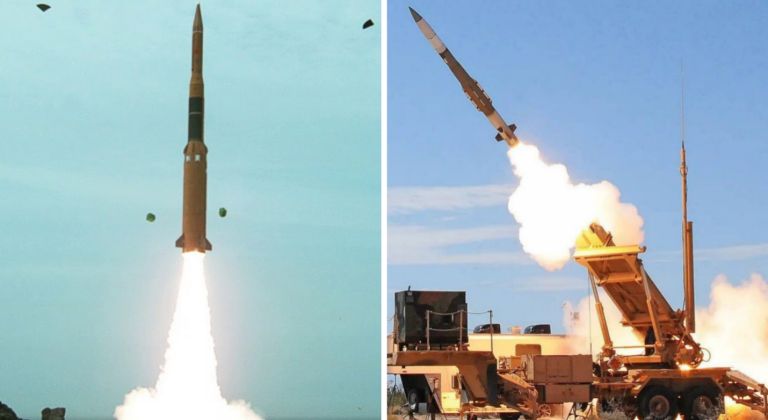
L-SAM (left) and Patriot Launches
The Swiss Defence Ministry is reported to be considering procuring the South Korean L-SAM long-range air defence system has an alternative to the U.S. MIM-104 Patriot system, amid growing concerns over delivery delays and rising procurement costs affecting the latter. Switzerland is facing significant issues with its existing Patriot acquisition program, including delays that could extend up to seven years and cost increases of at least 50 percent over the original contract value. These challenges have prompted Swiss defence planners to reassess alternative high-end air defence solutions capable of addressing both aerodynamic threats and ballistic missile interception requirements.
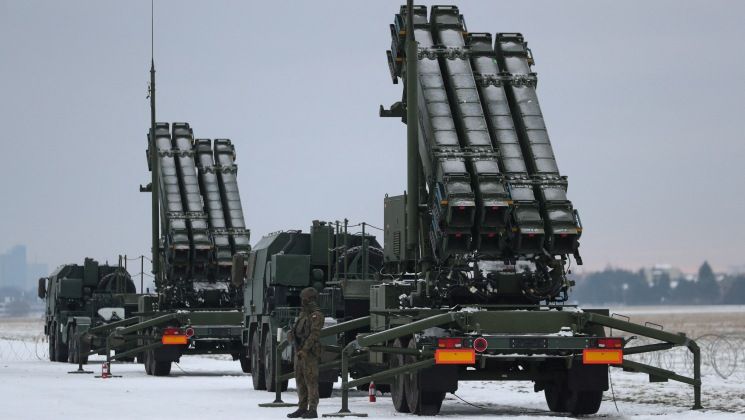
The most significant performance advantage of the L-SAM is its ability to engage targets at a much higher altitude than the Patriot family. The system is expected to intercept ballistic missiles at altitudes of approximately 50–60 kilometres, placing it closer to the lower end of the exo-atmospheric defence layer. By comparison, the Patriot PAC-3 MSE is primarily designed for terminal-phase interception and typically engages ballistic missile threats at much lower altitudes, generally below approximately 30–40 kilometres. The L-SAM also provides a larger engagement envelope than the Patriot, with an engagement range of roughly 150–200 kilometres against ballistic missiles, compared with the Patriot PAC-3 MSE’s approximate 35–60 kilometre range. This larger engagement envelope provides important advantages during large-scale missile attacks.
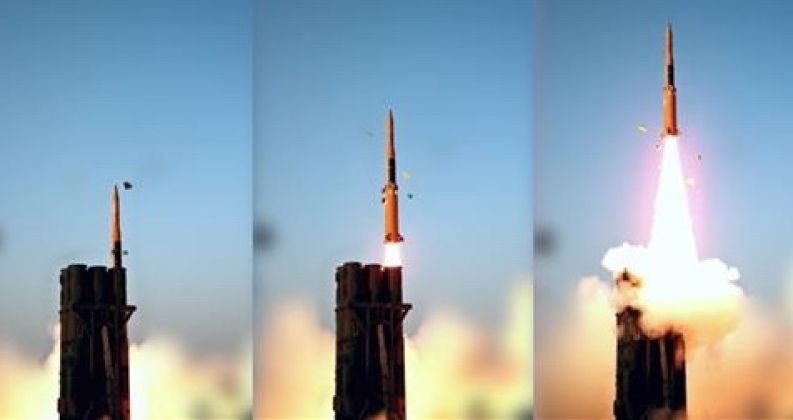
Alongside the South Korean proposal, several other major systems are reportedly under consideration, including the Eurosam SAMP/T NG, Germany’s Diehl IRIS-T SLX, and the Israeli Arrow and David’s Sling. The L-SAM and David’s Sling are considered by far the most capable to provide a multirole air defence capability replacing the Patriot, however. The L-SAM was designed as a high-altitude interception system positioned between traditional area air defence systems and exo-atmospheric missile defence layers. In concept, it is intended to perform roles similar to both THAAD and systems like Israel’s Arrow family, while also retaining flexibility for broader air defence tasks like the Patriot. This dual-role architecture allows it to engage both aircraft and ballistic missiles, placing it above systems such as the M-SAM, which has already achieved significant export success and operational validation.
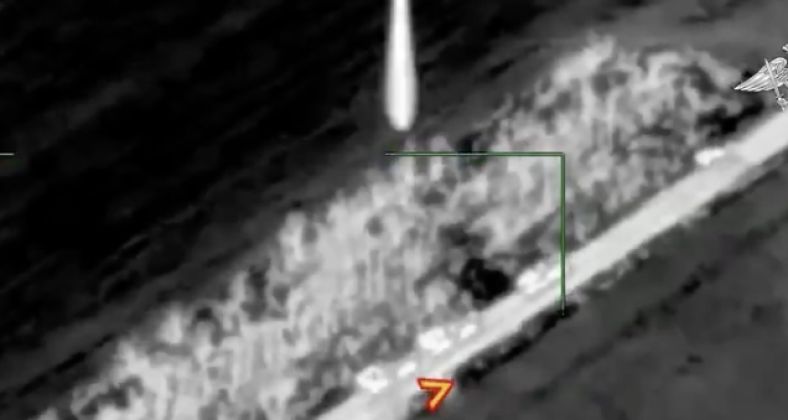
European NATO members have critically depleted their stockpiles of interceptors for the Patriot system through large scale donations to Ukraine, while reports from multiple Western sources confirming on March 5, 2026, that the United States Army had expended over 800 of its own interceptors from the systems during just five days of engagements with Iranian forces. This followed severe depletion of the U.S. arsenals during engagements with Iranian forces in June 2025, leading the U.S. to request supplies of interceptors to replenish its severely depleted stockpiles. Deliveries of Patriot systems to Switzerland have been seriously delayed due to both the prioritisation of deliveries to Ukraine, and to the United States’ prioritisation of rebuilding its own arsenals.
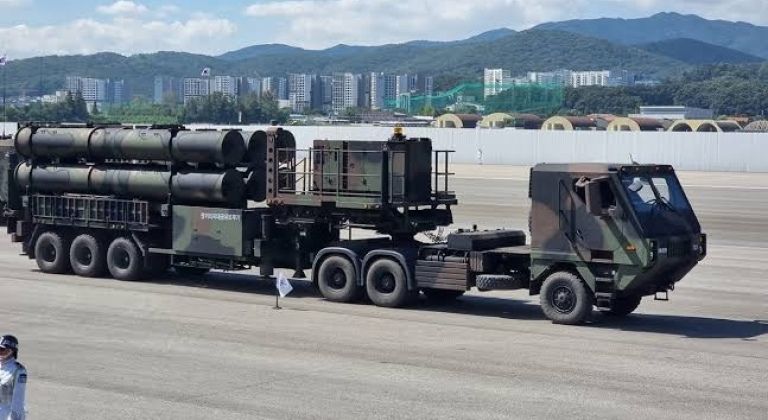
The L-SAM is still in the early stages of deployment, with production priority is currently focused on meeting the requirements of the Republic of Korea Air Force, which limits its immediate availability for export customers. It is nevertheless expected to become available far sooner than the Patriot, in large part due to the lack of a comparably long queue of countries placing orders. The competition reflects broader shifts in the global air defence market, with European systems still considered far behind the cutting edge, while the U.S. faces growing competition from both Israel and South Korea producing the most advanced NATO-standard systems. South Korean armaments have more broadly gained a fast growing market share in Europe, with their superior performances, much faster delivery times, and often their much lower costs than locally developed or U.S. systems providing an advantage.
