
U.S. Officials Confirm Serious Depletion of Air Defence Stockpiles Were Worsened By Israel’s Efforts to Save Its Own
Military Watch Magazine Editorial Staff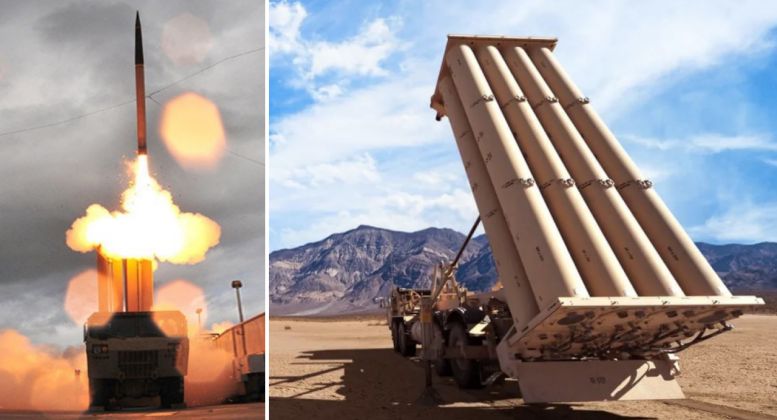
Missile Launcher and Launch From THAAD System
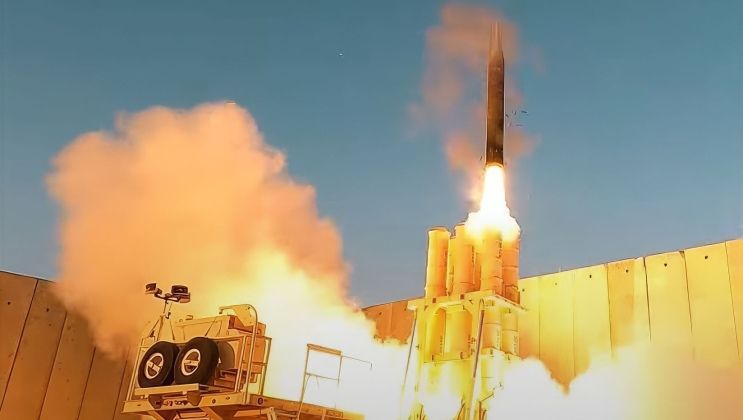
United States officials speaking to the Washington Post have reported that the Israel Defence Forces conserved its stockpiles of anti-ballistic missile interceptors during the 39 day war with Iran, which placed more pressure on U.S. forces in the Middle East to expend very high portions of their own stockpiles. According to three officials who spoke to the outlet, the U.S. Army expended over half its stockpile of interceptors for the THAAD system, making around 200 launches, while the Navy expended over 100 SM-3 and SM-6 anti-ballistic missiles. Israeli forces, by contrast, used only 100 Arrow interceptors and 90 David’s Sling interceptors, many of them against less advanced missiles fired by the Yemeni Ansurullah Coalition and the Lebanese paramilitary group Hezbollah, rather than by Iran itself. “The United States absorbed most of the missile defence mission while Israel conserved its own magazines,” reported Kelly Grieco, a senior fellow at the Stimson Center think tank, which the paper noted pointed to “lopsided dynamic.”
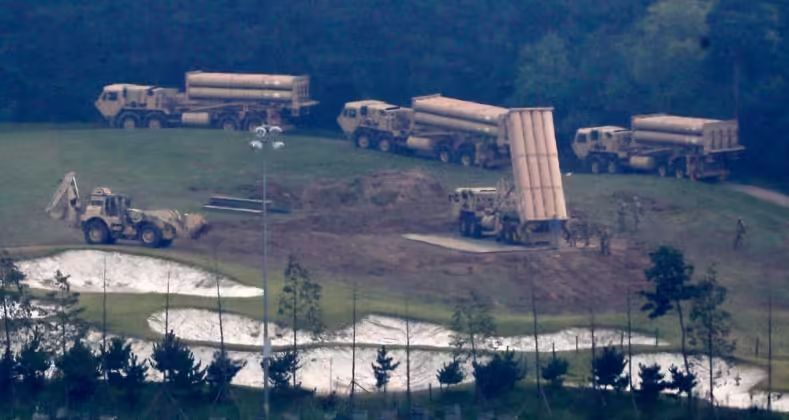
The U.S. Armed Forces initiated hostilities with Iran on February 28 with their munitions stockpiles already seriously depleted. Taking THAAD as an example, with only approximately 600 interceptors having been in service in the U.S. Army at the beginning of 2025, over 150 were expended during under 12 days of hostilities with Iran from June 13-25, 2025. Each THAAD interceptor launch costs approximately $15.5 million, with the defence of Israeli airspace using these systems for 12 days is conservatively estimated to have cost over $2.35 billion. Air defence efforts during the 39 day conflict from February 2026 are estimated to have cost close to $3.5 billion using THAAD alone. The Army deployed THAAD systems to Jordan and Israel preceding the attack on Iran, and was confirmed in mid-March to be withdrawing systems from South Korea, a strategically critical location, to reinforce positions in the Middle East amid sustained Iranian attacks.
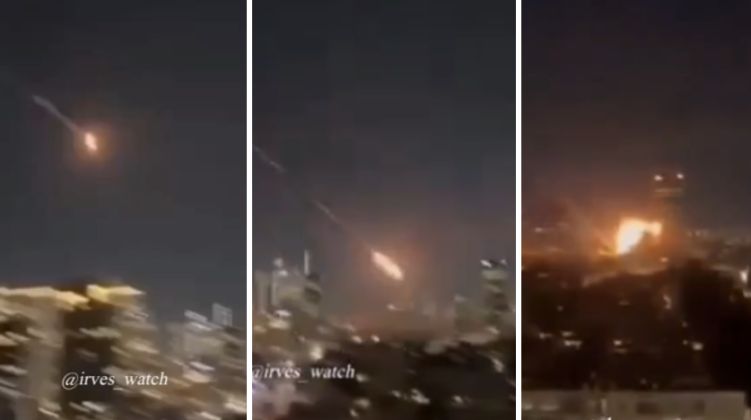
The effectiveness of U.S. and Israeli missile defence efforts was limited for multiple reasons, including Iran’s deployment of advanced missile types with manoeuvring reentry vehicles, multi-warhead capabilities, and in the case of the new Fattah-2 missiles hypersonic glide vehicles. A further major factor was the destruction of U.S. forward radar systems in allied Arab states such as Qatar, Jordan, and the United Arab Emirates, which limited the quantities of cueing data that could be provided. Israeli paper Haaretz in March confirmed that 8 out of 10 Iranian missiles launched against Israeli targets were reaching their targets, following mounting reports and growing quantities of footage pointing to the failures of Israeli and U.S. ballistic missile defences. The report further noted that success rates had continued to improve as air defences became increasingly strained.
The consequences of the depletion of U.S. air defence arsenals during its 39 day assault against Iran are significant not only for the Middle East, but globally, as these anti-missile systems are relied on across multiple theatres, and particularly in the Pacific to provide a defence against the much more formidable Chinese and North Korean missile arsenals. An assessment published by the Center for Strategic and International Studies (CSIS) in April noted that this resulted in a “near term risk” that could leave the U.S. vulnerable, as even if hostilities with Iran do not resume, it is expected to take several years and tens of billions of dollars in investment to replenish stockpiles of anti-ballistic missiles. U.S. forces are estimated to have fired 2,000 anti-ballistic missiles to intercept Iranian strikes, including shorter ranged missiles from the MIM-104 Patriot system which were forward deployed to bases across the region. Like THAAD, sustaining the Patriot arsenal also relied on significant withdrawals of systems and stockpiles from across the world, including from key deployments in South Korea.
