
NATO’s Korean Artillery Arsenal Aimed at Russia Expanding Further as Finland More Than Doubles Orders
Military Watch Magazine Editorial Staff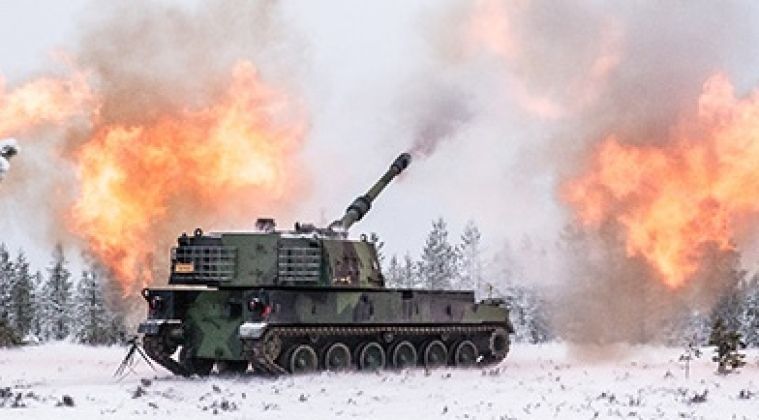
Finnish Army K9 Self-Propelled Howitzer
The Finnish Defence Ministry has placed an order to procure 112 additional K9 Thunder 155mm self-propelled howitzers, with the guns expected to be heavily concentrated on the country’s 1,340 kilometre border with Russia. The procurement will more than double the number of K9s in Finnish Army service, bringing it up to 208 howitzers. The Ministry framed the deal as part of the Army’s long-term modernisation, providing an and replacement for aging towed artillery. Although the Finnish Army previously considered tracked 155mm artillery to be a limited specialist capability fielded only in some select units, it has adapted to make such systems a central component of national land combat power.
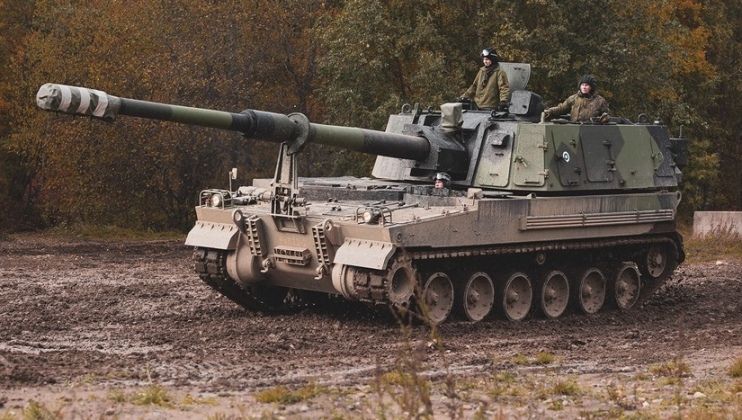
The procurement of large numbers of K9 howitzers both by Finland and by a growing number of other clients across Europe is thought to have been heavily influenced by lessons from the war in Ukraine, as the conflict has highlighted the central role which self-propelled guns can play in modern warfare. The induction of additional K9s into service is expected to be relatively straightforward, with the Finnish Army already having a mature ecosystem for the howitzers, including trained crews and maintenance networks. Perhaps most critically, its crews already have considerable experience operating the K9 in demanding northern conditions. The procurement has very significant implications for Russia security, as Russia’s own artillery forces around its northeastern borders are very considerably smaller, while systems of similar sophistication to the K9 are not widely fielded in the Russian Army.
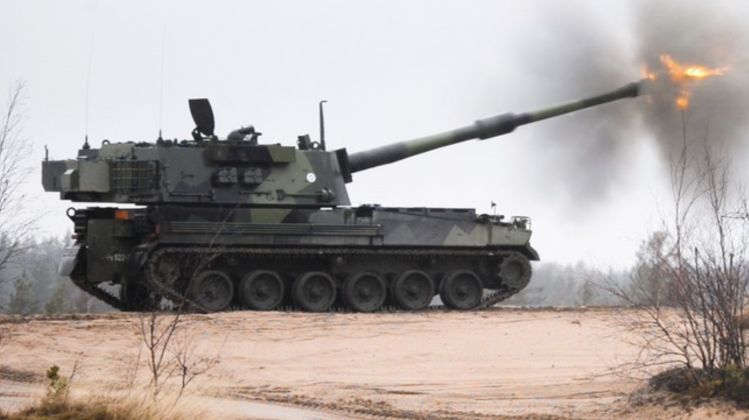
The K9 has been particularly popular in Europe, and recently emerged as a frontrunner for the Swedish Defence Ministry’s selection of a new artillery system, while Romania has the systems on order, and Finland, Norway, Poland, Turkey, and Estonia already field them. It has consistently outperformed the rival German Panzerhaubitze 2000 (PzH 2000) to gain orders across the continent. The South Korean K2 tank has also gained growing attention across Europe, with Poland and Turkey each planning to field 1,000 of the vehicles, although Germany lobbying efforts have been more successful in preserving a market share for its Leopard 2 tank - a vehicle that is more costly, decades older, and has far longer delivery times.
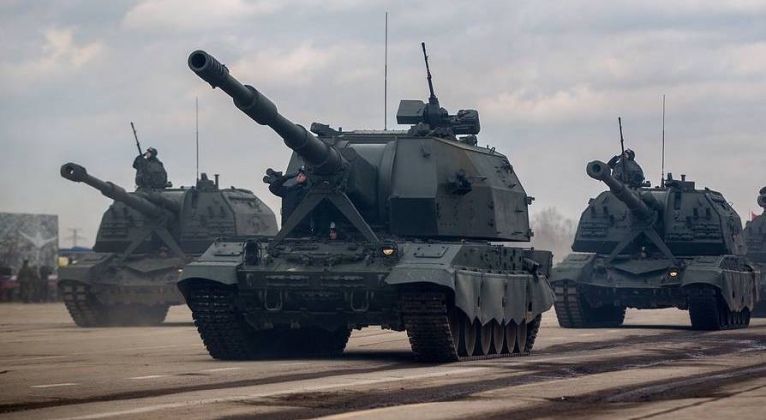
The Polish Army 16th Mechanised Division on December 16 received the last of 212 K9s ordered from South Korea, the first 48 of which were delivered in 2022, highlighting the unrivalled speed among producers of NATO-standard artillery with which the East Asian state could fulfil orders. The K9’s increasingly widespread deployment in Europe is placing significantly greater pressure on Russian defences, with the howitzer far outmatching the capabilities of the large majority of Russian self-propelled howitzers, and being rivalled only by the new 2S35 Koalitsiya-SV which began to enter service in limited numbers from 2023. Russia has benefitted considerably from the delivery of North Korean 170mm self-propelled guns, the long ranges and high precision of which have been singled out specifically be senior Ukrainian officers as a major challenge facing by Army units on the frontlines. North and South Korea’s defence sectors have both been leading beneficiaries of the Russian-Ukrainian War and its broader fallout, and have emerged as the leading suppliers of the two opposing sides.
