
More South Korean 155mm Artillery Aimed at Russia in Europe: Delivery of 212 K9s Howitzers to Poland Completed
Military Watch Magazine Editorial Staff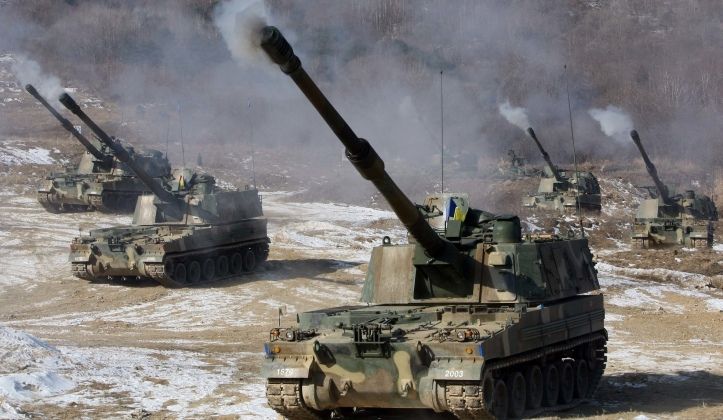
K9 Self-Propelled Howitzers
The Polish Army 16th Mechanised Division on December 16 announced the handover of the final 12 K9A1 Thunder self-propelled howitzers to its 1st Masurian Artillery Brigade, completing deliveries under the first executive contract for the procurement of 212 of the systems from South Korea. A $2.4 billion contract was signed for the procurement of these systems on August 26, 2022, and included including ammunition, logistics support, training packages, and simulator-based training for Polish personnel. Poland that year emerged as by far the leading client for South Korean armaments, fuelling speculation that the East Asian state could emerge as the world’s second largest defence exporter to challenge Russia’s longstanding position. South Korea has been prized as a supplier not only due to the often superior capabilities of its equipment compared to Western alternatives, but also because of its much greater productive capacities, allowing it to supply armaments quickly.
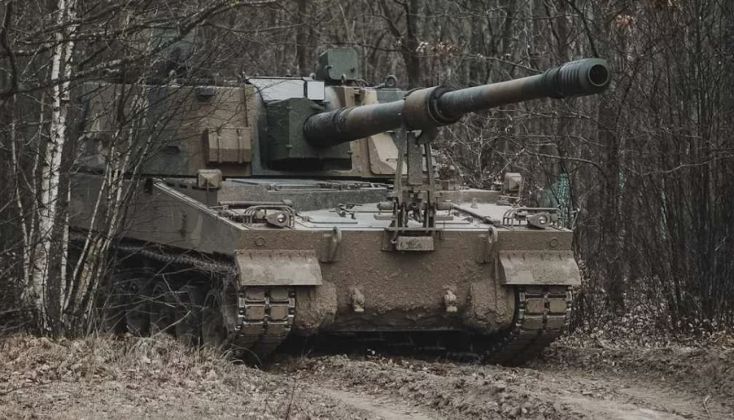
South Korea industry was able to expedite the delivery of the first 48 K9 howitzers by drawing them from Republic of Korea Army stocks, after which they were modernised to the K9A1 standard and delivered to the Polish Army. External loans covered approximately 70 percent of the overall costs associated with Polish defence procurements from South Korea in 2022, with other major acquisitions including K2 main battle tanks, FA-50 lightweight fighter aircraft, and Chunmoo rocket artillery and ballistic missile systems, making Poland by far the largest foreign user of armaments from the East Asian state. Deliveries of new howitzers and tanks in particular has played a key role in allowing Poland to retire older equipment, such as T-72, PT-91 and Leopard 2A4 tanks, which have been rapidly donated to the Ukrainian Army. The large scale involvement of Polish contractor units in the conflict has fuelled speculation that this retired equipment may be being used by Polish personnel to engage Russian forces.
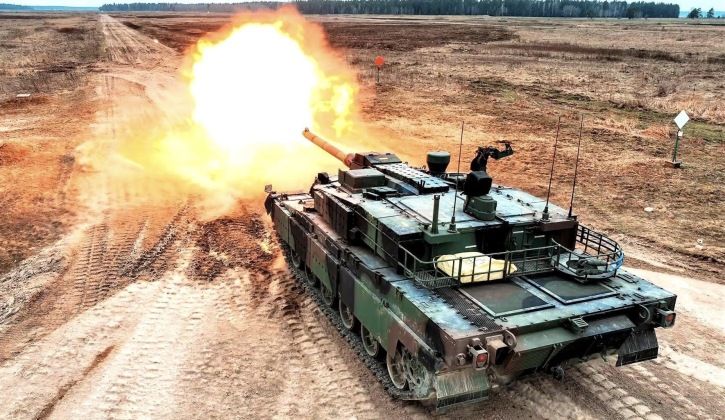
K9 howitzers have been distributed across multiple formations, with the first 72 K9s which had been delivered by June 2024 serving across three battalions, namely the 1st Masurian Artillery Brigade, the 21st Podhale Rifles Brigade, and the 18th Artillery Regiment. South Korean industry has significantly expanded production rates of both the K9 and the K2 tank specifically to meet Polish demand, although the number of other clients placing smaller orders for the systems has also grown rapidly. Deliveries of K2s in 2025 were thus triple what they were the previous year, with 96 tanks reaching the Polish Army to complete an order for 180 of the vehicles, allowing a contract for 180 more to be finalised in July. As a defence exporter, South Korea has been a leading beneficiary of the outbreak of full scale war between Russia and Ukraine in 2022, as Western defence producers have been unable to compete with the capabilities and delivery schedules of its equipment.
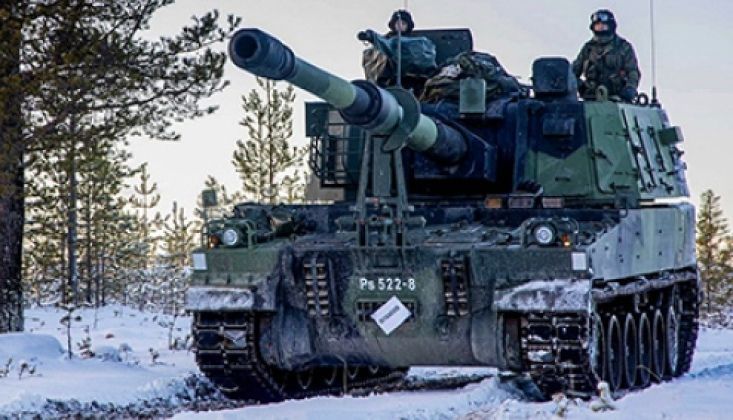
The K9 has been particularly popular in Europe, and recently emerged as a frontrunner for the Swedish Defence Ministry’s selection of a new artillery system, while Romania has the systems on order, and Finland, Norway, Poland, Turkey, and Estonia already field them. The system’s automatic shell handling and ramming system, rate of fire of six shells per minute, and its ability to fire on different trajectories in short succession, set it apart from most rival systems. The enhanced K9A1 variant has enhanced fire controls and computer operating systems, allowing the system to fire without running its main engine for reduced fuel consumption, reduced maintenance needs, and a higher degree of precision using both INS and GPS guidance. New extended range ammunition has also improved the system’s engagement range to 54 kilometres. The rival German Panzerhaubitze 2000 (PzH 2000), by contrast, faces longer production timelines, and has suffered from very serious performance issues when deployed by the Ukrainian Army, including showing significant “wear and tear,” and breaking down rapidly after just a month of combat use.
