
’S-400 Killer’: U.S. Air Force Wants a New Anti-Radiation Missile for its F-35 Stealth Fighters
Military Watch Magazine Editorial Staff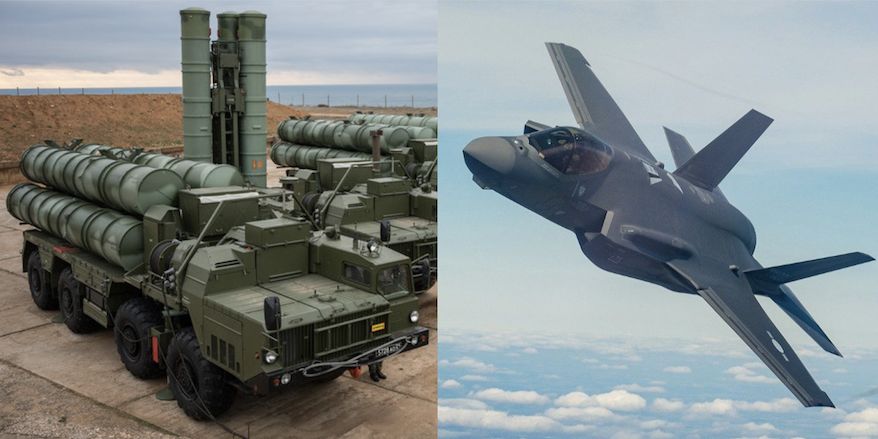
S-400 Missile Batteries and F-35 Stealth Fighter
The U.S. Air Force has requested information on the possibility of developing a new air launched anti radiation missile to equip its F-35A fifth generation stealth fighters, a new class of single engine multirole fighter of which the service plans to field close to 1000 by the mid 2030s. The new missile will reportedly be based on the Advanced Anti-Radiation Guided Missile-Extended Range (AARGM-ER), an advanced derivative of the Cold War era AGM-88 HARM currently deployed by the U.S. Navy’s F-18E Super Hornets and E/A-18G Growlers. Anti radiation missiles are designed to detect and home in on the source of enemy radio emissions, and allow fighters to engage enemy air defence systems at standoff ranges and neutralise surface to air missile and radar installations. The Northrop Grumman AARGM-ER is an extended range version of the AGM-88E which integrates a solid rocket ramjet engine to provide double the range. To be optimally integrated onto the F-35, the missile will need to be miniaturised to be carried from its internal bomb bays.
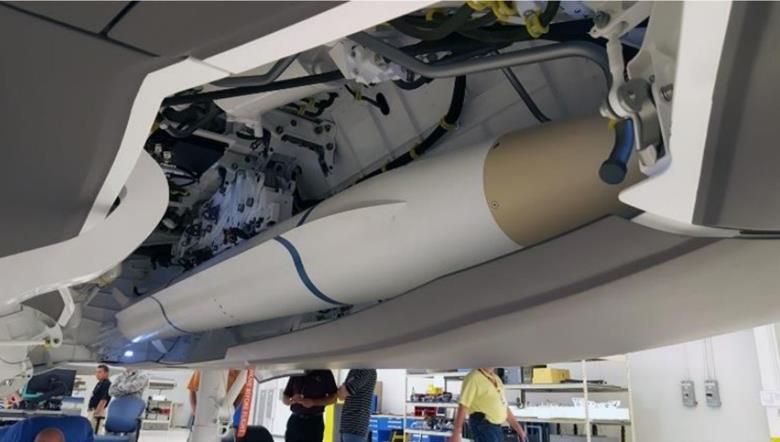
Referring to the munition as the Stand-in Attack Weapon (SiAW), the U.S. Air Force’s official statement elaborated regarding its usefulness: “The SiAW modifications will make the weapon relevant for fifth-generation aircraft and include the development and integration of a warhead and fuze capable of prosecuting an expanded target set, an active radar homing guidance system and a universal armament interface message set for the SiAW missile and F-35A aircraft… SiAW will also seek development of future advanced capabilities to keep it relevant for evolving threats.” Long range air defence systems deployed by potential U.S. adversaries are considered a leading potential threat to its aircraft, in particular the Russian S-400 and S-300V4 systems and to a lesser extent the Chinese HQ-9B and the North Korean Pyongae-5 (KN-06). The S-400 was designed specifically to neutralise stealth aircraft, and deploys a wide range of surface to air missiles including hypersonic missiles with ranges of up to 400km and speeds exceeding Mach 14. Development of more advanced standoff anti radiation munitions is considered a key means of allowing American F-35s to neutralise enemy air defence systems, although potential adversaries have invested heavily in protecting these systems from anti radiation attacks with complementary shorter ranged defences such as Russia's new S-350 missile system.
