
Russian Su-35 Production Poised to Exceed 400 Fighters as War and Exports Fuel New Orders
Military Watch Magazine Editorial Staff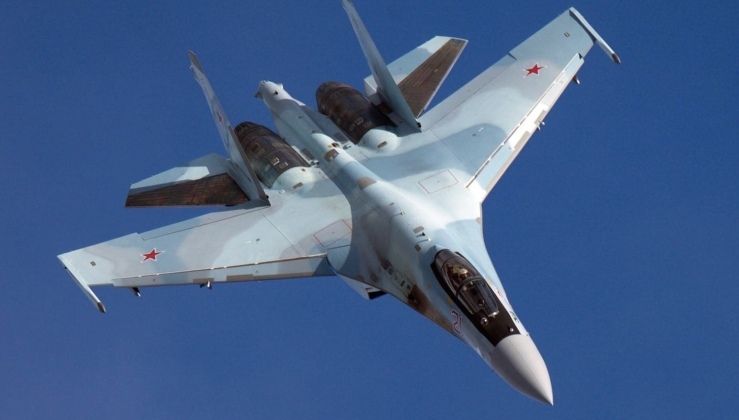
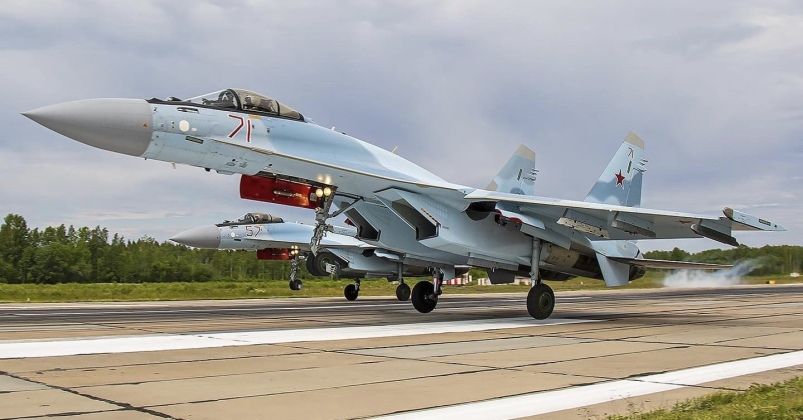
Russian Aerospace Forces Su-35
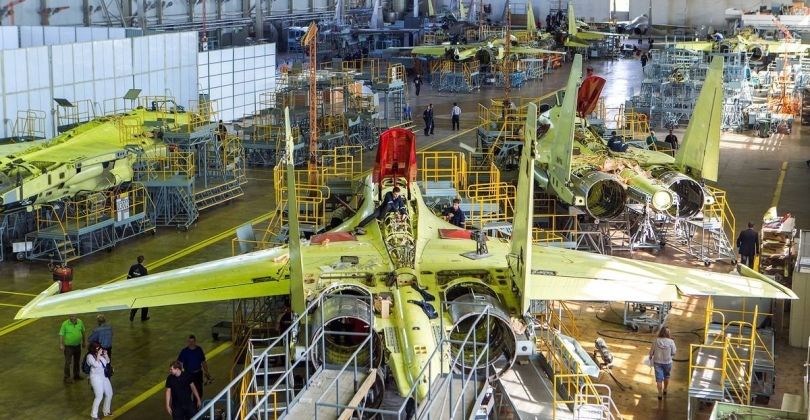
The Russian Su-35 fighter program has entered a major transition phase, as for the first time the bulk of production over several years will be allocated to meeting export orders rather than orders for the Russian Aerospace Forces. This is the result of the first placing of a large Iranian order for 48 fighters, which is twice as large as the two prior orders placed by China and Egypt - the latter of which was cancelled with the fighters resold to Algeria and Ethiopia. The Komsomolsk-on-Amur Aviation Plant, which produces the fighters was reported in early July to have completed the production of 20 Su-35s for the Iranian Air Force, with 28 additional fighters expected to be produced over the next two years, alongside a much smaller number for the Russian Aerospace Forces.
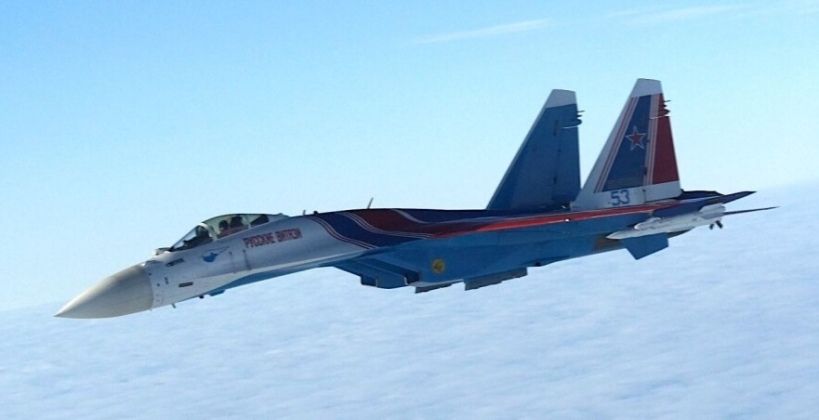
The Su-35 was initially conceived as a heavily export oriented program, with a planned production run of 200 fighters, of which approximately half were expected to be exported. The significant rise in tensions between Russia and NATO members, and delays affecting the Su-57 fifth generation fighter program, have led the Russian Defence Ministry to finance an expansion of its fighter fleet. Although this is expected to prioritise procurements of the Su-34 and Su-57, procurements of the Su-30SM2 and Su-35 are also expected to increase significantly. While the Defence Ministry was confirmed to have ordered 128 Su-35s by the end of 2020, from 2022 the ministry shifted to rolling procurement contracts rather than announcing large one-off orders, which has made subsequent orders more difficult to track.
Conservative estimates indicate that over 70 new Su-35s have been ordered by the Defence Ministry, bringing total orders for the Aerospace Forces to close to 200 fighters. A number of Russian sources estimated that the service had already fielded 170–190 fighters by early 2025, before production for Iran began later that year. It is highly possible that over 200 fighters will have been delivered to the Aerospace Forces by the end of 2026, and that total deliveries to both the Aerospace Forces and to export clients will exceed 280 fighters. The quadrupling of confirmed export orders from 24 to 96 fighters in 2025 has brought total orders close to 300 fighters, with the Algerian, Ethiopian and Iranian orders all confirmed that year.
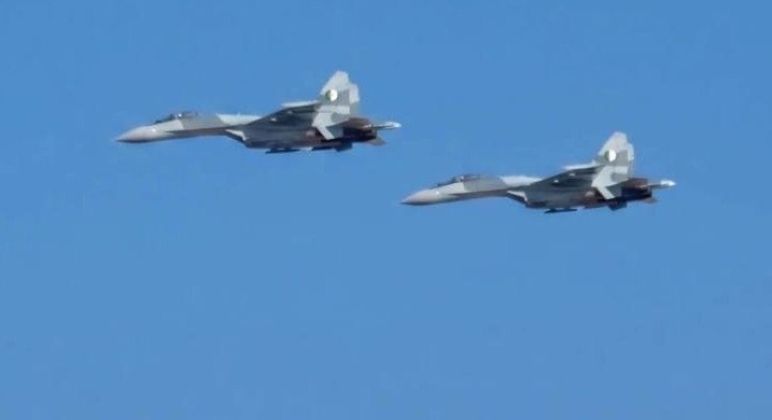
While Algeria is expected to focus future procurement funding on acquiring the Su-57 fighter, and possibly another fifth generation fighter type such as the Chinese J-35, it remains highly possible that Iran and Ethiopia will place followup orders. The Ethiopian Air Force has reportedly ordered only two Su-30MK fighters and six Su-35s, which are far from sufficient to replace its 18 Su-27s. Orders for a further ten Su-35s thus remain highly possible. The Iranian Air Force’s current orders for 48 Su-35s and 12 Su-30SM2 fighters will meanwhile be sufficient to replace only around one fifth of its current fleet of approximately 300 fighters, leaving considerable room for further orders. The procurement of a further 48 Su-35s is highly possible, which would alone bring the program’s total production to around 350 fighters or more.
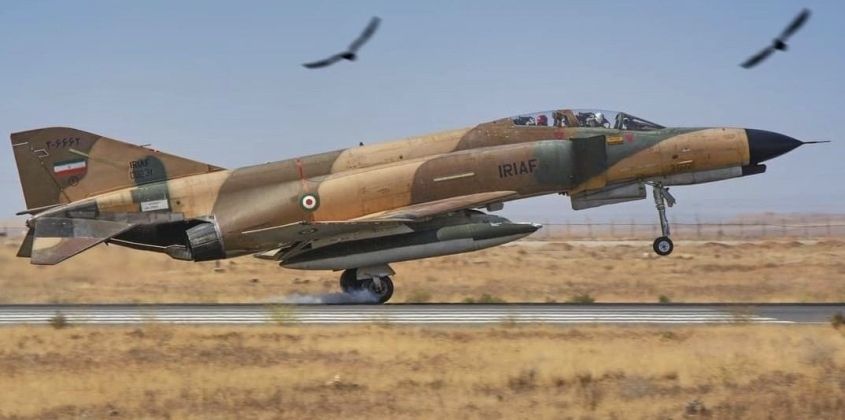
Beyond Iran, it is highly possible that the Su-35 will attract new foreign clients, despite the fighter’s export prospects having been severely diminished by Western threats of economic sanctions on potential clients. The modernisation of the fighter with an AESA radar and new generations of weaponry, including the R-77M air-to-air missile, are major factors in its favour, as is its highly successful combat record with very few losses and more extensive air-to-air combat testing than any other post-Cold War fighter type. A potential game changer for the program’s export prospects beyond Iranian orders would be a shift in Russian policy towards arms exports to North Korea, which itself can absorb much larger numbers of new aircraft.
North Korean officials have shown an interest in procuring Russian fighters for several years, and in September 2023 watched the test flight of a newly built Su-35 and inspected production facilities and a Su-57 cockpit at the Komsomolsk-on-Amur Aircraft Plant. As Russia had come to depend increasingly heavily on North Korean support for its ongoing war effort with Ukraine and conflict with NATO, the possibility of Russia seeking to offset the costs of important North Korean equipment not only with technology transfers, but also with fighter sales, has been widely raised by analysts. While the Korean People’s Army Air Force could relatively easily absorb over 100 new fighters, however, it remains uncertain whether the service will show an interest in the Su-35, as when faced with large numbers of U.S., Japanese and South Korea F-35 fifth generation fighters near its borders, only the Su-57 would provide something close to parity. One possibility is that Russia will seek to tie Su-57 sales to commitments to procure a number of Su-35s, particularly if it struggles to supply the more advanced fighters sufficiently quickly.
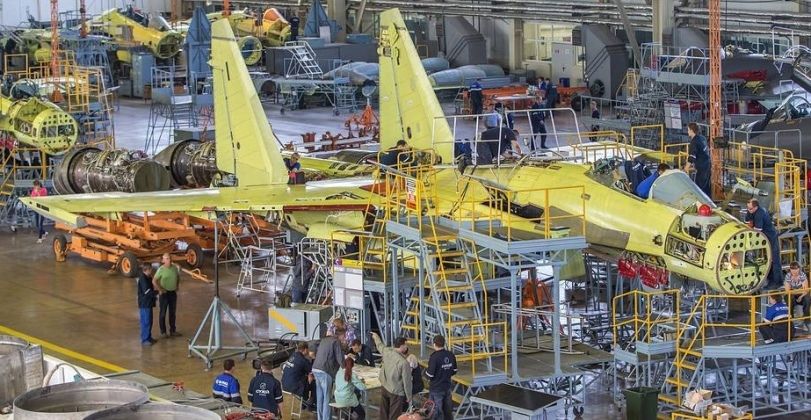
The future of the Su-35 program remains highly uncertain, but with investments in upgrades being ongoing, a combination of domestic and foreign orders may bring production to over 400 aircraft. Much will depend on the Russian Defence Ministry’s assessments of the fighter’s combat effectiveness when compared to the much more sophisticated Su-57, which has seen its production scale expanded significantly to be able to meet large orders. The Su-35’s combat record in the Ukrainian theatre, and the effectiveness and cost of future upgrades, including a reported new radar, are expected to be further primary factors shaping future procurement decisions. While the Su-35’s production numbers will remain far from outstanding when compared to larger U.S. and Chinese programs, with the Chinese J-20 fleet already having exceeded 500 fighters relying on domestic orders alone and despite being a much more complex and sophisticated aircraft, a production run of over 400 fighters would be a major milestone for post-Soviet Russia and double the program’s initial goal.
