
Russia Fortifies Su-57 Stealth Fighter’s Main Production Facility as Drone Strikes on Key Air Assets Intensify
Military Watch Magazine Editorial Staff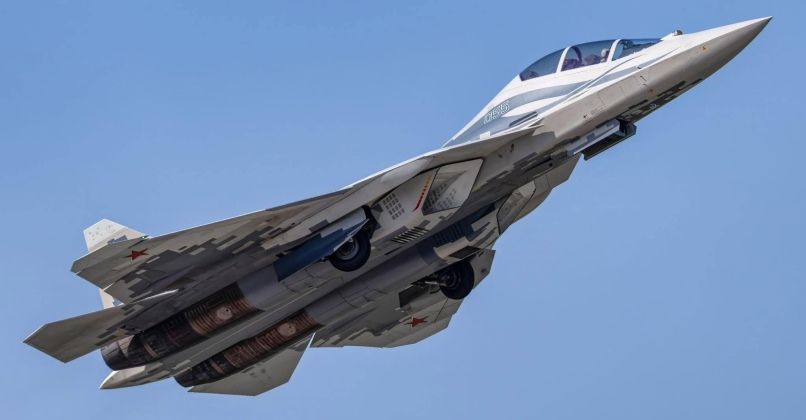
Su-57D Twin Seat Fifth Generation Fighter Prototype
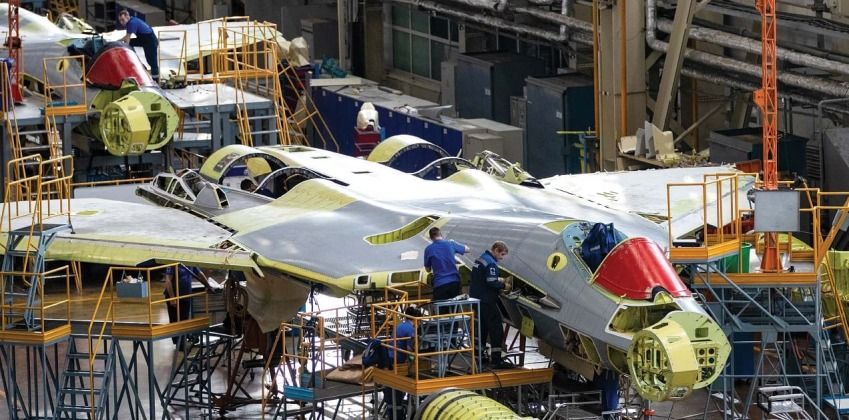
Satellite imagery has revealed continued rapid progress in Russia's effort to harden key military aviation facilities against long-range Ukrainian and possible Western strikes, with the Komsomolsk-on-Amur Aviation Plant and the adjacent Dzemgi Air Base undergoing extensive construction work. The aircraft plant is the sole facility producing Russia’s two most sophisticated fighter types, the Su-57 and Su-35, and has benefited from significant investment over the last decade to facilitate a much expanded scale of production for the former. The latest images show the near completion of a large new production hall alongside the construction of numerous reinforced aircraft shelters intended to protect some of Russia's most advanced combat aircraft, including Su-57, Su-35S, and Su-30SM2 fighters.
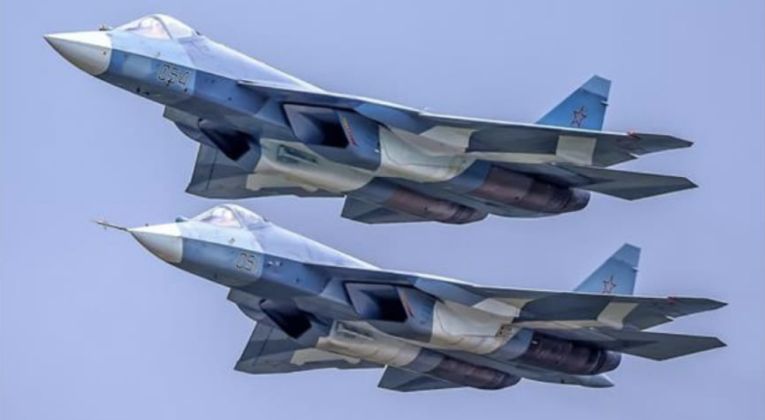
Work to construct fortifications at the Komsomolsk-on-Amur Aviation Plant reflects a broader nationwide programme to improve the survivability of Russian aviation infrastructure following a series of increasingly ambitious Ukrainian long-range attacks on air bases deep inside Russian territory. The imagery indicates that construction has advanced rapidly, with several protective shelters now taking shape directly around aircraft already parked on the flight line. Rather than relocating fighters while construction proceeds, engineers appear to be erecting hardened structures around them, minimising disruption to flight operations while rapidly increasing protection. Several of the newly constructed shelters also appear large enough to house multiple aircraft simultaneously, with some capable of accommodating two or even three fighters. This approach allows the protected parking capacity to be expanded more quickly while making more efficient use of available space.
Adjacent to the Komsomolsk-on-Amur Aviation Plant, Dzemgi Air Base hosts operational fighter units equipped with Su-35 and Su-57 fighters, making the location one of the most strategically significant aviation sites in the world. The Su-57 program is not only vital for Russian fleet modernisation, with its other fighter types all being technologically far behind, but it is also critical for the country’s defence export profile, with multiple countries confirmed to have placed orders, while the first export deliveries were confirmed in November 2025 to have been made to Algeria. Protecting both production facilities and operational aircraft has therefore become an increasingly important priority at a time when Ukrainian forces are demonstrating growing long-range strike capabilities.
The acceleration of airfield fortification efforts follows a series of successful Ukrainian attacks against Russian aviation infrastructure over the past two years. Ukrainian forces have employed increasingly sophisticated combinations of long-range drones, cruise missiles, and special operations to strike airfields hundreds or even thousands of kilometres from the front lines. These operations have targeted strategic bombers, airborne early warning aircraft, logistics infrastructure, and maintenance facilities, demonstrating that even bases previously considered relatively secure are vulnerable to precision attack. The largest of these operations, Operation Spider's Web, targeted multiple Russian airfields simultaneously on June 1, 2025, destroying multiple high value aircraft.
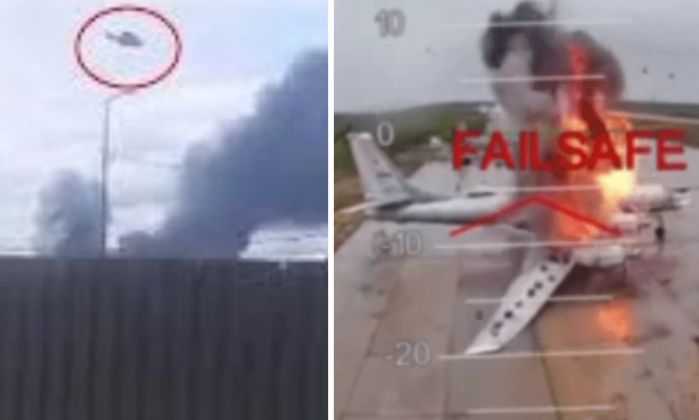
Operation Spider’s Web destroyed multiple Tu-95MS and Tu-22M3 strategic bombers at airbases across the country, causing losses from which the Russian strategic aviation fleet is expected to take years to recover. Ukrainian strikes have frequently achieved more minor successes targeting airbases hosting tactical combat aircraft such as Su-34 strike fighters and MiG-31 interceptors. Crimea has been particularly intensively targeted in Ukrainian strikes, including attacks on beaches, key infrastructure such as bridges, as well as military targets including air defence systems. Most recently on June 28 an SBU drone attack on Crimea’s Kirovske Airfield destroyed a number of helicopters including at least one Mi-28 attack helicopter.
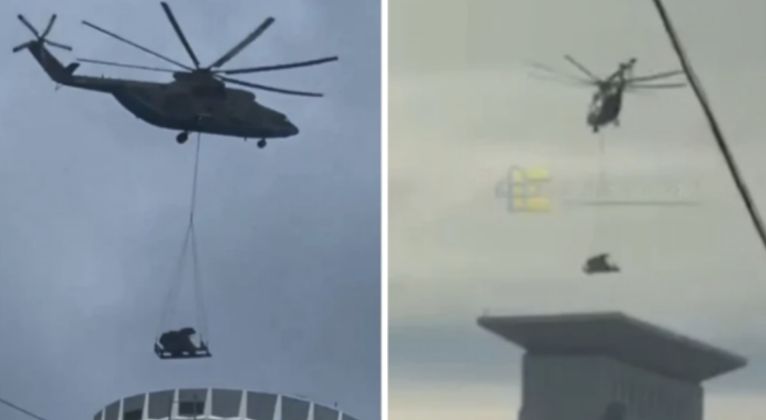
Officials from multiple NATO member states have made calls for intensified Ukrainain strikes on Russian airfields, with German Army Major General Christian Freuding having stated to this effect in July 2025: “You can also indirectly affect the offensive potential of Russian strike forces before they are deployed… Use long-range air warfare assets to strike aircraft and airfields before they are used. Also, target weapons production facilities.” Drone attacks have also intensified against a wide range of other strategic targets, including the Russian capital Moscow, resulting in significant measures being taken to fortify the city. Significant support from Western personnel on the ground and access to satellite intelligence have been key to facilitating such attacks, as has the tremendous supply of parts and funding to sustain drone production in Ukraine. As Ukraine acquires longer-ranged strike capabilities and expands domestic drone production, Russian military planners appear to have concluded that permanent infrastructure improvements are necessary rather than relying solely on enhanced air defence coverage.
