
Russian Su-35 Achieves Longest Ranged Fighter Shootdown on Record Striking MiG-29 190km Away
Military Watch Magazine Editorial Staff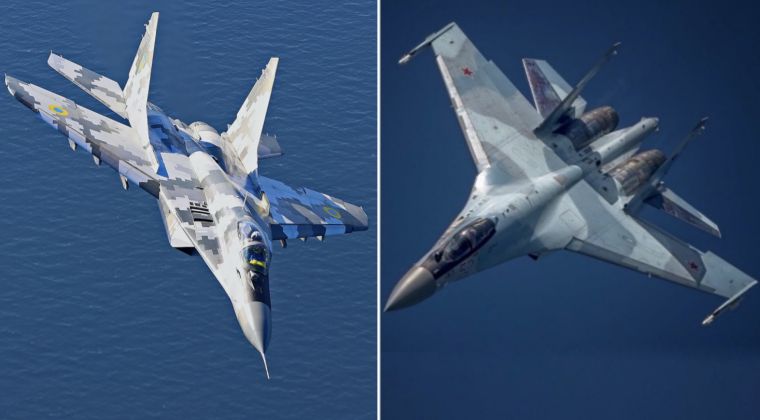
Ukrainian MiG-29 (left) and Russian Su-35 Fighters
Following confirmation that a Ukrainian Air Force MiG-29 fighter crashed in Poltava region on June 27, closely coinciding with the destruction of two further MiG-29s on the ground in drone strikes, multiple sources have indicated that a Russian Aerospace Forces Su-35 fighter was responsible for shooting down the aircraft. The Su-35 reportedly shot the fighter down using an R-37M long range air-to-air missile at a range of approximately 190 kilometres, which may represent the longest successful air-to-air kill ever recorded in combat. Assessments by open-source analysts using publicly available tracking data indicate that the Su-35S was operating well inside Russian-controlled airspace, which remains standard practice for Russian fighters to avoid being targeted by Ukraine’s ground-based air defences.
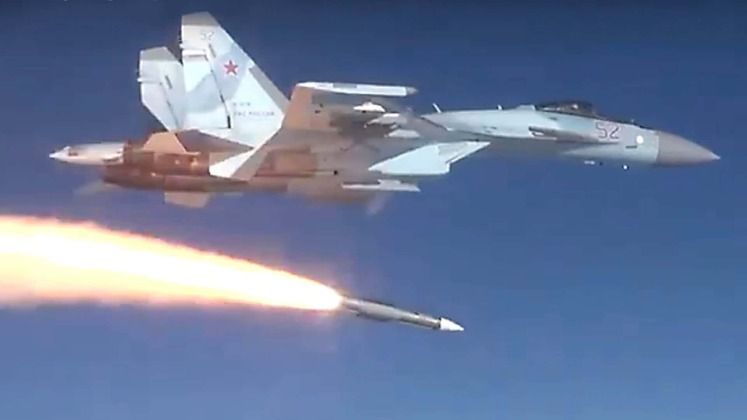
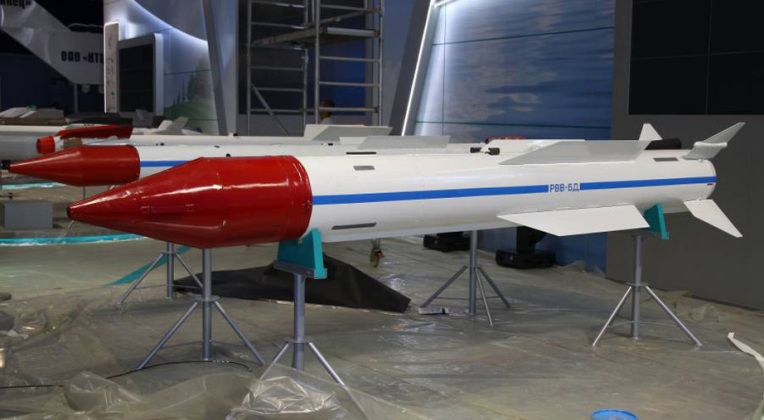
The R-37M air-to-air missile was developed to serve as the primary air-to-air weapon of the MiG-31BM interceptor, which is a much heavier aircraft than the Su-35 that operates at far higher speeds and altitudes and is relied on to defend the Russian Arctic. The missile began to be integrated onto the Su-35 in the early 2020s, and has been used extensively in the Ukrainian theatre. The R-37M is capable of speeds approaching Mach 6, and is reported to have a maximum range of up to 400 kilometres when launched by the MiG-31BM, or 350 kilometres when launched by the Su-30SM or Su-35S which launch them from lower speeds and altitudes. The missiles were expected to have a high probability of kill against manoeuvrable fighter-sized at ranges of under 250 kilometres, although Western assessments indicate that their reliability has proven lower than previously thought.
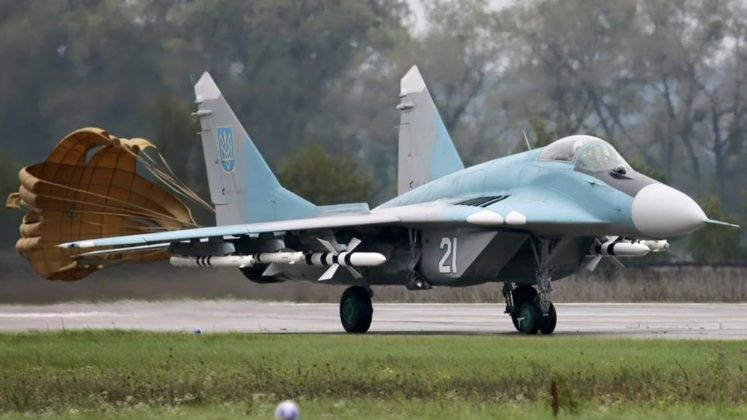
While a shootdown of a MiG-29 by a Su-35 at long range remains highly plausible, it may not be the longest ranged air-to-air shootdown on record as many sources have claimed. Following reports in October 2022 that a Ukrainian Air Force Su-27 fighter and accompanying Su-24 strike fighter were shot down by Russian forces during an attack on Russia’s Belgorod region, conflicting reports from a number of Russian and Indian news outlets indicated that a Russian Su-57 fighter was responsible. These have contradicted earlier reports that an S-300V4 air defence system using a 40N6 or possibly a 48N6DM surface to air missile was responsible. The Su-27 shootdown was achieved at a 217 kilometre range, which if confirmed would have made it by far the longest ranged fighter shootdown on record, exceeding the 190 kilometre range of the latest reported MiG-29 shootdown.
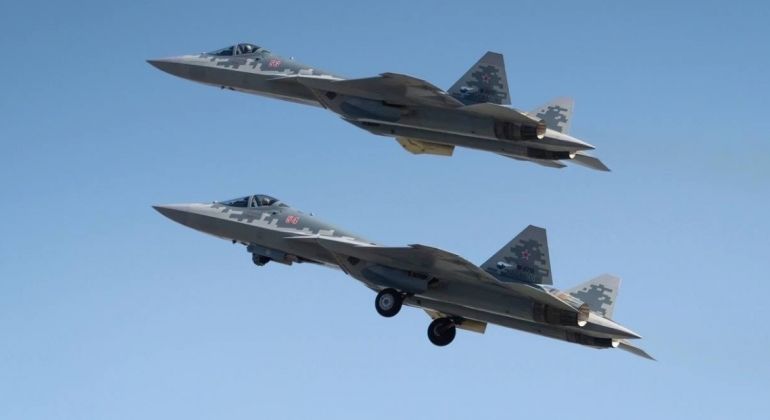
The use of the R-37M to engage Ukrainian fighters at extreme ranges has been reported since mid-2022. Following a report in January 2023 by the British Defence Ministry highlighting the roles of the Su-57 and MiG-31BM in engaging Ukrainian fighters over very long ranges, the British conservative outlet The Conversation reported in mid-February that “The Russian MiG-31 and Su-57 operating the R-37M long range hypersonic missile have engaged Ukrainian aircraft at a range of over 200kms from the safety of Russian airspace.” Sources speaking to the Russian state media outlet Sputnik the following month reported: “The R-37M missile has demonstrated the greatest efficiency during the special military operation. When the missile was used, the probability of hitting targets close to one was recorded - that is, one missile is enough for one Ukrainian military aircraft.”
Although significantly less capable than the Su-57 or MiG-31BM in their beyond visual range air-to-air combat capabilities, Russian Su-35 fighters have been responsible for multiple shootdowns of Ukrainian fighters since the first days of hostilities. The fighters notably lack comparably powerful radars to the MiG-31, however, which prevent them from using the R-37M to its full range when relying on onboard sensors, meaning for longer range engagements targeting data must be provided by MiG-31s, A-50U AEW&C systems, or forward deployed assets such as ground-based air defence systems. The Su-35’s radar tracking range is nevertheless significantly longer than those of all Western fighter types other than possibly the F-15SA/QA/EX, and while its Irbis-E radar is far from cutting edge, its sheer size and power heavily compensate for this with its size being approximately triple that of the F-35’s AN/APG-81 radar.
