
Russia Deploys its Heaviest and Fastest Interceptors For Strategic Arctic Mission: How Capable is the MiG-31BM?
Military Watch Magazine Editorial Staff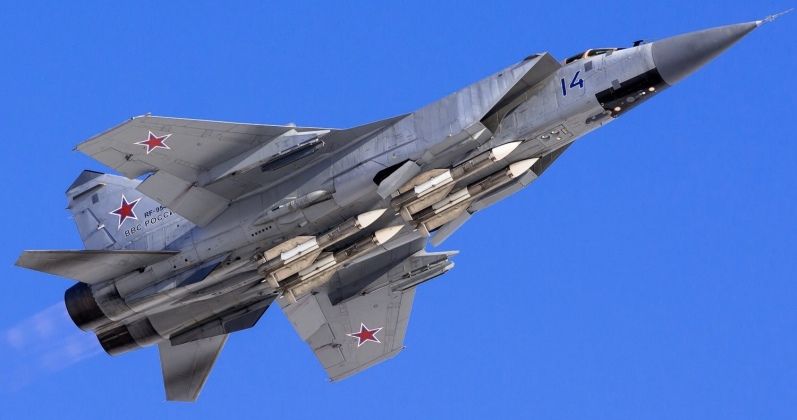
MiG-31BM Interceptor
The Russian Aerospace Forces deployed MiG-31BM long range interceptors to escort the country’s most capable strategic bombers, Tu-160 aircraft, on a 16-hour mission over the Barents and Norwegian Seas. The operation included air-to-air refuelling, and demonstrated the endurance of Russia's long-range aviation and its ability to conduct sustained operations near NATO's northern flank. Although the aircraft remained in international airspace, the mission was closely monitored by fighters from NATO member states, making it both a military training exercise and a strategic signalling operation. The exercise was notable because it combined several layers of capability into a single operation, with the Tu-160s rehearsing long-endurance strike missions, tanker support extended their operational range, while the MiG-31s provided protective escort.
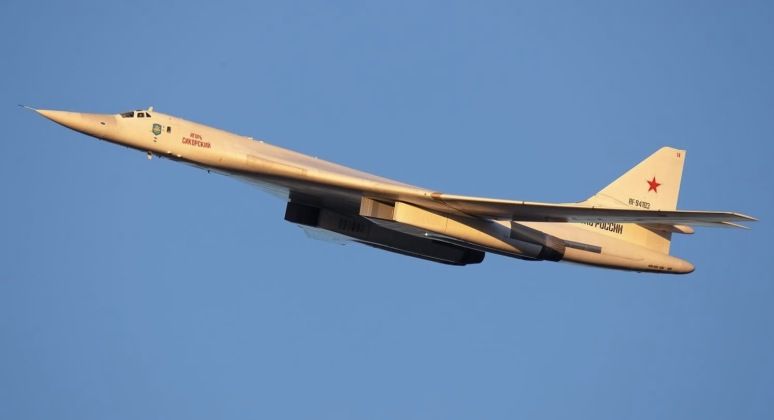
The bomber and interceptor operation reflected the increasing strategic importance of the Arctic, as following the significant expansion of NATO’s forces in Northern Europe, the Barents and Norwegian Seas have become key areas where both sides regularly monitor each other's air activity. The MiG-31 fleet remains heavily concentrated in the Arctic regions, and was designed specifically for very long range air-to-air operations in remote parts of Russia primarily in the far north. The aircraft thus not only has a long range, but also by far the world’s highest cruising speed at close to Mach 2.3, and by far the world’s largest radar on a tactical combat aircraft the N007, which is over three times the size of the largest radars carried by Western fighters. When the aircraft first entered service, they were entirely unrivalled in their situational awareness and long range missile defence capabilities.
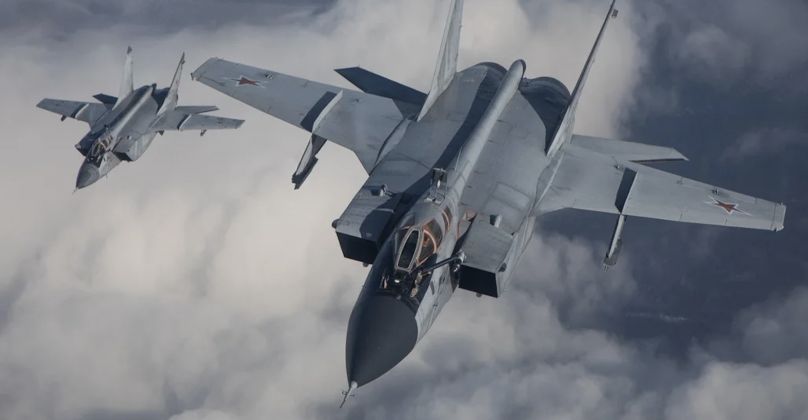
The MiG-31BM’s uniquely high performance has been demonstrated in the Ukrainian theatre, with its powerful radar in particular allowing it to engage enemy aircraft at extreme ranges, using its 400 kilometre range R-37M air-to-air missiles without support from other assets such as ground-based radars or airborne early warning and control (AEW&C) systems. The radar was designed to be able to ‘burn through’ electronic warfare countermeasures using its sheer power. Furthermore, the aircraft’s much higher cruising speeds and operational attitudes meant that missiles fired had significantly more energy when launched compared to the same missiles fired by aircraft such as Su-35 fighters. The aircraft is considered one of Russia’s most capable for air-to-air operations, rivalled only by the Su-57 fifth generation fighter, with its ability to threaten high value support aircraft such as tankers and AEW&Cs beyond the ranges of their defensive escorts considered particularly significant due to NATO members’ particularly high reliance on such assets.
