
Russian Su-57 Fighters Test New Interception-Proof Data Link and Secure Communications Systems
Military Watch Magazine Editorial Staff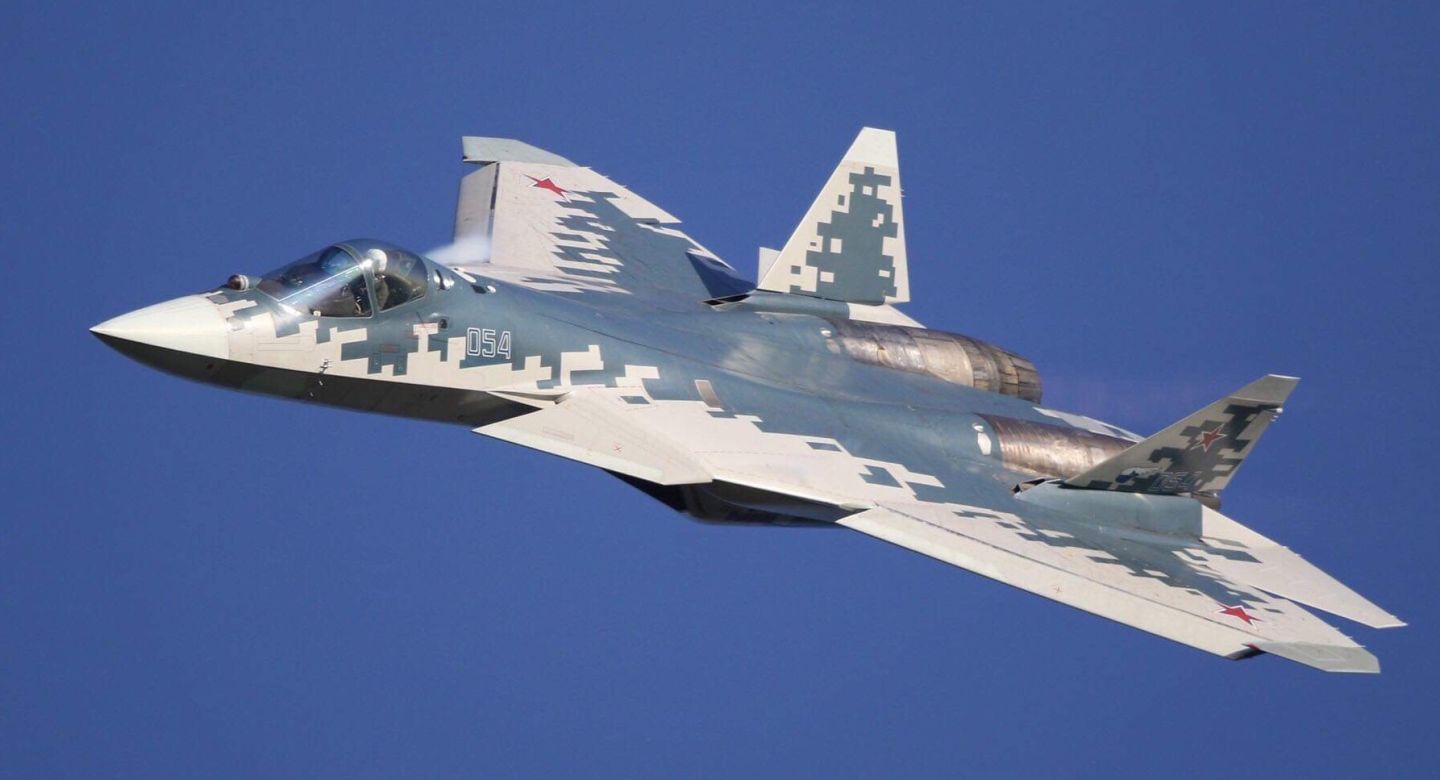
Russian Su-57 Next Generation Fighter
After demonstrating new capabilities and being marketed for export at the MAKS 2019 airshow, Russia’s new Su-57 next generation air superiority fighters have tested the latest of a number of new technologies set to be integrated onto the airframes - a new combined system of communications, data exchange, navigation and identification (OSNOD). The system benefits from enhanced encryption protection and anti jamming features, and is critical to allowing the aircraft to function as part of a larger combat network and synergise its capabilities with those of other units from air defence and radar systems to accompanying drones and fighter jets. Head of the Polet science and technical centre of the Russian Electronics holding Alexei Ratner stated regarding the variant of the OSNOD system developed for the next generation fighter: “The Su-57 variant was designed specifically for this aircraft and is now undergoing state trials as part of its systems,” and alongside advanced new anti jamming technologies the system “ensures constant cryptographic protection of communications… In other words, intercepting them will produce no result.”
The Su-57 entered serial production in July 2019 and three battalions are expected to be deployed by the mid 2020s. Large scale orders for the platform came after widespread Western claims that the fighter program had amounted to failure and that Russia was unlikely to ever field a viable next generation fighter. The Russian Air Force’s schedule for acquiring the aircraft was notably accelerated considerably in mid 2019, the reasons for which have only been speculated. Intelligence on the United States’ development of its own next generation fighter jets such as the Air Dominance Fighter and Penetrating Counter Air Fighter has been speculated as a possible cause, as has the need to drive down unitary production costs with larger manufacturing to benefit from economies of scale. The Su-57 has tested a number of next generation technologies, and systems set to be integrated onto the fighter have included laser weapons, hypersonic ballistic missiles and artificial intelligence systems among others.
