
Russia Launches Six Types of Nuclear-Capable Missile in Major Show of Force: Which Role is Assigned to Each?
Military Watch Magazine Editorial Staff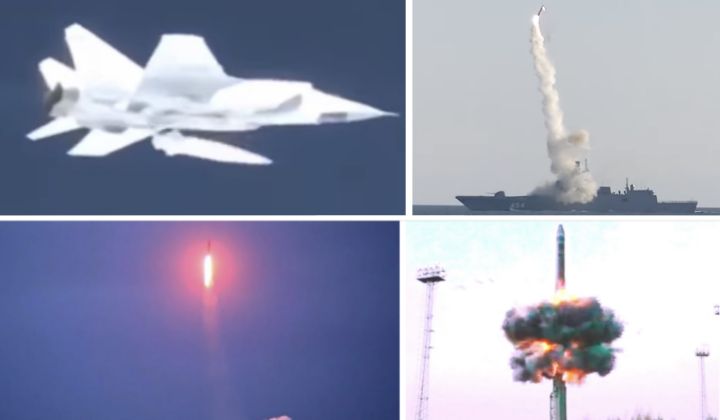
Russian Kinzhal, Zircon, R-29 and Yars Missile Launches
Following the announcement that the Russian Armed Forces and allied Belarusian forces were conducting large scale nuclear forces exercises, which included units across the breadth of the two countries’ territories from Eastern Europe to the Pacific, the launches of six separate types of nuclear-capable missiles have been confirmed. These launches took place during the second phase of bilateral exercises, and included ground and submarine launched intercontinental range ballistic missiles, air-launched cruise and ballistic missiles, ship-launched hypersonic cruise missiles, and ground launched short ranged tactical ballistic missiles. The exercises have served to highlighted the diversity and sophistication of the Russian nuclear arsenal, which has particularly significant implications at a time of high tensions between Moscow and the Western Bloc. The importance of Russia’s nuclear forces to deterring Western military action, which has been alluded to repeatedly by officials from NATO member states, has strengthened the consensus in Russia regarding the vital importance of these capabilities.
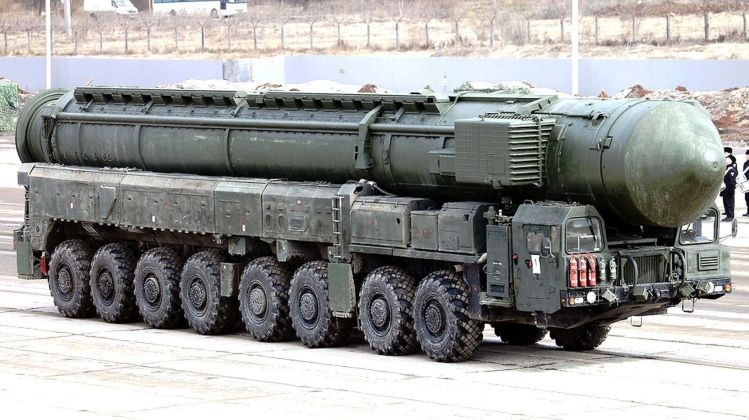
The missile type with the most firepower to be tested was the RS-24 Yars intercontinental ballistic missile, which was launched from the Plesetsk Cosmodrome toward a designated range on the Kamchatka Peninsula. The Yars missile currently forms the backbone of the Russian land-based strategic nuclear deterrent, and equips eight divisions with close to 150 missiles in service. The missile first entered service from July 2010, with its ability to integrate multiple independently targetable warheads setting it apart from preceding road-mobile ICBM types in service. The large majority of missiles deployed from road-mobile launchers, while a smaller number are deployed from silos. The missile is expected to continue to be procured as a lighter counterpart to the RS-28 Sarmat, which is silo-based, close to four times as large, and is scheduled to enter service near the end of the year.
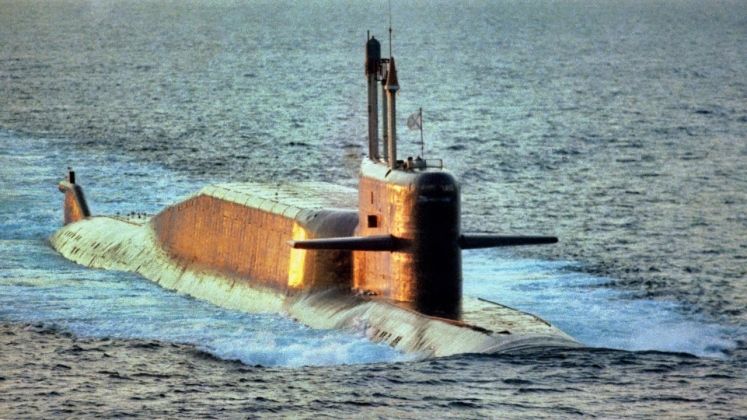
The missile type with the second greatest firepower to be launched was the R-29RMU2 Sineva, which was launched from a Delta IV class submarine. Soviet Delta class submarines are significantly smaller and have much smaller missile launch tubes than modern Borei class ballistic missile submarines, and as a result the R-29 is a much smaller ballistic missile than the RSM-56 Bulava that equips Borei class ships. Although retaining a comparable range to the Bulava, Sineva missiles can only carry four nuclear warheads. The R-29RMU2 variant was developed to keep Delta IV class submarines viable, until the type is eventually phased out of service in the mid-2030s and replaced by Borei class ships. The missiles have sufficient ranges to strike targets across the United States and Europe without submarines leaving the Russian Arctic, which is particularly important for Delta IV class ships which are significantly easier to detect and target that Borei class ships, and thus more vulnerable if operating in the far seas.
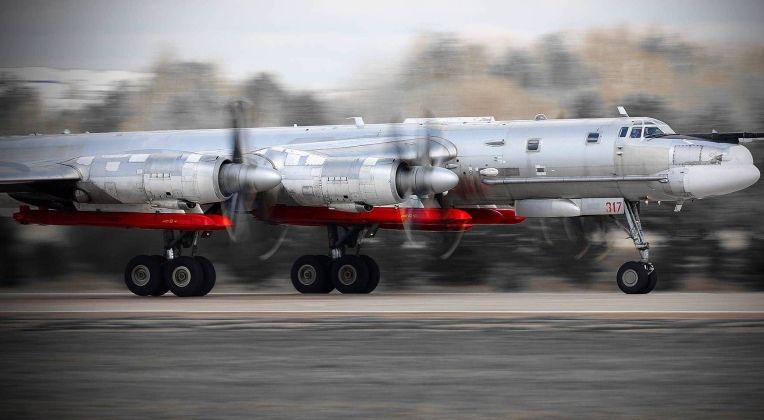
A much lower impact ground launch of ballistic missiles was carried out by Belarusian military units using the Iskander-M system at the Kapustin Yar test range in Russia. The systems serve as the Belarusian Armed Forces’ primary means of nuclear delivery under the country’s nuclear sharing agreement with Russia. The Russian Aerospace Forces also launched an air-launched counterpart to the Iskander’s 9K720 missile, the Kinzhal missile, from a MiG-31K/I strike fighter as part of the exercises. A Tu-95MS strategic bomber, which forms the backbone of the Russian strategic aviation fleet, also launched cruise missiles, presumably the Kh-101/2. The missile type has radar evading stealth capabilities and a range estimated at close to 5,000 kilometres. Although the MiG-31 and Tu-95 are both ageing designs, the development of new avionics suites and weaponry has allowed them to continue to play important roles in Russia’s nuclear forces, as well as in conventional operations such as in the Ukrainian theatre.
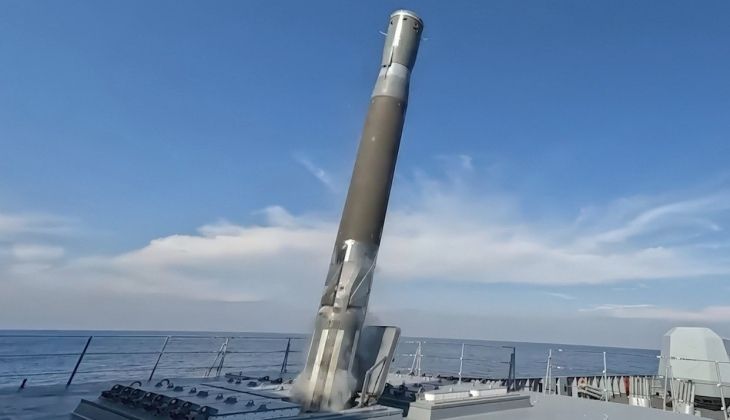
The sixth type of nuclear-capable missile confirmed to have been launched during the exercises is the most unique, namely a 3M22 Zircon hypersonic cruise missile which was launched from the frigate Admiral Gorshkov in the Barents Sea. The missile travels at Mach 9 speeds, and has a range of more than 1,000 kilometres, which comfortably surpasses the capabilities of all known ship-launched anti-ship missile types other than the Chinese YJ-20. Alongside anti-shipping roles, it is also capable of delivering nuclear strikes against ground targets, and has been tested against ground targets in the Ukrainian theatre. The missile’s extreme speed and high manoeuvrability make it extremely difficult to intercept, while its highly compact size allows several dozen to be integrated onto destroyers and larger frigates such as the Admiral Gorshkov class. The missile’s service entry in growing numbers, including from nuclear powered Yasen class attack submarines with effectively unlimited ranges, has very significant implications for the Russian Armed Forces’ ability to deliver tactical nuclear strikes.
