
Russia Launches World’s Largest Nuclear Missile to Prepare For 2026 Service Entry
Military Watch Magazine Editorial Staff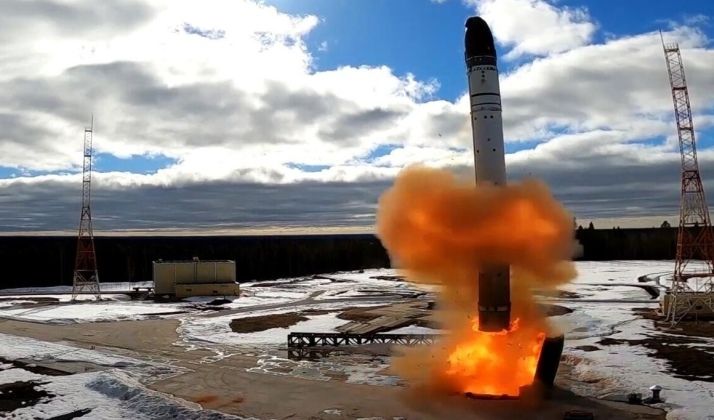
Russian Sarmat ICBM Test Launch
The Russian Armed Forces on May 13 conducted a successful test launch of the world’s largest missile, the RS-28 Sarmat intercontinental range ballistic missile (ICBM), which was confirmed by Commander of the Strategic Missile Forces Sergey Karakayev. The commander commented on the launch: “The test results confirmed the correctness of the design and technological solutions, as well as the missile system’s ability to achieve its quality conformance characteristics." He projected that the deployment of Sarmat launchers “will significantly enhance the combat capabilities of the ground-based strategic nuclear forces to guarantee the destruction of targets and fulfil strategic deterrence missions.” “The positive results of the Sarmat missile system launch will allow the first missile regiment equipped with this missile system to be deployed on combat duty in the Uzhur formation in the Krasnoyarsk Region by the end of this year,” Karakayev concluded.
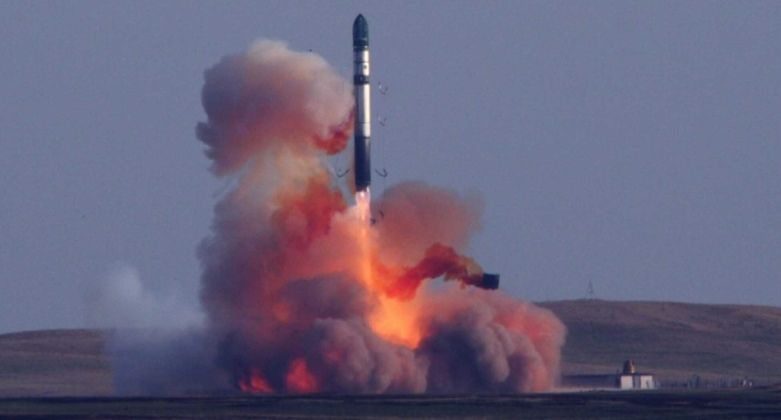
Commander Karakayev observed that the Sarmat missile system surpasses the Soviet-made Voyevoda system “primarily in terms of range, throw-weight, launch readiness, and the countermeasures it employs, which allow it to reliably overcome existing and future missile defence systems.” His statement closely followed the announcement by President Vladimir Putin that the Sarmat the world’s longest engagement range at 35,000 kilometres, and the president’s elaboration that: “The total yield of the delivered warhead is more than four times greater than that of any existing, most powerful Western equivalent.” This range is by far the longest ever reported for a missile, more than double the estimated 15,000 kilometre ranges of the Chinese DF-41 and DF-5 and North Korean Hwasong-17 that were previously estimated to be the world’s longest ranged ICBMs.
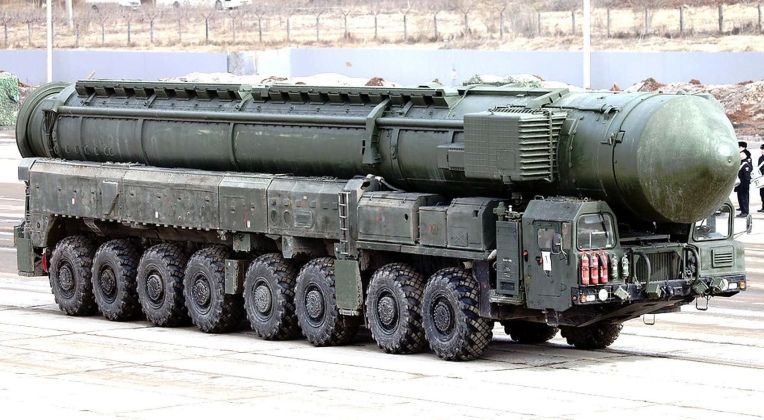
Commenting on plans to bring the Sarmat into service in 2026, President Putin noted: “The Sarmat will indeed be deployed on combat duty by the end of this year.” “The missile can move not only on a ballistic but also on a suborbital trajectory, which allows for a range of over 35,000 km while doubling its accuracy and the ability to penetrate all existing and future missile defence systems,” he elaborated. At over 208 tons, the Sarmat is part of a complementary high-low combination of ICBMs, and is deployed from heavily fortified silos while the much lighter Yars ICBMs, which are approximately a quarter of the weight, are predominantly deployed from mobile transporter-erector launchers. The Sarmat’s extreme range is achieved through the integration of Avangard hypersonic glide vehicles, which have unique flight characteristics.
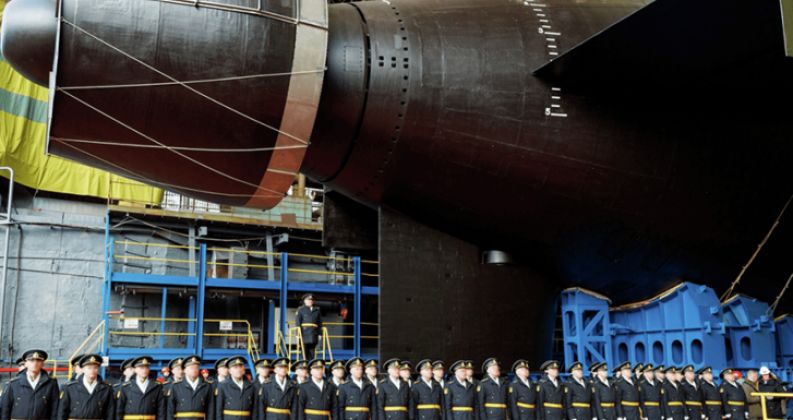
Despite the considerable decline seen in the standings of the Russian Armed Forces and defence sector since the disintegration of the Soviet Union, the country’s strategic nuclear forces have continued to lead the world in both size and performance, reflecting their prioritisation for R&D, procurement and sustainment funding. The testing of the Sarmat follows confirmation in December that the Russian Defence Ministry State Armaments Program for 2027-2036 has paid specific attention to the modernisation of the country’s nuclear triad and air defences. Alongside the modernisation of traditional assets the nuclear triad, the Defence Ministry has increasingly invested in novel means of nuclear delivery not seen elsewhere in the world. The most notable among these are the 9M730 Burevestnik intercontinental range cruise missile, which uses a miniaturised onboard nuclear reactor, and the 2M39 Poseidon nuclear-armed underwater drone which is deployed from new Khabarovsk class submarines.
