
Russia’s Su-35 vs. America’s F-15EX: Air War in the ‘4++ Generation’
Military Watch Magazine Editorial Staff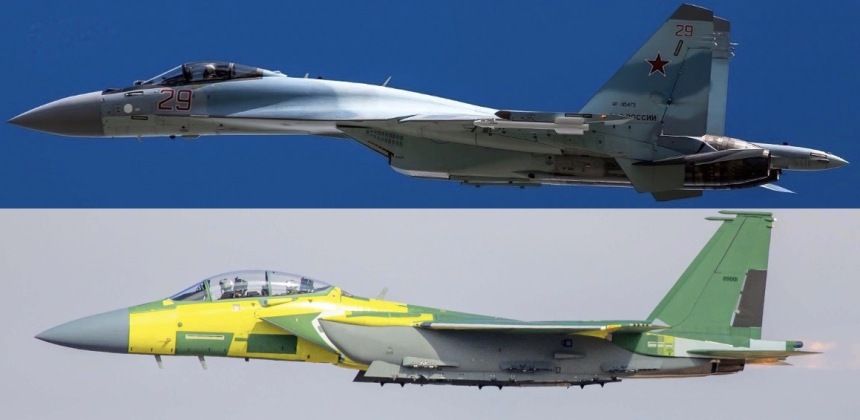
Russian Su-35 (top) and U.S. F-15X Air Superiority Fighters
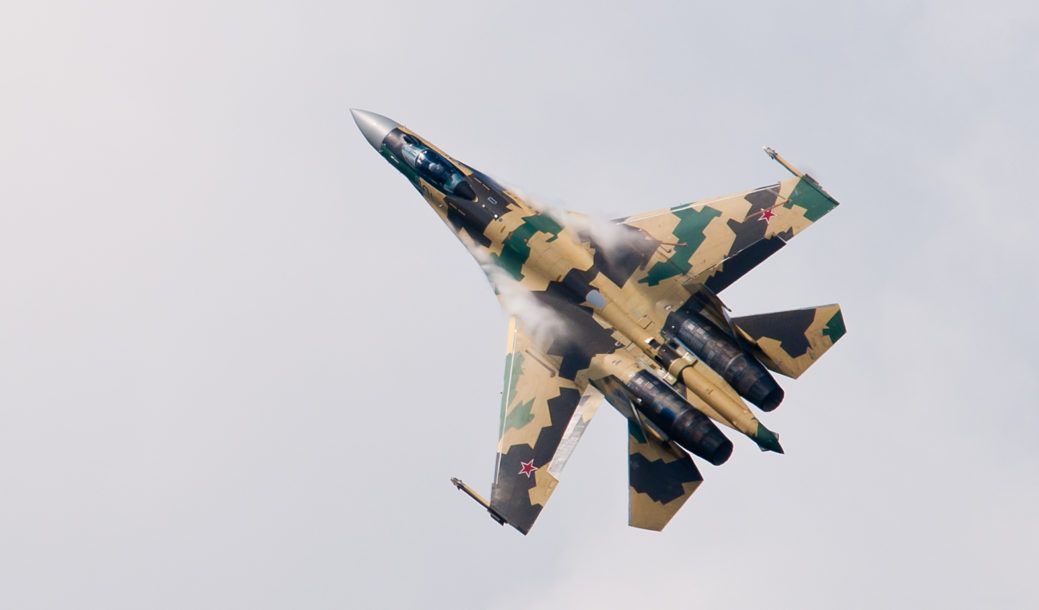
Since Russia first demonstrated the capabilities of the Su-37 technology demonstrator, a concept for advanced next generation fighter jets designed to operate without significant stealth capabilities emerged as a potentially highly potent and in many ways advantageous alternative to the stealth jets being developed in the United States. Thus while the U.S. in the Cold War’s aftermath focused heavily on the F-22 Raptor to replace its Cold War era F-15 Eagle heavyweight air superiority fighters, Russia’s own means of contesting air superiority was markedly different – relying on enhancing the design of its own Cold War analogue to the F-15 the Su-27 Flanker. Enhancements included the integration of three dimensional thrust vectoring engines for supermanoeuvrability, multiple new and more powerful sensors including the nose mounted Irbis-E radar for excellent situational awareness over 270 degrees around the fighter, and an expanded payload of up to 14 missiles from the original eight. A more powerful infra red search and track system was also integrated, allowing the fighter to operate without a radar signature if necessary.
The Flanker's range was also increased with new fuel tanks and more AL-41 efficient engines, which were also significantly more powerful than the AL-31 which powered on the Su-27. The new Flanker was made considerably lighter and more durable through much greater use advanced of composite materials, while its radar cross section would be reduced by over 70% due to a simple redesign of the airframe which, while not compromising the aircraft’s capabilities, improved its survivability at long ranges. These enhancements were complemented with a new generation of air to air missiles primarily including the R-77, multiple enhanced variants of the R-27 and the hypersonic R-37M. The Flanker also received next generation avionics and electronic warfare systems, and the resulting aircraft which built on many of the successes of the Su-37 was the Su-35 ‘4++ generation’ air superiority fighter which entered service in 2014 and was designed to be able to go head to head with all existing Western fighters up to and including America’s elite F-22 Raptors.
While the United States initially planned to replace its entire F-15 fleet with 750 Raptors, and potentially also replace the Navy’s carrier based F-14 Tomcat heavyweight fighters with carrier based derivatives of the F-22, the considerable operational costs of the next generation jets and their massive maintenance needs made operating such a large fleet impractical. With the F-15 already having had an extremely high operational cost of around $31,000 per hour, the F-22 approximately doubled this at over $60,0000 per hour which did not sit well with the post-Cold War defence budget. This led the planned number of the new stealth jets to be acquired to be cut by 75% to 187. With tensions between the United States and major near peer adversaries growing, prospects of a major contest for air superiority again arose. As remaining air superiority configured F-15s in service have increasingly suffered metal fatigue with the entire fleet being over 35 years old, the U.S. Air Force sought to enhance its fleet of heavyweight fighters with a ‘4++ generation’ jet of its own.
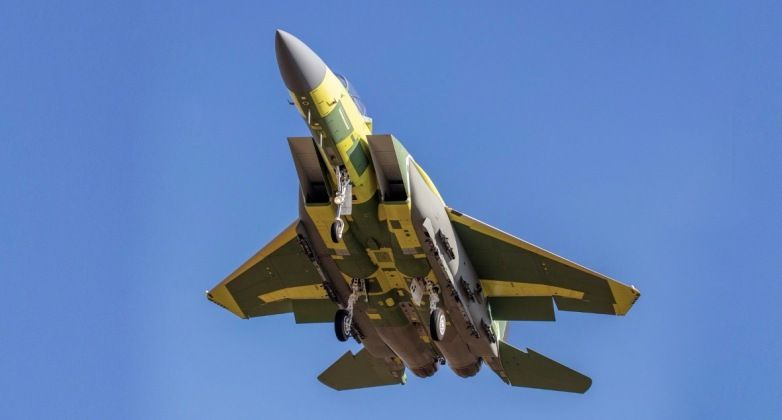
The F-15X was thus developed to fulfil the Air Force’s requirements, and although it bore far greater similarities to the original Eagle than Russia’s Su-35 did to the original Flanker it was nevertheless a considerable enhancement. The F-15X integrated a powerful new active electronically scanned array radar, advanced new electronic warfare systems and avionics, and a vastly expanded missile payload of up to 22 missiles from the original eight. New data links were designed to allow the fighter to provide support to stealthy F-35 and F-22 fighters, both of which had smaller and more restricted missile payloads of four and eight respectively. New conformal fuel tanks also increased the fighter’s endurance. Perhaps most critically, the fighter’s operational costs and maintenance requirements were reduced significantly over those of the original Eagle, meaning the fighter can be operated in significant numbers at lower cost.
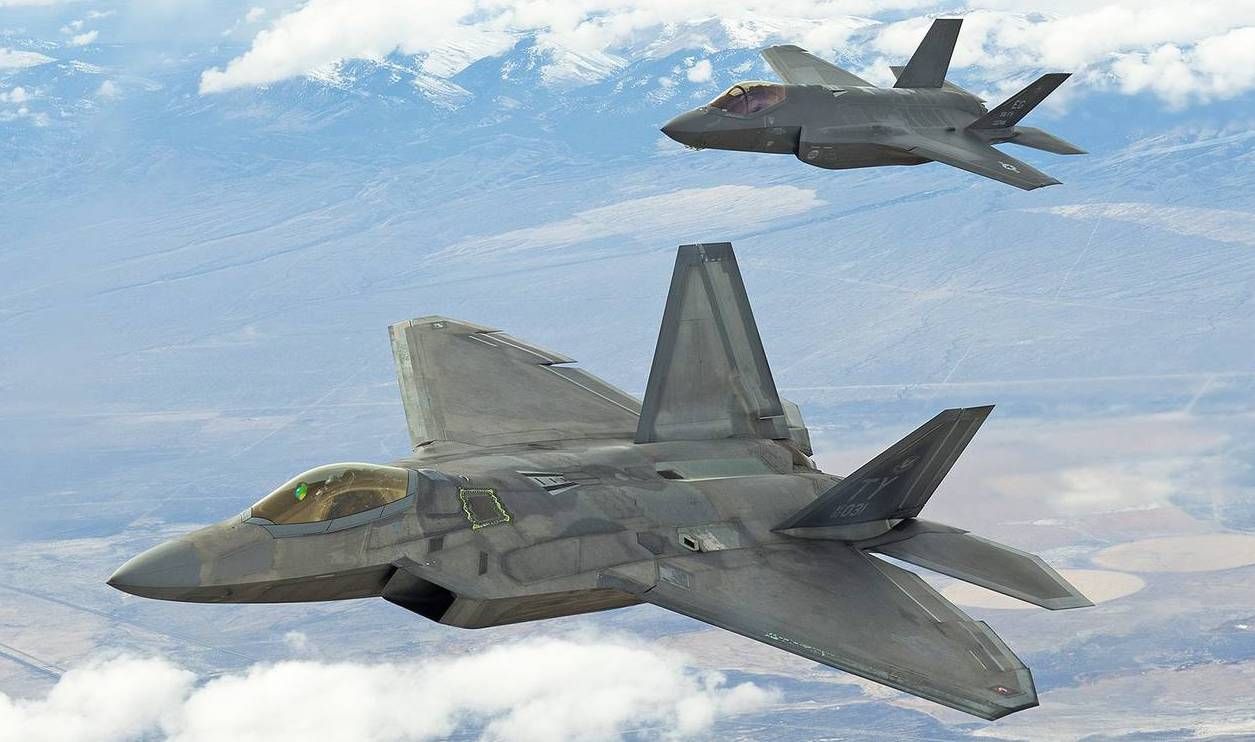
Comparing the capabilities of the Su-35 and the F-15X, the designs notably differ because the former was designed to be Russia’s prime frontline air superiority fighter – surpassed only by elite MiG-31BSM interceptors and years later by the Su-57 fighter which will not enter service in meaningful numbers for years to come. While the F-15X is set to be acquired in large numbers, with 114 planned, these are primarily intended to support larger fleets of F-35A and F-22 stealth fighters and upcoming sixth generation jets which will replace the Raptor such as the Penetrating Counter Air Fighter and Air Dominance Fighter. Nevertheless with Russia proliferating the Su-35 acquiring it in large numbers, and the F-15X itself potentially set to be sold abroad, the possibility remains that the two aircraft could go head-to-head despite their different roles.
In visual range combat the Su-35 benefits from a number of considerable advantages, including a far more manoeuvrable airframe inherited from the original Flanker and enhanced with three dimensional thrust vectoring engines. The F-15X lacks any thrust vectoring capabilities whatsoever, and while the original F-15 was designed to engage enemy fighters at all ranges the F-15X is more heavily tailored towards beyond visual range combat. While the Su-27 originally included an infra red search and tracking system, such features represent a much newer addition to the F-15 design and partly even the odds at close ranges by allowing it to operate without a radar signature as the Flanker can. In beyond visual range combat the Su-35 benefits from superior situational awareness due to its multiple sensors and ability to detect targets in a far wider arc - where the Eagle much like the Raptor has its field of vision more restricted. The Flanker also benefits from a smaller radar cross section due to the limited stealth technologies applied, and while stealth modifications for the F-15 design have been developed these have not been applied to the F-15X.
The F-15X benefits from a far larger payload of missiles with its 22 AIM-120D missiles having 180km ranges. The platform is also a leading candidate to deploy the upcoming AIM-260 air to air missile, although this missile is still in early development stages. While the Su-35 currently deploys just 14 missiles, it benefits from longer engagements ranges and from access to some unique missile technologies. The platform’s R-27 and R-77 missiles remain considerably less capable than the newer AIM-120D, but fighters can also deploy longer ranged R-37M which have a hypersonic speed of Mach 6 which reduces an adversary’s response time and a range of 400km. The F-15X currently lacks access to an analogous platform missile, meaning the Su-35 will effectively have more than double the air to air engagement range. The Su-35 is also set to deploy the new K-77 missile, which has a 197km range and unique active phased array antenna guidance systems that make it extremely difficult to evade even for highly manoeuvrable fighters operating near the limits of its range. Other beyond visual range munitions are currently in the works and will likely enter service around the same time as the AIM-260. Su-35 fighters deployed by China’s People’s Liberation Army Air Force may also potentially deploy a number of more advanced missiles including the PL-15 with a range of approximately 250km and AESA radar guidance and upcoming PL-12D and PL-21 missiles with extreme ranges.
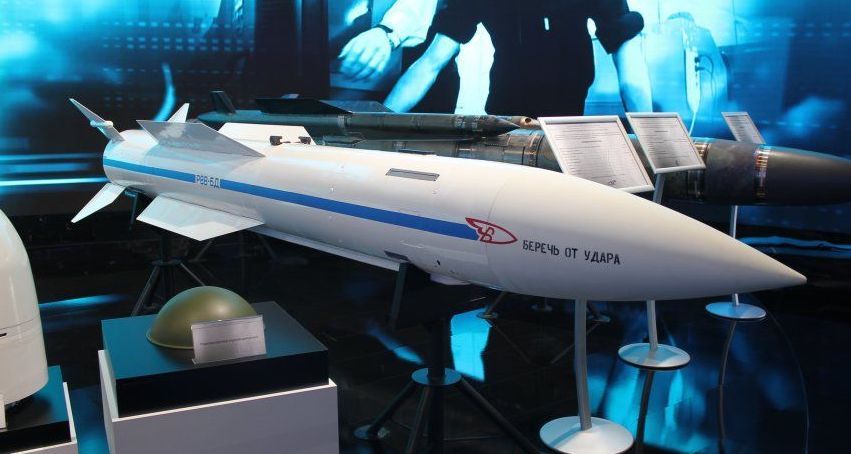
The Su-35’s high manoeuvrability notably allows it to partially compensate for its lower missile payload, and provides it with significantly greater survivability at range due to its better ability to evade enemy missiles through complex manoeuvres. The F-15X will need to rely more heavily on electronic warfare systems to neutralise threats, and could be particularly vulnerable to advanced missile types such as the K-77 and R-37M. The survivability of the Su-35 will likely decline in future however when the AIM-260 begins to enter service, with the missile reportedly intended to engage supemanoeuvrable fighters at extreme ranges in direct response to the proliferation of the Flanker design and development of more advanced and survivable jets such as the Su-57. As both the Flanker and the Eagle have have comparable speeds and altitudes, kinetic energy imparted onto missiles by both fighters is likely to be similar.
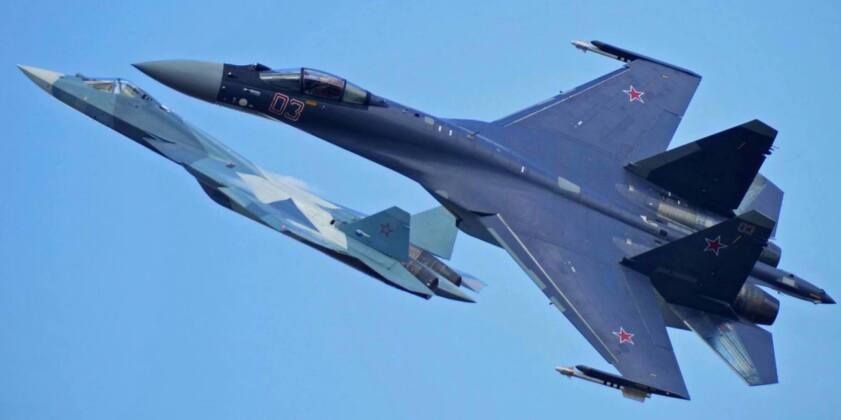
Ultimately both Russia’s Su-35 and America’s F-15X represent state of the art fighters which, alongside China’s J-16 and J-11D, represent the most capable fourth generation heavyweight fighters developed. Although less capable than their more costly and stealthier counterparts the Su-57 and F-22, the two designs are set to remain viable beyond the 2050s and are considerably superior to their predecessors which entered service during the Cold War. The aircraft are set to fly supporting missions alongside the most advanced next generation platforms currently under development - the American Penetrating Counter Air Fighter and Air Dominance Fighter and the Russian Su-57 and MiG-41. The balance of power in the skies is more likely to be decided by these more advanced upcoming aircraft which integrate sixth generation technologies. Whether Russia or the United States will retain an edge in sixth generation warfare remains uncertain, as does the way in which evolving missile technologies will affect the roles of the Su-35 and F-15.
