
Russia Never Rejected Iranian Request for S-400 Missile System; Moscow Denies American ‘Fake News’ Reports
Military Watch Magazine Editorial Staff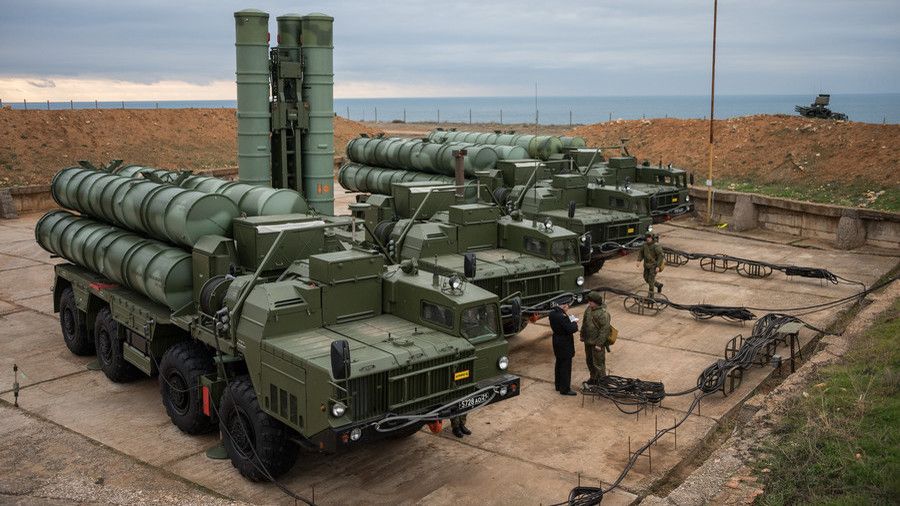
S-400 Surface to Air Missile Batteries
Spuntik
Following reports from prominent U.S. news outlet Bloomberg that Russia had denied an Iranian request to purchase S-400 long range surface to air missile systems, the Moscow has issued its first response in an official capacity. Russian Deputy Prime Minister Yury Borisov stated on June 7th: "Let them (U.S.) continue spreading (fake news)… Everything goes as it goes.” When asked by state media outlet Sputnik whether Iran had requested the S-400 system, the minister denied this outright. The report be Bloomberg comes amid growing tensions between the United States and Iran, and was widely re-reported by several Western outlets. Western reporting has in recent months increasingly emphasised a growing divergence in foreign policy and conflict between Russia and Iran - namely over their interests Syria - though the veracity of many of these reports remains questionable.
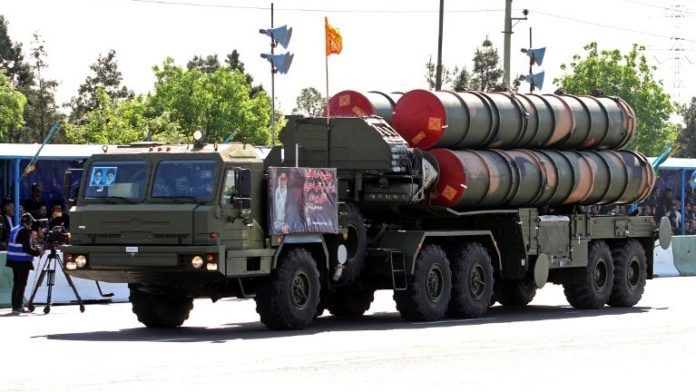
Iran acquired the Russian S-300PMU-2 missile system in 2016, a predecessor to the S-400 which lacks many of the platform’s advanced capabilities with a considerably shorter range, lower mobility, lack of anti stealth capabilities, weaker sensors and less than half the rate of fire of the newer platform among other shortcomings. Given the overall shortcomings of the country’s Air Force, investment in more advanced air defence systems alongside more capable fighter jets remains highly plausible in light of the recent U.S. escalation of its military presence in the Persian Gulf targeting Iran. While Russia has denied U.S. reports regarding its unwillingness to provide Iran with the S-400, Moscow has previously refused to provide the Western Bloc's adversaries with advanced aerial warfare systems on a number of occasions since the Soviet collapse under Western pressure. This included an end to Soviet sales of advanced combat aircraft to Iran from 1991, a unilateral freezing of sales of the S-300PMU-2 system to Iran in 2010, and denying of advanced MiG-31 Foxhound combat jets and S-300 air defence systems to Syria throughout the 2000s. With Iran’s ability to modernise its aerial warfare capabilities undermined by Moscow’s susceptibility to Western pressure in the post-Soviet era, the evolution of its defence partnership with Russia in light of escalating Western threats against both states in recent years remains to be seen. Iran is reportedly planning a large scale acquisition of Russian combat jets including Su-30 air superiority fighters - though the details of these negotiations have yet to be revealed and a UN ban on sales of such weapons remains in place until 2020.
