
Russia’s Most Powerful Attack Helicopter Adapted for Air Defence Duties with New Anti-Drone Missiles
Military Watch Magazine Editorial Staff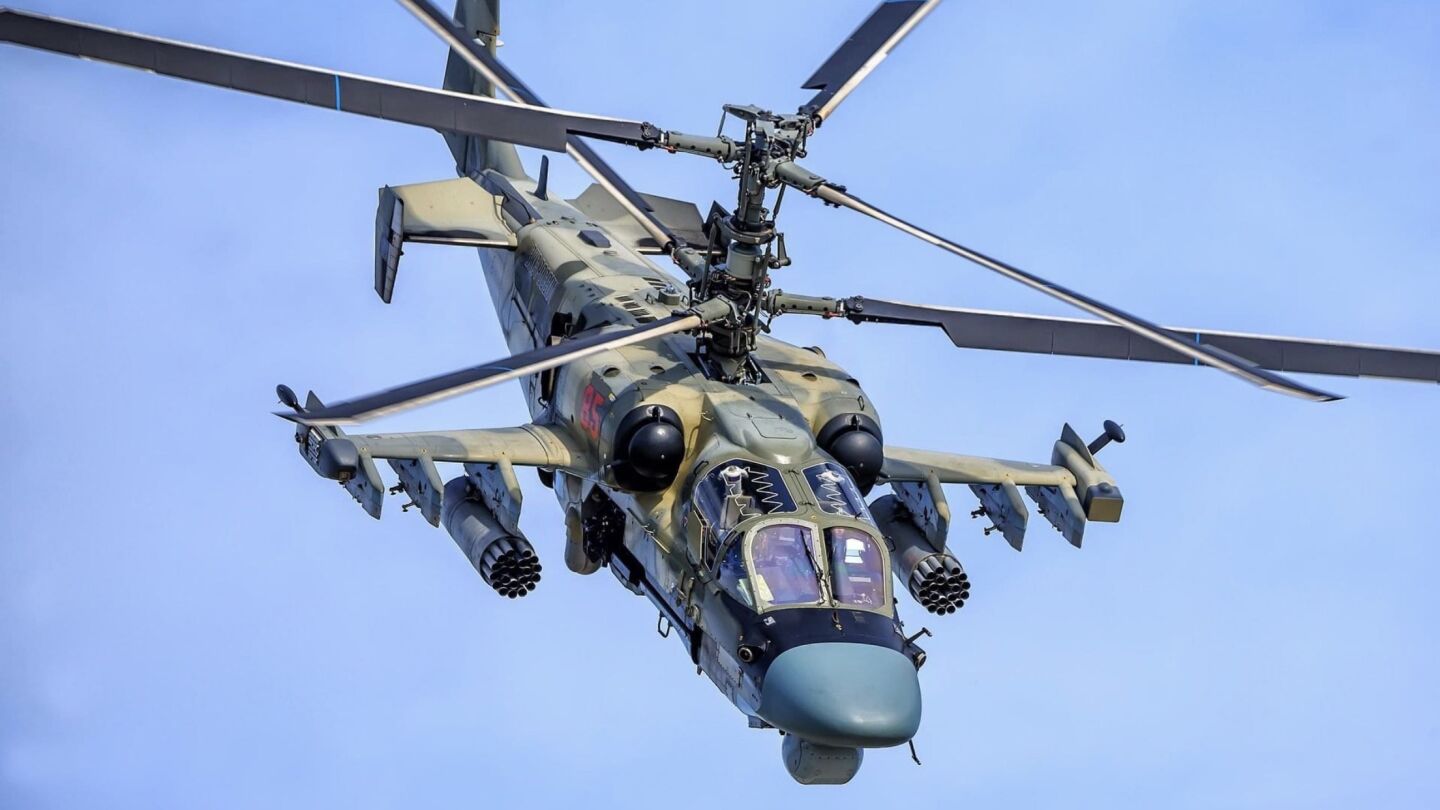
Russian Ka-52 Alligator attack helicopter units have been reconfigured for drone interceptor operations, responding to the growing threat posed by Ukrainian unmanned aviation. The Ka-52 was designed to detect and engage small, low-signature ground targets at long range, and integrates electro-optical/infrared (EO/IR) sensors capable of detecting drones, a laser rangefinder/designator already integrated for guided missile employment, and modern battlefield surveillance systems, which are well optimised for targeting unmanned aircraft. The attack helicopter’s distinctive coaxial rotors provide several advantages, including excellent hover stability, rapid yaw turns, good low-speed manoeuvrability, and a better ability to maintain weapon aim while manoeuvring, which are all valuable when tracking slow-moving drones.
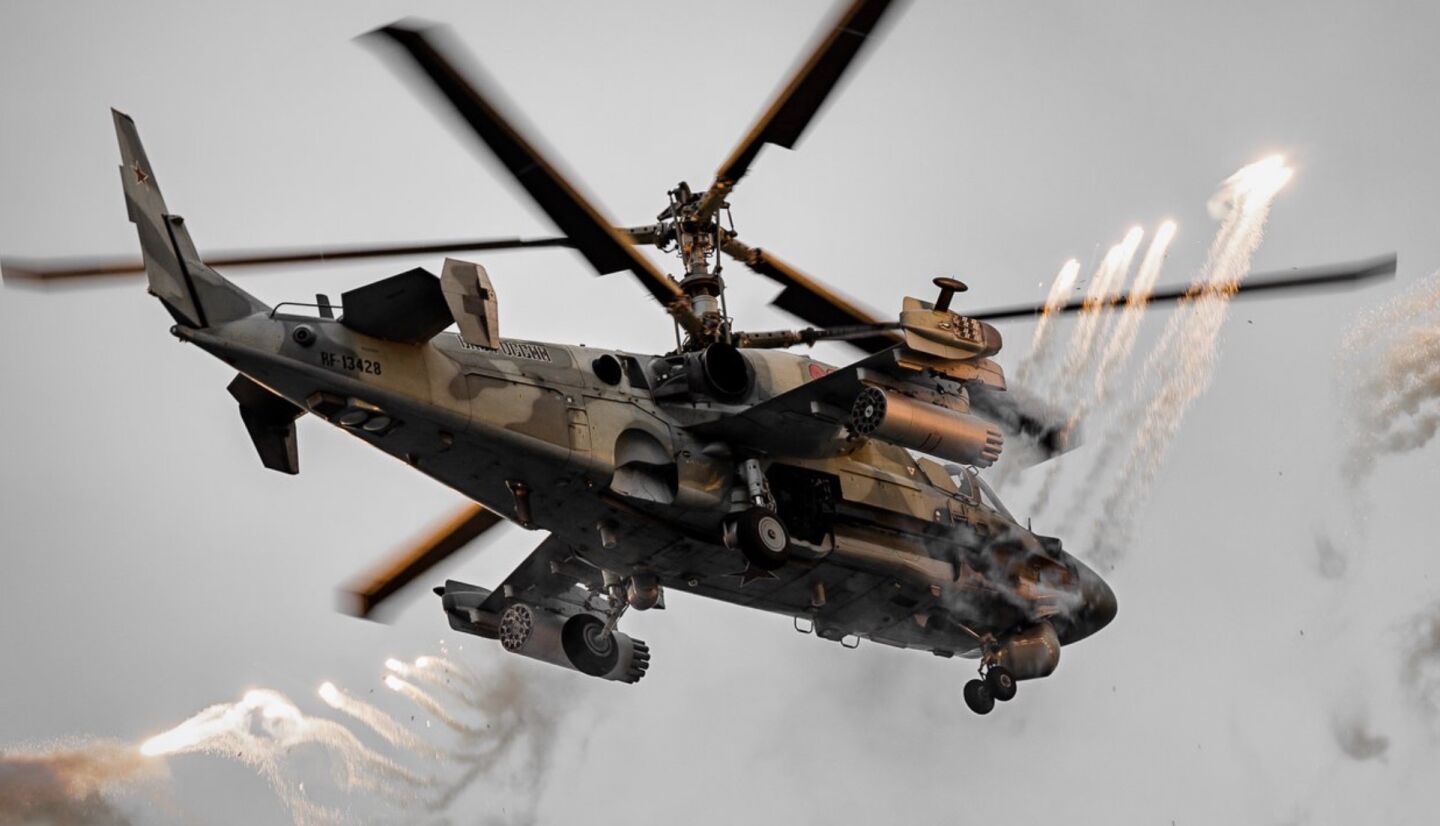
Russian ground based air defences have struggled to provide an effective defence against persistent large scale drone attacks, leading to a number of extreme measures being taken, such as the positioning of Pantsir-SMD-E stationary air defence systems onto Moscow rooftops. A helicopter can pursue drones that alter course or operate beyond the range of static defences, however. A greater reliance on helicopters for anti-drone operations is far from unique to Russia, with training for U.S. Army AH-64E Apache crews having increasingly emphasised anti-drone warfare exercises, while Apaches in the United Arab Emirates, Israel, and possibly elsewhere in the Middle East, have been actively involved in counter-drone operations from early March.
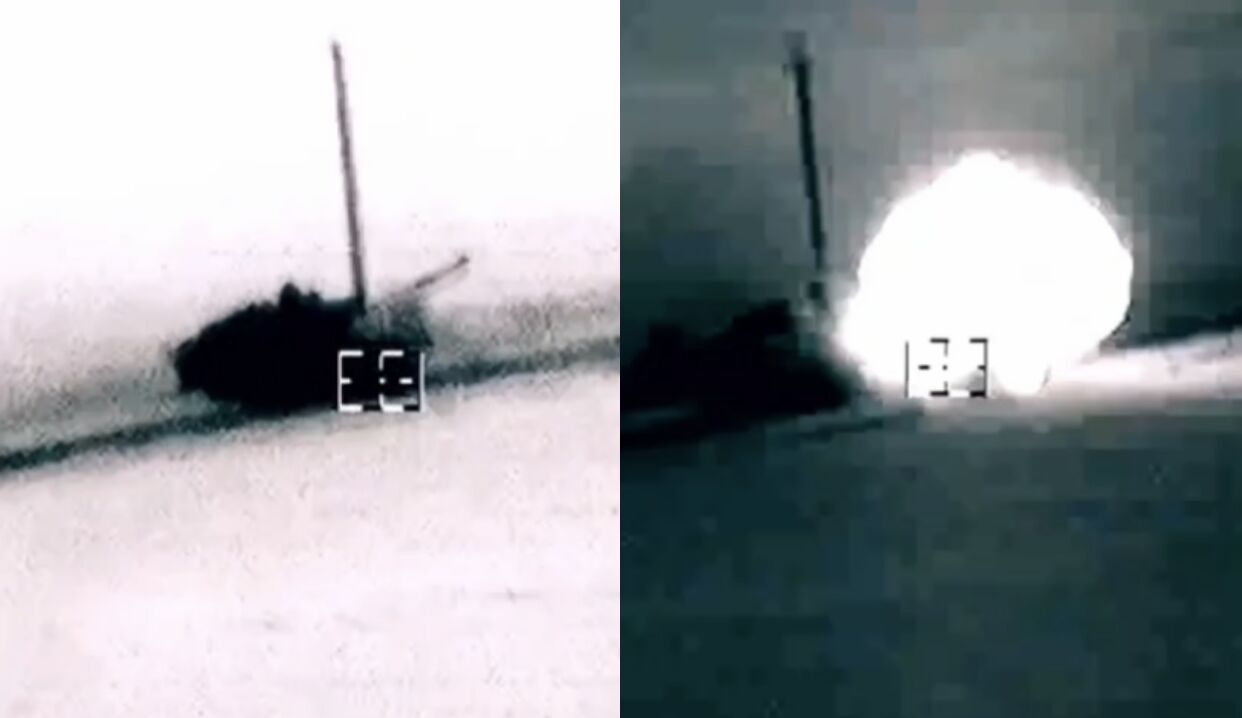
The Ka-52 relies on upgraded Vikhr-M guided missiles which are now reportedly capable of engaging unmanned aerial vehicles using newly integrated proximity fuzes. The missile was developed high-speed laser beam-riding anti-tank guided weapon combining supersonic speed approaching Mach 2 with a range of approximately 10 kilometres and a multi-purpose warhead capable of engaging heavily armoured vehicles and low-flying helicopters. Rather than semi-active laser homing, the Vikhr follows a laser beam projected from the launch platform, making it relatively resistant to many forms of electronic jamming while allowing very rapid engagement of targets. The latest modernisation equips the Vikhr with an improved non-contact target sensor specifically intended to increase its effectiveness against drones.

The growing reach of drone attacks has increasingly threatened targets deeper into central Russia, including its industrial heartlands in the Urals region. These attacks have received very considerable support from across the Western world, including funding, training, supplies, and intelligence. In late July a report by the Financial Times shed new light on the extent of Western intelligence support for Ukraine’s expanding deep-strike operations, which have increasingly targeted critical infrastructure hundreds of kilometres inside Russian territory. This intelligence has enabled Ukrainian planners to identify the locations of Russian air defence systems and construct flight paths allowing drones to bypass them.
