
Russia Makes First Ever Deployment of Enhanced MiG-31BM Interceptors to Airbase Above the Arctic Circle
Military Watch Magazine Editorial Staff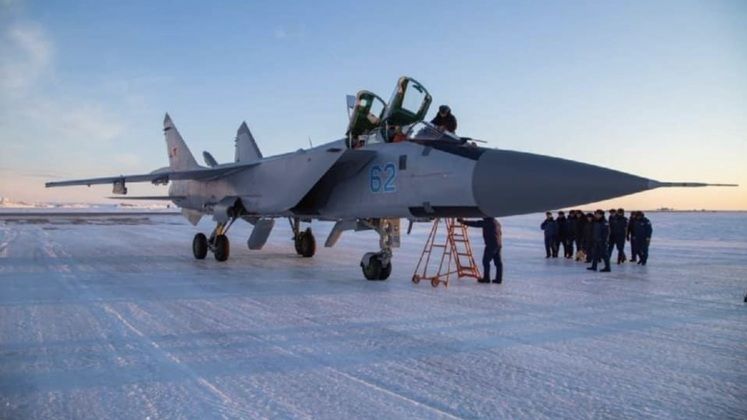
MiG-31 Foxhound at the Novaya Zemlya Archipelago
Russian Defence Ministry
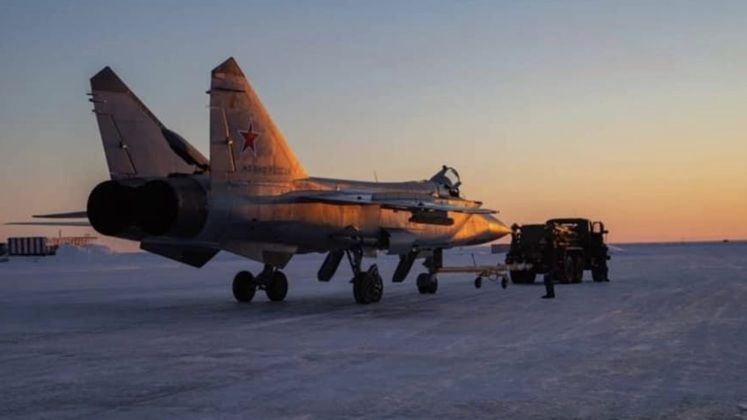
Russia has deployed a unit of MiG-31BM Foxhound heavyweight interceptors to the Novaya Zemlya archipelago, located above the Arctic Circle, as part of a growing military presence in the area. The Ministry of Defense provided images of the aircraft deployed to the facility, which it described as an “experimental combat duty to protect the state border of the Russian Federation in the Arctic airspace.” This marks the fist time Foxhounds have been deployed to this location which lies between the Barents Sea to the west and the Kara Sea to the east. The MiG-31 has long been favoured for Arctic deployments for a number of reasons, with its landing gear well suited to deployments from iced or snowy runways and its very high endurance and unrivalled speed allowing it to patrol very large areas. The Foxhound is the heaviest aircraft in the world designed for air to air combat, and the enhanced MiG-31BM variant deploys an advanced Zaslon-M radar which has few rivals in the world for situational awareness. The aircraft have an unmatched speed among modern combat jet exceeding Mach 2.8, and can cruise at supersonic speeds allowing them to more quickly respond to threats.
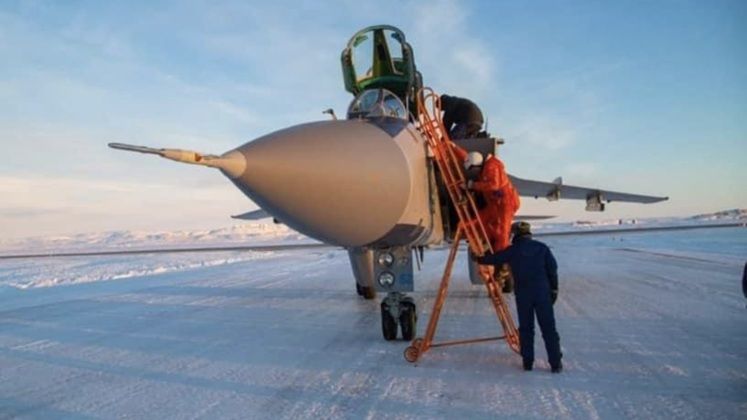
Speaking regarding the value of Foxhound interceptors in Russia’s northern regions, Lieutenant General Alexander Otroshchenko stated: “The machine [the MiG-31BM] works excellently [and] there is no difference from the altitudes where we normally fly around Monchegorsk… A month has passed and we, therefore, needed to shift the aircraft and their personnel, and also have a closer look at the conditions for the servicemen and their living conditions.” The general is himself trained as a MiG-31 navigator, and flew with the Foxhounds to Novaya Zemlya. “They can fly in temperatures down to minus 60°C which has been confirmed in experimental operations in the area of the Northern Sea Route… The main nuance here is the weather, which is very complicated. Now, for example, the wind has for a week blown with a speed of about 100 km/h,” he further elaborated.
The MiG-31 is prized for its deployment of R-37M air to air missiles which have an unrivalled 400km engagement range, Mach 6 speed and a very large 60kg warhead. The missile can be used to intercept enemy cruise missiles as well as aircraft, and complements the deployment of advanced air defence systems such as the Pantsir, Tor and S-400 to the Arctic. Foxhounds deployed to Novaya Zemlya are from the Russian Northern Fleet’s 98th Composite Aviation Regiment, which has fielded two MiG-31BM squadrons since 2019. The fleet announced regarding the new deployment: “Carrying out combat duty on the [Novaya Zemlya] archipelago will significantly increase the reach of Northern Fleet fighter aircraft in the Arctic and significantly expand control of the airspace over the waters of the Northern Sea Route.”
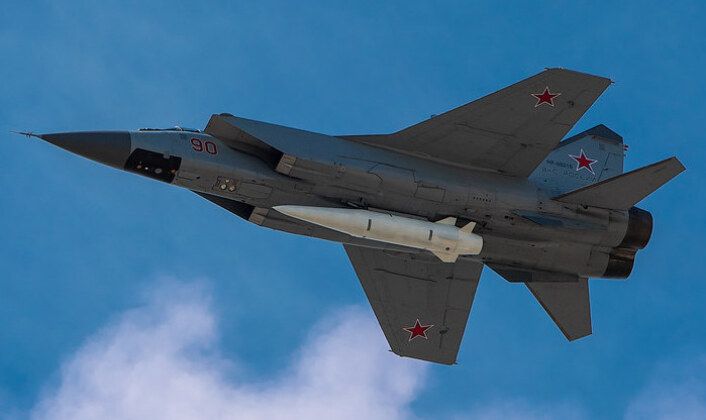
A second newer MiG-31 variant, the MiG-31K, has also been deployed to the Arctic and is equipped for strike rather than air to air roles. The aircraft are armed with Kh-47M2 hypersonic ballistic missiles, which combined with the Foxhounds’ already long ranges allows Russian forces to threaten targets across much of the theatre. The deployment of Foxhound interceptors comes amid growing tensions in the Arctic theatre and a growing Western military presence, with the area expected to be a leading theatre of strategic competition between Russia and the West in the coming decades.
