
Russia Confirms Development of Twin Seat Su-57 Variant: Will Its Own Air Force Buy Any?
Military Watch Magazine Editorial Staff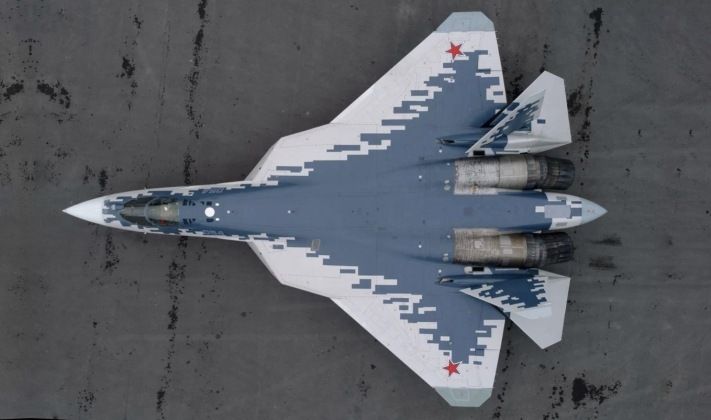
Russian Su-57 Heavyweight Fighter
Russian Deputy Prime Minister Yuri Borisov confirmed on June 16 that the Sukhoi Design Bureau and the country’s defence ministry are planning the development of a twin seat variant of the Su-57 next generation fighter specifically to target export markets. During an official visit to the Primorye Region in the Russian Far East, Borisov sated regarding these plans: "There is interest in this aircraft and, in my view, it will grow with every passing year as our Russian Army is supplied with this model. Foreign customers at first look at how a particular weapon of the Russian Armed Forces operates. The Defense Ministry and the Sukhoi Design Bureau have plans to develop a two-pilot aircraft that will boost the export demand for this model … and it may create additional demand.” No post fourth generation generation fighter in the world has been developed into a twin seat aircraft, with the American F-22 seeing production terminated several decades early before this could be developed, although China’s J-20 is expected to be the first to be fielded in a twin seat variant. The Russian Air Force currently fields only a single Su-57 aircraft, although it is expected to receive four more before 2022 and have a total fleet size of 76 by the end of 2027. The scale of production is expected to increase drastically afterwards, while a new generation of engines, the Saturn 30, will be introduced by 2023.
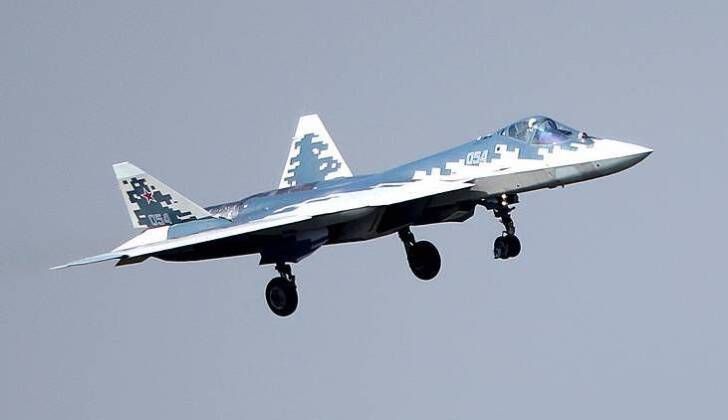
It remains uncertain if the Russian Defence Ministry has any interest in acquiring a twin seat variant of the Su-57, although export clients such as India which strongly favour twin seat aircraft will likely be more interested. It was reported in December 2020 that foreign clients had specifically requested information on a possible twin seat variant. Russia’s previous generations of leading air superiority fighters, the Su-27SM2/3 and Su-35, were all single seat jets, although the Su-57 is more balanced and better suited to strike or anti shipping roles than its predecessors. This could make a second seat useful, as it can accommodate a weapons systems officer who operates air to ground armaments as the pilot in the front seat flies the plane and engages enemy aircraft. With the Su-57 expected to be supported by unmanned aircraft such as the stealthy Okhotnik drone, the second seat could also accommodate an operator to direct these pilotless jets. The need for a second seat on next generation fighters has been increasingly questioned, as the growing ability of artificial intelligence to support pilots allows each to perform more tasks simultaneously than they would otherwise. While a twin seat Su-57 is very likely to appear, particularly considering that India is expected to be the fighter’s primary client, it remains uncertain whether the Russian Air Force will itself be interested in acquiring these in any significant numbers.
