
Prototype of South Korea’s KF-X Stealth Fighter Nears Completion: Will It Be The World’s Fifth ‘5th Generation’ Fighter to Fly?
Military Watch Magazine Editorial Staff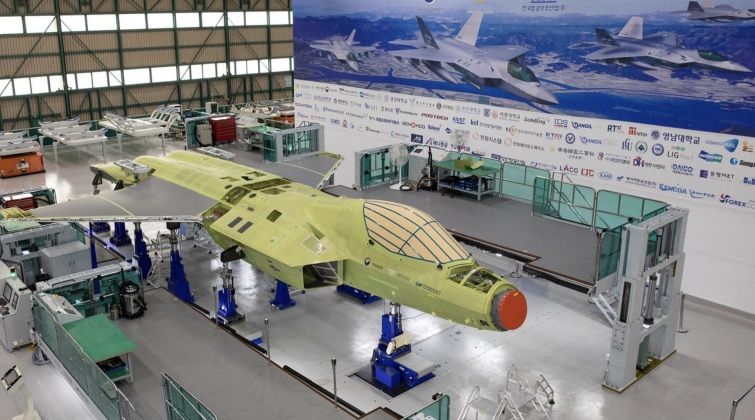
KF-X Stealth Fighter in Production
South Korea’s Korea Aerospace Industries (KAI) is expected to unveil the first completed prototype of its KF-X fifth generation twin engine fighter jet shortly, with the aircraft having begun construction in September 2020. Assembly is taking place at the final assembly building in KAI’s headquarters in Sacheon, Gyeongnam. Reflecting the limitations of South Korea’s industrial base, the KF-X is expected to rely on a number of foreign technologies - ranging from European Meteor air to air missiles to Israeli Terrain Following-Terrain Avoidance (TF/TA) systems and American F414 engines. The fighter’s design places a strong emphasis on stealth capabilities, and will integrate indigenous derivatives of the Taurus ‘bunker buster’ cruise missile which are currently deployed by Korean F-15K strike fighters. South Korea has had prior success developing a fighter with the F/A-50 program, which has seen combat in Iraq and the Philippines with formidable results. The jet’s trainer variant the T-50 has been popular across much of the world, and is considered the most capable trainer in the world developed outside China in terms of combat capabilities.
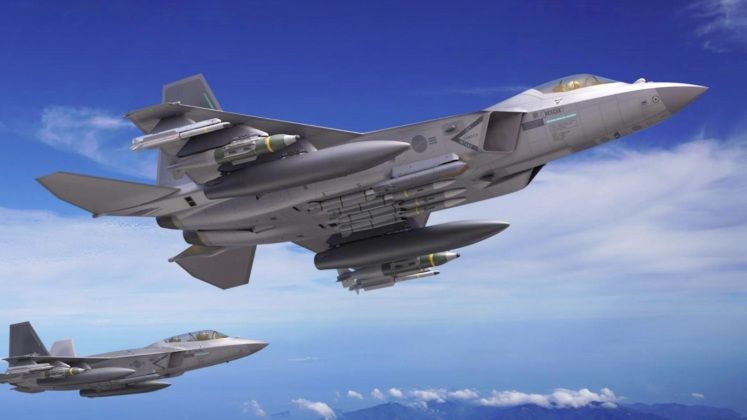
Research and development for the KF-X has cost approximately $7.9 billion - the highest for any fighter of its generation completed outside the United States. South Korea is expected to be one of just five countries to develop a fifth generation fighter, only the U.S., Russia and China having yet to develop aircraft with such capabilities. These countries’ aircraft first entered service in 2005, 2017 and 2020 respectively, and tailing South Korea’s KF-X another potentially promising program is being pursued jointly by Pakistan and China under Project AZM. Turkey has also looked to develop such an aircraft, although its very limited technological base and lack of significant experience in the field of military aviation mean the goal to develop a jet which can compete with foreign designs is unlikely to be seen through. The KF-X is expected to be exported as a low cost platform which will be particularly attractive due to its low operational costs, with many of the clients which purchased the F/A-50 and T-50 expected to show interest in the aircraft. In Korean service, the aircraft is expected to replace F-4E Phantom units and a significant portion of F-5E and F-16C units.
